

When a Manhattan building was first attempted to be placed on a blockchain in the fall of 2018, it seemed more like a farce than a tactic. At 436 and 442 East 13th Street, a twelve-unit luxury condo complex valued at about $30 million was divided into digital tokens and put up for sale on Ethereum. The deal was mediated by Ryan Serhant, yes, the Bravo TV personality. The coverage by the media was breathless. The legal documents were a complete mess. And very few people bought in.
Seven years later, that awkward experiment seems more like a prologue than a failure. Some of Wall Street’s largest companies are now constructing the necessary infrastructure, and Wall Street has quietly stopped making fun of real estate tokenization. Larry Fink of BlackRock, who previously disregarded Bitcoin as a means of money laundering, now claims that tokenization of all assets is a matter of “when” rather than “if.” The New York Stock Exchange itself declared in January 2026 that it was developing a tokenized securities platform, which would allow for 24-hour on-chain trading of US stocks and ETFs. The discussion has changed when the NYSE begins acting in that manner.
| Information | Details |
|---|---|
| Concept | Real Estate Tokenization — converting property ownership into digital tokens on a blockchain |
| First Major Manhattan Tokenization | 436 & 442 East 13th Street, luxury condo development (2018) |
| Original Valuation | Approximately $30 million |
| Units Tokenized | 12 condos, 1,700 sq ft each |
| Original Broker | Ryan Serhant |
| Tech Partners (2018) | Fluidity and Propellr |
| Tokenized Asset Market Size | Roughly $1.2 billion (mid-2025), up from $200 million in 2023 |
| Notable Institutional Backer | BlackRock, led by CEO Larry Fink |
| NYSE Initiative | Tokenized securities platform announced January 2026 |
| Regulatory Framework (EU) | MiCA (crypto-assets) vs. MiFID II (securities) |
| Famous Commercial Precedent | St. Regis Aspen Resort — 19% stake sold via blockchain for $18 million |
| Government-Backed Example | Dubai Land Department issuing tokenized title deeds |
| Key Legal Mechanism | Corporate Resolution tying on-chain tokens to off-chain property rights |
Because of the harsh underlying mechanics, the original Manhattan project failed. A “two-token waterfall”—a special-purpose vehicle that divided the capital stack into debt tokens with fixed returns and equity tokens with profit-sharing—had to be built by Serhant’s team. All of the compliance logic had to be created from the ground up. The entire democratizing pitch was a bit of theater because it was only available to accredited investors. To purchase a digital portion of a building that was advertised as opening real estate to everyone, you still had to be wealthy.
The technology hasn’t really changed since then. The plumbing is the problem. platforms such as Tokenizer and Blocksquare.A real estate operator can now launch a branded tokenization platform in weeks rather than months thanks to Estate’s white-label marketplaces. The Corporate Resolution is the main legal innovation, and even though it sounds dull, it is actually an innovation. Modern platforms tokenize the economic rights to revenue rather than the equity of an SPV, which places the entire transaction under stringent securities law. With its hash incorporated into a smart contract and its signed paper version stored on IPFS, the token becomes a contractual claim on rent and appreciation. Token holders have real courtroom evidence in the event that the property owner defaults.
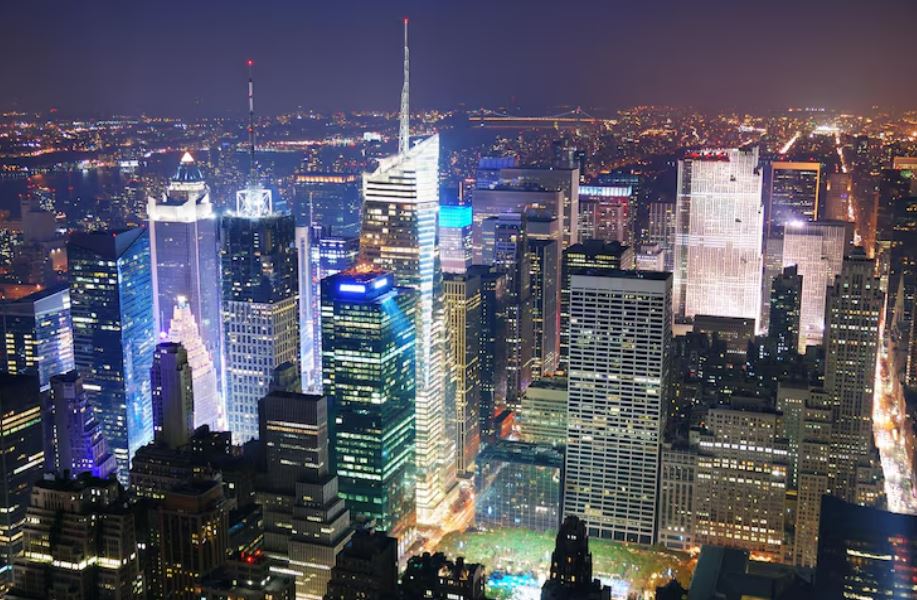
The business world has begun to move more quickly than most people are aware of. Tokenized shares of about 19% of the St. Regis Aspen Resort sold for $18 million. Government-backed property title deeds are now being issued as blockchain tokens by Dubai’s Land Department, with fractional entry points as low as $545. As part of a larger goal to tokenize 1% of Japan’s total real estate market, a Japanese developer has announced plans to put $75 million worth of commercial properties in Tokyo on the blockchain. Plans to integrate “blue-chip properties from skyscrapers to smart contracts” into a compliant on-chain structure have been proposed by a financial firm associated with the Trump real estate empire. Trump-branded cryptocurrency projects have a tendency to blend into political theater, so it’s unclear if that one will actually happen, but the fact that it’s even being discussed shows how much the landscape has changed.
However, there are good reasons to be skeptical. When compared to the multitrillion-dollar real estate market, the tokenized real estate market’s $1.2 billion global valuation is merely rounding error. The largest unresolved issue is still liquidity. Secondary markets for fractional property tokens are still small and unstable, and a token only matters if someone wants to buy it back from you. The uncomfortable fact that rent is still paid by tenants on the first of each month to a bank account in dollars is another. Tokenization was intended to remove the steps, middlemen, and conversion risk that come with turning that into stablecoin distributions.
As this develops, there’s a sense that the concept has finally gained traction—not as the revolution its proponents had envisioned in 2018, but rather as more subdued infrastructure is being built beneath the current financial system. It’s still genuinely unclear if a Queens warehouse worker will ever truly own a piece of One Vanderbilt or if tokenization will only serve as another means for the already wealthy to transfer money more quickly. Both results are conceivable. Most likely, both will occur simultaneously.
