

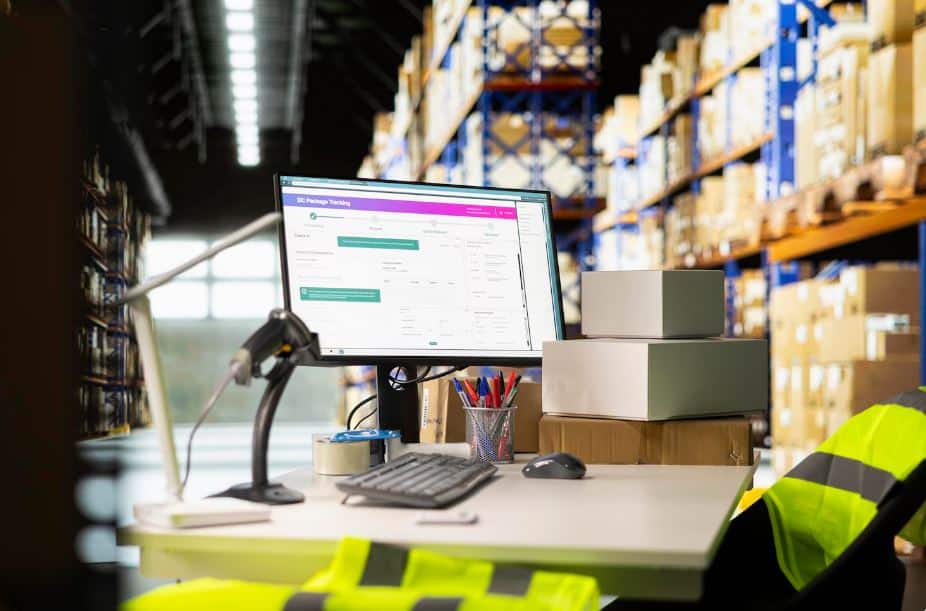
A contemporary distribution warehouse that has, to use the polite terminology of corporate strategy, “built resilience” has a certain kind of quiet. Forklifts make noise. Pallets are four or sometimes five feet high. The aisles are longer than they were three years ago, lined with parts that no one has yet to use, and ordered for a potential disruption. The first thing that comes to mind when you walk through one of these locations is comfort. If you stand there long enough, the second is discomfort.
“Just-in-case” created this world. Executives drastically reversed course after the pandemic revealed just-in-time’s vulnerability. stockpile. Increase diversity. duplicate. Include a backup supplier, followed by a backup for the backup. At the time, it seemed wise. In PowerPoint decks, it still seems wise. The bill is the problem.
| Topic Snapshot | Details |
|---|---|
| Subject | The cost crisis behind corporate “just-in-case” inventory strategy |
| Industry Focus | Global manufacturing, retail, automotive, semiconductors |
| Origin of the Shift | Post-COVID move from “just-in-time” to “just-in-case” sourcing |
| Estimated Margin Risk | 20%–30% of EBIT margins exposed across manufacturing sectors |
| Key Megatrends Driving It | Economic statecraft, climate disruption, robotics adoption, talent shortages |
| Notable Voices | BCG analysts, Deloitte, Oracle NetSuite supply chain researchers, MIT operations scholars |
| Geographic Hotspots | China+1 corridor — India, Vietnam, Mexico, Eastern Europe |
| Recent Tariff Movement | US average tariff rates climbed from roughly 3% to 17%, levels not seen since the 1930s |
| Reference Body of Research | Peer-reviewed work archived at the National Institutes of Health |
| Article Length | 500–600 words |
Businesses are covertly holding tens of billions of dollars’ worth of excess inventory, and BCG analysts calculate that 20% to 30% of manufacturing sector EBIT margins are now vulnerable to increased expenses and fluctuations in tariffs. It’s not a rounding error. That is the kind of figure that puts an end to corner office careers. The way logistics-heavy stocks have been penalized whenever a quarterly call mentions “elevated inventory levels” suggests that investors are also taking notice.
The industry may have confused activity with strategy. It is simple to approve the addition of redundancy. In a board meeting, it appears decisive. However, many CFOs are now squinting at warehouses full of safety stock and wondering, quite rightly, what exactly they bought because redundancy treats the symptom rather than the illness. The usefulness of a semiconductor buffer depends on the chips not becoming outdated while being stored. If the tariff regime changes again before auto parts are shipped from Tennessee, it won’t help.
You can tell that procurement professionals are more cautious now than they were two years ago. The “resilience at all costs” philosophy seems to be turning into something more awkward. Last year, I had a conversation with a supply chain director who described his company’s shift as “buying peace of mind by the truckload, then realizing peace of mind has a holding cost.”
Similar concerns were once raised about Tesla’s vertical integration. Decades earlier, when Western manufacturers were unsure whether to emulate Toyota’s lean methodology or scoff at it, Toyota did the same. Cycles of strategy. This time, the macro backdrop is different. Geopolitical fractures are no longer anomalies on the trend line; rather, they are the trend line, and the risks associated with climate disruption are not going away either.
Thus, the more astute operators are beginning to pose a different query. Rather than “how much inventory do we need,” but instead “where does flexibility actually live in our network.” regional manufacturing, multi-sourcing, and supply chain intermediaries that are able to transfer production across borders without starting from scratch. It is more difficult to describe on a slide, slower, and less satisfying. However, the math seems to support it.
It’s difficult to ignore how frequently the loudest solution ends up being the most costly one as you watch this play out. Exactly, just-in-case wasn’t incorrect. From a generation that pretended shocks wouldn’t occur, it was a reasonable overcorrection. Discipline will likely be the focus of the next correction, which is already beginning in quieter rooms. About acknowledging that hedge-filled warehouses aren’t a strategy.
It’s still unclear if businesses will tolerate that. In either case, the warehouse lights remain on.
