

One of the pictures that emerged from Beijing on January 16, 2026, showed Mark Carney and Xi Jinping standing in the Great Hall of the People, both well aware of the meaning. Older Canadian diplomats stated they were surprised to see this picture. Justin Trudeau was the last Canadian prime minister to travel to China in 2017, and the years that followed had been difficult. Two Michaels. Huawei. accusations of election meddling. In 2024, a 100% surtax on electric cars made in China will be implemented in tandem with Washington. Silently and abruptly, Carney’s government concluded that the wall was no longer worth defending.
On paper, the deal itself seems relatively minor. Up to 49,000 Chinese-made electric cars annually, increasing to about 70,000 in five years, are coming into Canada at a Most-Favoured-Nation tariff rate of 6.1% instead of the harsh 100% that had essentially closed the market. In exchange, China’s canola tariffs drastically decrease. Lobster, crab, and peas move once again. Announcements of new strategic alliances are always accompanied with soothing language. When considered separately, none of these figures seem capable of upending a sector. But when they work together, they accomplish something more intriguing. They reopen a door that Washington has been making a lot of effort to keep shut.
In actuality, that is the narrative beneath the story. For a long time, Canada has positioned itself as the obedient half of the North American auto-trade architecture, the nation that, despite the pain involved, emulates American industrial policy. One striking example was the surtax on Chinese EVs in 2024. Ottawa followed Washington because that’s what it usually does, even though Canada didn’t need it as badly as the US did—domestic production exposure was lower and political pressure was less intense. For the first time in years, the federal government publicly selected its own math with Carney’s January declaration.
The auto-sector response was anticipated, quick, and worthy of serious consideration. Doug Ford, the premier of Ontario, was reportedly told just days before the deal was inked and pushed back almost immediately, saying that no matter how carefully the quota is set up, Canadian assembly employment cannot withstand a significant influx of low-cost Chinese EVs. The auto workers’ union, Unifor, has expressed open skepticism.
In actuality, the allocation of half the quota for cars under CAD $35,000 will specifically target the market where traditional international and domestic manufacturers find it difficult to compete. According to Carney’s staff, China’s joint venture promises will eventually attract manufacturing investment to Canada. On paper, that promise is genuine. It is also simpler to draft than to enforce, much like the majority of three-year promises in trade agreements.
The body language of provincial premiers from Saskatchewan and Alberta, who nearly grinned during the announcements, reflects how different the calculation is for Prairie farmers. China’s reduction of canola tariffs from a total of 84% to about 15% is not a slight change. It makes the difference between an industry that is silently bleeding and one that is breathing once again. It is still unclear whether the relief would last into the end of 2026, and Beijing will probably utilize this ambiguity as a negotiation tool during the upcoming round of talks. Such trade agreements are rarely completed. They establish a rhythm of re-pressure and regeneration.
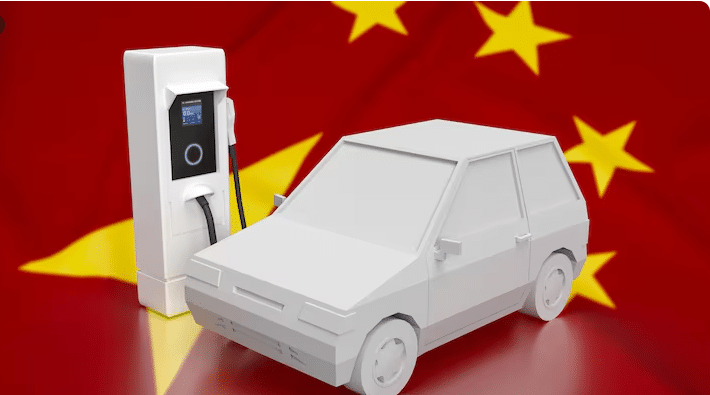
It is hard to overlook the geopolitical environment. It has become more challenging to rely on the US as a reliable trading partner due to escalating tariff pressure from the Trump administration. In its first year in office, Carney’s administration has been actively diversifying: energy agreements in Europe, new discussions with Korea and Japan, and now an opening to China that two years ago would have been politically unthinkable. As this develops, it seems as though Canada is doing what all middle powers eventually do when their biggest neighbor becomes unstable. It is a hedge. It just so happens that the hedge has a Chinese license plate on.
Nearly 400 dealers nationwide are planning inventory and staff training, and the first BYD and NIO showrooms have already begun to arrive in Vancouver and Toronto. When Canadian customers enter those showrooms, they will see figures on stickers they have never seen before, especially those who have been priced out of the EV transition for the past few years. Depending on the sector of the Canadian economy you work in, that may or may not be a good thing. The nation recently made a significant wager on more affordable automobiles and quicker electrification. Additionally, it is subtly wagering that the shock can be absorbed by its own industrial foundation. Years will pass before the answer to that becomes apparent.
