

A business that most people are unfamiliar with has more than $187 billion in assets in an unremarkable office space registered in the British Virgin Islands, which is more than the GDP of most nations. It’s not a central bank. It’s not a business bank. Neither is it governed. It issues a US dollar-pegged digital token, earns billions of dollars in interest each quarter on the US Treasury bills it purchases with client cash, and gives its clients no compensation for the right to keep their money. I’m Tether. And depending on who you ask, it is either one of the worst unregulated financial dangers now operating at scale or the essential foundation of the global crypto economy.
In its most basic form, the business concept is really straightforward. To obtain USDT, Tether’s dollar-pegged stablecoin, a customer or exchange must deposit US dollars. This allows them to trade cryptocurrency assets without having to convert back into fiat money. Tether invests those dollars, mostly in short-term US Treasury securities that earn between 4% and 5% per year.
The yield is maintained. Nothing is given to the USDT bearer. As of April 2026, there were approximately $187 billion in outstanding tokens. At current rates, interest income alone generates earnings of between $8 and $10 billion annually, which Tether verified in its Q3 2025 attestation. This margin structure makes traditional financial institutions appear inefficient in comparison to a business with fewer than 200 employees.
| Category | Detail |
|---|---|
| Market Capitalisation | Over $187 billion in USDT outstanding as of April 2026 — representing approximately 70% of the global stablecoin market |
| Incorporation | Primary operations conducted through entities registered in the British Virgin Islands and the Bahamas — jurisdictions with limited financial disclosure requirements |
| Q3 2025 Net Profit | Over $10 billion — generated primarily by investing customer USD deposits in US Treasury bills and other short-duration instruments while paying USDT holders zero interest |
| Reserve Composition | Primarily US Treasuries; also holds approximately 96,000 Bitcoin (valued at $8.4 billion+) and $12.9 billion in gold reserves (as of Q3 2025 attestation) |
| User Base | Over 350 million users across more than 200 countries; essential liquidity infrastructure for Binance, OKX, Bitfinex, and most major crypto exchanges globally |
| Regulatory Friction | EU’s MiCA stablecoin rules have caused several exchanges to delist or restrict USDT for European users; US regulators have raised questions about reserve transparency and illicit finance exposure |
| Reserve Audit Status | Tether publishes quarterly attestations (not full audits) from accounting firm BDO — critics argue attestations provide insufficient visibility into reserve quality and liquidity |
| Further Reference | Stablecoin market data and regulatory analysis at Centre Consortium and the BIS |
This is significant because of what it indicates about systemic risk. Tether, which accounts for almost 70% of all stablecoin transactions and is integrated into the trading infrastructure of all major exchanges, is the leading liquidity vehicle for cryptocurrency markets worldwide. On Binance, OKX, or Bitfinex, traders are very probably using USDT at some point when they switch between Bitcoin,
Ethereum, or any other asset. Tether engages in more than just cryptocurrency trading. It supplies the connective tissue that allows the majority of those markets to function. Financial authorities have been worried by this dependency for years, and it only becomes worse as the overall supply increases.
Throughout its whole life, Tether has been plagued by the reserve question. The business releases quarterly attestations, which are created by the accounting firm BDO and verify assets and liabilities at a certain moment in time but fall well short of a comprehensive audit. Academics that have researched stablecoin reserve arrangements are among the critics who contend that attestations don’t give enough details regarding the accessibility, liquidity, or quality of the underlying assets in a stressful situation.
In response, Tether has kept its peg in place during all significant market downturns, including the FTX collapse in 2022, without falling below $0.99. This is true in terms of facts. Nobody wants to conduct an empirical test to see if it holds true in more extreme circumstances than those that have yet been encountered.
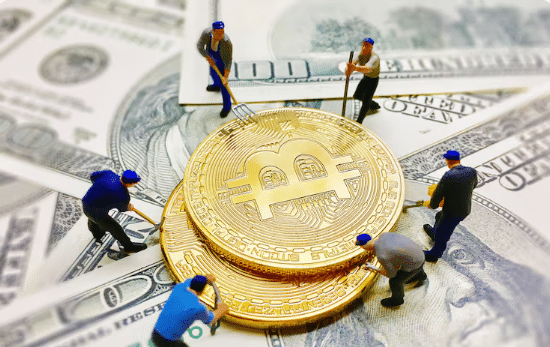
With approximately 96,000 Bitcoin and more than $12 billion in gold holdings as of its most recent attestation, the business has been diversifying its reserves into what it refers to as harder assets. According to the CEO of Tether, the goal is to create something like to a “borderless central bank” with a portfolio that cannot be frozen or taken over by a single nation.
As regulatory pressure mounts, there’s a feeling that this is more than just a financial strategy—it’s a conscious architectural decision about the kind of organization Tether wants to be. For European consumers, the EU’s MiCA framework has already resulted in limitations on USDT. The regulatory landscape in the United States is unpredictable and may change swiftly.
Whether the financial structure that has developed around Tether is truly solid or just unproven is still up for debate. The peg is still in place. The earnings are genuine. There is still a significant regulatory gap between what Tether does and what it must reveal about how it does it. Either a very successful financial operation or the next big idea that no one anticipated can be found somewhere in that gap.
