

Sandisk (NASDAQ: SNDK) and Kioxia Corporation announced on 27 August 2026 a joint Japan investment plan exceeding $31bn, or roughly 5 trillion yen, running through 2032. The companies described the spending as an extension of one of the industry’s most successful joint ventures, according to their joint statement.
The headline figure holds up. But it comes with a condition the companies’ framing glosses over: the money is contingent on Japanese government support that has not yet been confirmed, and the market’s reaction to the news was mixed at best.
A Japan investment plan with strings attached
The plan includes a new, third fabrication facility at Kioxia’s Iwate Prefecture site in Kitakami, aimed at advanced 3D flash memory for AI workloads, with Sandisk as manufacturing partner, the Japan Times reported. Of the six-year total, 1.8 trillion yen is earmarked specifically for the new fab, according to MarketScreener.
Nikkei Asia has separately reported that a related new production facility is expected to cost more than 1 trillion yen, or roughly $6.27bn, citing people familiar with the matter. The same report noted that Kioxia ranks third in the global NAND market, behind Samsung Electronics and SK Hynix — a detail that sits awkwardly alongside the companies’ “extending leadership” language.
This is not the first time Sandisk and Kioxia have locked in long-dated commitments this year. In January 2026 the pair extended their Yokkaichi joint venture through 2034, with Sandisk agreeing to pay Kioxia $1.165bn for manufacturing services in instalments between 2026 and 2029. Capital spending by the alliance had already been rising roughly 40% year-on-year, according to TrendForce, as Samsung and SK Hynix diverted resources toward high-bandwidth memory chips instead of NAND.
Shares fall despite the expansion news
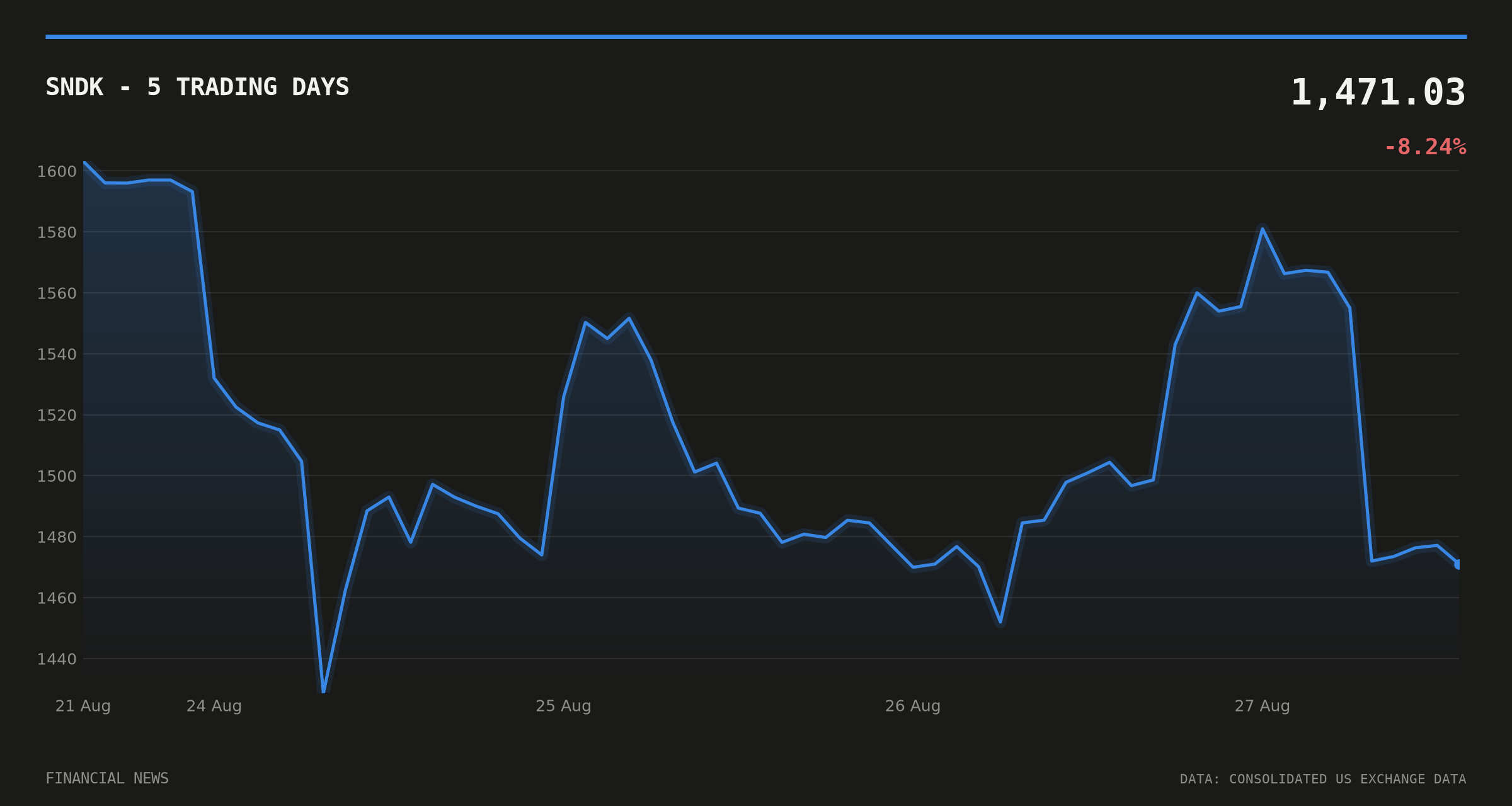
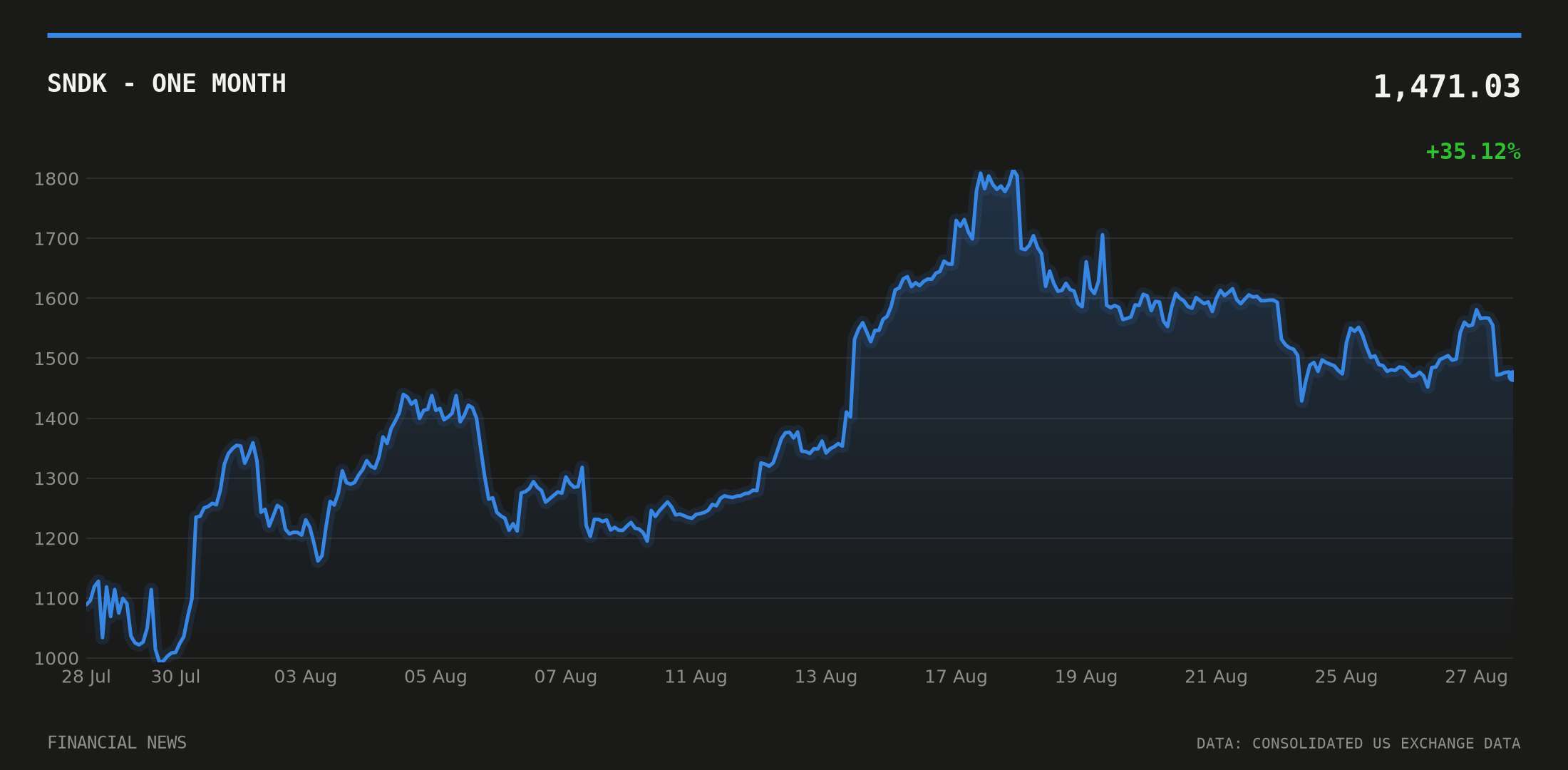
Sandisk shares fell 5.96% on the day, according to consolidated exchange data, even as the company unveiled its largest publicly disclosed capital commitment in Japan to date. The stock remains up 15.23% over the prior 20 trading days, but Wednesday’s session broke that momentum, with trading volume running slightly below its 20-day average.
Kioxia’s own shares moved the other way, jumping as much as 6.9% intraday, but they remain roughly 50% below their June peak, with analysts flagging oversupply risk from adding capacity just as AI-driven demand could cool, per BigGo Finance. As first reported by Noah Intelligence, Sandisk’s own stock slipped on the day of the announcement despite the scale of the Japan expansion, a divergence that undercuts any simple reading of the news as unambiguously bullish.
A business coming off a sharp turnaround
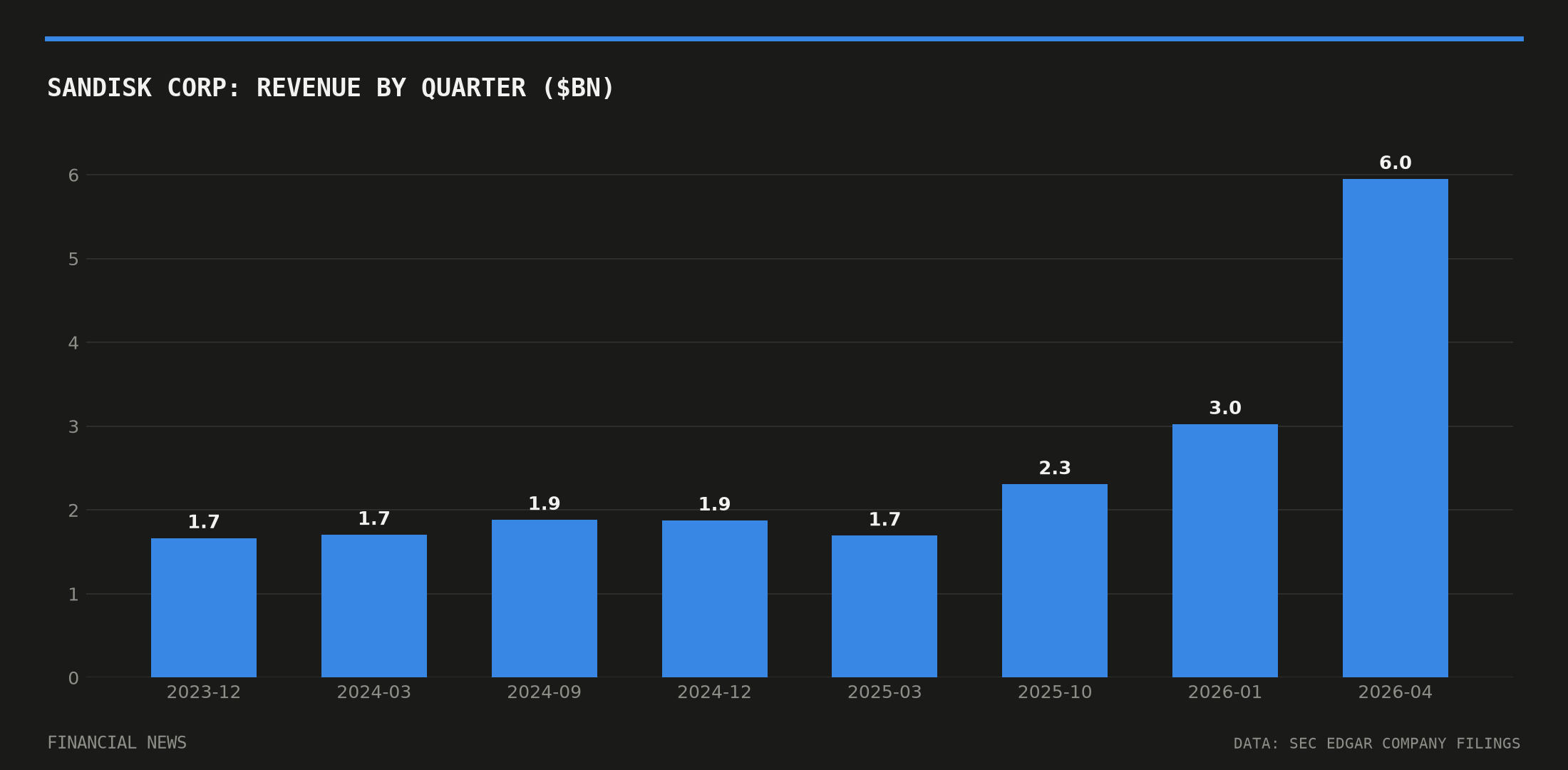
The investment plan lands as Sandisk’s underlying business swings from losses to record profits. The company reported net income of $3.615bn on revenue of $5.95bn for the quarter ended 3 April 2026, according to its 10-Q filing. That compares with a net loss of $1.933bn for the quarter ended 28 March 2025, filed with the SEC — a reminder of how volatile memory-chip earnings have been through the pricing cycle.
Three Form 4 filings from Sandisk insiders were lodged with the SEC on 24 August 2026, three days ahead of the Japan announcement, covering the issuer and two individual reporters. The filings do not disclose share or value figures, so no pattern of insider positioning ahead of the news can be established from the record. Separately, FINRA short-sale data show Sandisk’s daily short-volume ratio ranged between 0.378 and 0.472 in the ten trading days before the announcement, showing no unusual build-up in short positioning heading into the news.
What happens next
The Japan investment plan’s fate now depends on decisions in Tokyo rather than in Milpitas or Iwate. Government subsidy commitments, not yet finalised, will determine how much of the $31bn actually gets spent, and on what timetable through 2032. Investors will also be watching whether Kioxia’s stock, still roughly half off its June high, stabilises as the new Kitakami fab moves from announcement to construction — and whether Sandisk’s near-term earnings momentum survives a capital-spending programme of this size at a moment when NAND supply, not demand, is the industry’s biggest open question.
This article is for information only and is not investment advice or a recommendation to buy or sell any asset. Markets move quickly; figures are correct as sourced at the time of writing. Always do your own research before making financial decisions.
