
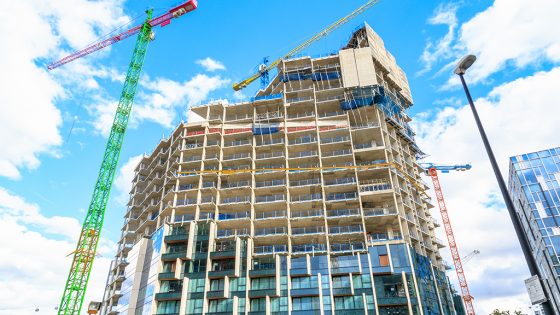

The Building Safety Regulator (BSR) faces criticism for extending nearly half of refurbishment applications beyond the eight-week limit.
- The BSR, now responsible for higher-risk building approvals, rejected 42% of applications received by the end of June.
- High-rise refurbishments continued to clog up the system, with only 5% decided within the statutory timeframe.
- Incomplete and unclear applications contributed to a backlog, with many applications lacking basic information.
- The BSR implements measures to improve the building-control approval process amidst operational challenges.
The newly established Building Safety Regulator (BSR) has extended nearly half of high-rise refurbishment applications beyond the prescribed eight-week time frame by the end of June, as revealed by building-safety minister, Rushanara Ali. The BSR, tasked with overseeing construction plans for higher-risk buildings (HRBs), has rejected over two-fifths, or 42%, of the applications submitted as of June.
Since April, the responsibility for approving construction plans for HRBs has fallen under the BSR’s purview. An HRB is defined as a structure standing taller than 18 metres or consisting of at least seven storeys, and containing a minimum of two residential units. The BSR is mandated to make determinations on refurbishment applications within eight weeks, with a 12-week period allocated for new-build applications.
In response to a parliamentary question posed by Labour MP Jenny Riddell-Carpenter, Ali outlined that by the close of June, the BSR had sanctioned extensions for 271 out of 606 refurbishment applications, equating to 45%. Merely 12 applications were resolved within the official timeframe, accounting for less than 5% of those processed.
The BSR, facing a backlog, had yet to address 335 applications, many potentially submitted within eight weeks of Riddell-Carpenter’s inquiry. In terms of new-builds, only 22 extensions were agreed upon compared to four decisions made within the 12-week statutory period.
Out of the 606 refurbishment submissions, 260 were outright rejected. Applications often faced invalidation instead of formal refusal, primarily when basic compliance documentation was not provided. The BSR has repeatedly stressed that many applications are deficient in ‘basic information’.
Furthermore, by the end of June, the BSR had not issued or rejected any Building Assessment Certificates (BACs) despite receiving 230 sets of documentation. These certificates, a requirement post-Grenfell, demand detailed safety risk management data from building owners. Specific high-risk residential buildings necessitating a BAC include those with combustible cladding or constructed with large panel systems.
A BSR spokesperson acknowledged the necessity for ‘operational contingency measures’ following an unforeseen surge in applications, subsequently causing processing delays. The spokesperson highlighted the influx of incomplete or vague applications which hindered the approval process.
By 16 September, over 40% of 808 HRB building approval applications were invalidated or rejected due to their inability to fully comply with building regulations. The spokesperson further explained that both invalidated and rejected applications required similar resources as those that were approved, underscoring the need for clear and comprehensive submissions to expedite decisions and ensure compliance.
Ali expressed an expectation that as new regulatory requirements and processes become more familiar, application processing timelines will improve, thus enhancing building safety and averting recurrence of past tragedies like Grenfell.
The BSR is actively working to streamline building safety processes while facing operational hurdles.

