
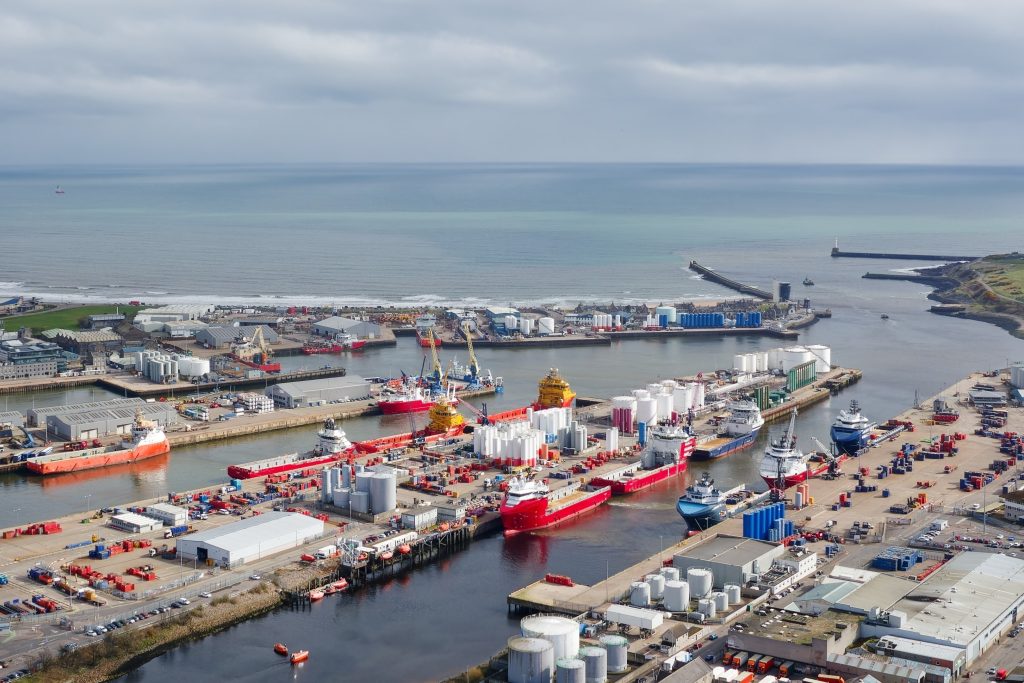

Port of Aberdeen has launched an ambitious £4M shore power venture aiming to supply clean electricity to docked vessels, a pioneering move in the UK marine industry.
- This innovative ‘Shore Power in Operation’ demonstrator project is among the first in the nation, with operations scheduled to commence by March 2025.
- The project benefits from matched funding by the Department for Transport, emphasising its strategic importance in reducing maritime carbon footprints.
- Implementation involves advanced technology, including grid-connected modular systems, to significantly cut down on emissions and pollution from berthed ships.
- Port of Aberdeen’s commitment to sustainability is further underscored by its investments aimed at attaining net-zero status by 2040, reflecting a broader vision for greener infrastructure in maritime operations.
The Port of Aberdeen has embarked on a groundbreaking £4M project intended to supply clean electricity to vessels at berth, marking a significant stride in the UK’s maritime sector. This initiative, titled ‘Shore Power in Operation’, represents one of the first of its kind across the nation, with an operational target set for March 2025. Backed by the Department for Transport through the £80M Zero Emissions Vessels and Infrastructure competition, the project underscores the commitment to minimising environmental impact in maritime activities.
The shore power system, also referred to as ‘cold-ironing’, is being established by PowerCon and involves connecting the modular shore power system directly to the grid. Strategically placed quayside connection points, facilitated by mobile cable reels, will enable vessels to access this clean power. This infrastructure equips ships docked at the Port of Aberdeen’s Albert and Mearns Quays to switch off their engines, resulting in over an 80% reduction in carbon emissions when contrasted with traditional marine gas oil usage. Furthermore, this innovation significantly diminishes the expulsion of harmful particulates, nitrogen oxides (NOx), and sulphur oxides (SOx), while also reducing noise pollution.
The project is a collaborative effort involving esteemed partners such as Connected Places Catapult, DOF Subsea, Tidewater Marine UK, OSM Offshore, the University of Manchester’s Tyndall Centre, and Buro Happold. These collaborations aim to evaluate both the land-side and vessel-side power infrastructures’ construction and performance, complemented by a commercial analysis focused on the financial and socio-economic advantages accessible to the port and its stakeholders. Building on a prior feasibility study, the consortium is keen to analyse the broader impacts of shifting to sustainable energy solutions within port operations.
Port of Aberdeen’s ambitious pursuit of becoming the UK’s foremost net-zero port by 2040 is exemplified by its substantial investment plans, projecting up to £55M over the next ten years. Chief Executive Officer Bob Sanguinetti highlights this development as “a great example of public and private partnership to drive forward advances in delivering green infrastructure for ports”. The port’s active participation in three out of the ten projects supported by the DfT’s ZEVI competition further illustrates its leading role in pioneering sustainable energy initiatives.
Peter Selway from PowerCon lauds Aberdeen as a frontrunner in renewable and sustainable energy advancements, anticipating significant environmental and commercial benefits for the port, adjacent wildlife, and the local community. Besides, the port’s involvement extends to other ZEVI-backed projects, such as Bibby Marine’s creation of the world’s first zero-emission electric Commissioning Service Operation Vessel (eCSOV) and Cummins Inc’s development of a methanol conversion kit for marine engines. This demonstrates a comprehensive commitment to adopting cleaner and more efficient technologies across the sector.
The Port of Aberdeen is poised to set new standards in maritime sustainability with its pioneering shore power project.

