
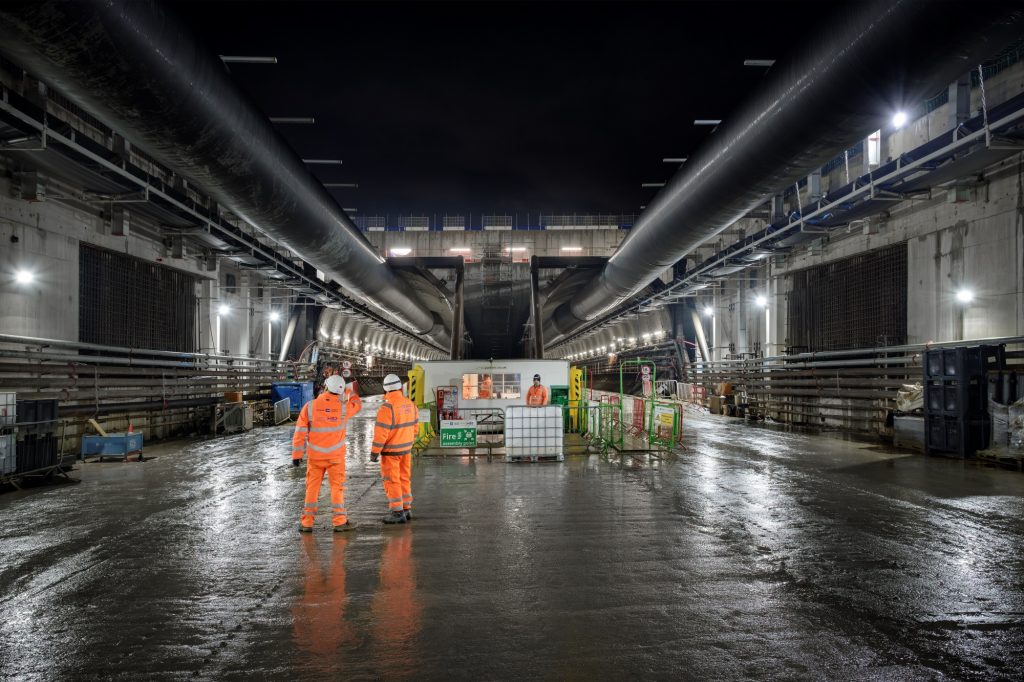

The construction of the Northolt Tunnel marks significant progress in London’s HS2 project, reaching its halfway point.
- The 13.5km twin-bore Northolt Tunnel is being excavated with four tunnel boring machines by Skanska Costain Strabag JV.
- TBMs Sushila, Caroline, Emily, and Anne have collectively progressed 13.5km since launching from West Ruislip and Victoria Road Crossover Box.
- The project involves excavation of 27km in total, making it the second longest tunnel on the HS2 route.
- Material excavated is being used to remodel local areas and create new green spaces in affected communities.
The HS2 project in London has achieved a noteworthy milestone with the Northolt Tunnel reaching its halfway point. Skanska Costain Strabag JV, the main contractor for the project, is utilising four sophisticated tunnel boring machines (TBMs) for the 13.5km twin-bore tunnel. Two TBMs commenced from West Ruislip, working on the 8km Northolt Tunnel West, while another pair started at the Victoria Road Crossover Box, tasked with the 5.5km Northolt Tunnel East.
These machines—named Sushila, Caroline, Emily, and Anne—have collectively excavated 13.5km to date. This extensive tunnelling operation is a part of the ambitious HS2 initiative, which will ultimately create the second longest tunnel on its route. The TBMs advance at an average of 16m each day, installing precast segments and grouting them during the process. The completion of this phase is a testament to the engineering prowess being applied to one of the most extensive infrastructure projects currently underway in the United Kingdom.
Upon arrival at the Green Park Way vent shaft in Greenford, these machines will be retrieved sequentially. Notably, the first TBM to emerge will be Sushila, expected later in 2024, followed by the other machines in 2025. A specially-designed steel can will be used to extract the TBMs, preventing water ingress and ensuring the integrity of the tunnel remains uncompromised post-extraction.
Concurrently, SCS engineers are working on other critical elements of the tunnel such as cross passages, vent shafts, and headhouses. There are plans for five vent shafts along the Northolt Tunnel, which will serve the dual purpose of providing ventilation and emergency access once the tunnel becomes operational. This meticulous planning underscores the project’s complexity and the multifaceted nature of tunnel construction.
In addition to tunnel excavation, the project is actively contributing to local improvements. Nearly 2 million tonnes of earth removed by the TBMs are being repurposed for environmental enhancements. This includes reshaping the Copthall Green Tunnel area and transforming a local golf course that has been affected by HS2 works. Further, some of the excavated clay from the east section is transported to the London Logistics Hub, and then moved by rail for use in environmental projects in Rugby, Kent, and Cambridgeshire.
While the Northolt Tunnel is advancing, preparations are also underway for the subsequent 7.2km Euston Tunnel. Though currently paused, dialogues with the government are ongoing to secure the necessary approvals and funding. Two additional TBMs are due to arrive in the UK and will be stationed at the Old Oak Common, ready to be deployed when official clearance is granted. This forward-looking approach reflects the continuance of HS2’s mission to evolve Britain’s railway network.
The Northolt Tunnel’s halfway mark exemplifies the significant engineering progress on the HS2 project and sets the stage for future developments.

