
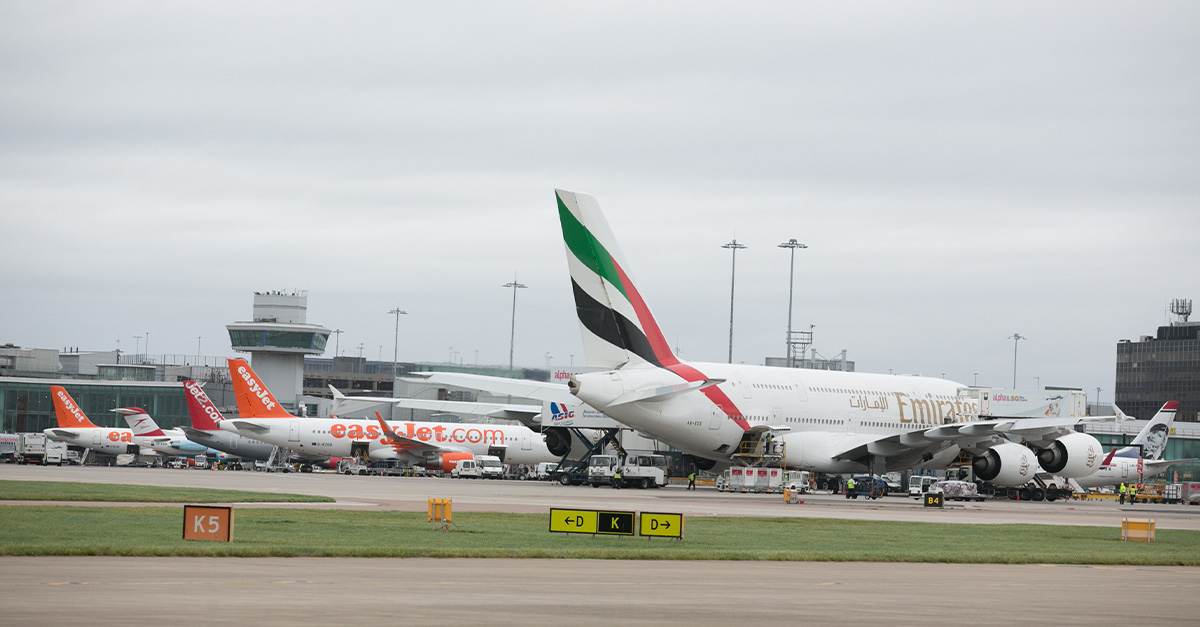

Manchester Airports Group has reached an impressive milestone by surpassing its pre-Covid passenger numbers, indicating strong recovery. This development marks a pivotal moment in the UK’s aviation sector.
Record Passenger Numbers Surpass Pre-Pandemic Levels
Manchester Airports Group (MAG), which manages Manchester, Stansted, and East Midlands airports, has for the first time exceeded its passenger numbers from the years prior to the Covid-19 pandemic. In the past financial year, these airports collectively handled a total of 61.3 million travellers. This marks a significant milestone, indicating robust recovery and growth in the aviation sector.
Revenue and Profit Surge
During this period, MAG reported an impressive operating profit of £240.1 million, a substantial increase from the previous year’s £28.6 million. The adjusted earnings before interest, taxes, depreciation, and amortisation (EBITDA) also saw a notable rise, escalating by 23% to reach £507 million. This was based on a total revenue of £1.2 billion, underscoring the financial health and operational efficiency of the group.
This dramatic financial performance is attributed to the rising demand for air travel as well as strategic operational improvements made by MAG.
Individual Airport Performance
Stansted Airport was the first major UK hub to surpass pre-pandemic traffic numbers, achieving 28.5 million passengers in July 2023. This figure represents a 12% year-on-year increase, equating to 106% of the traffic it handled prior to the pandemic.
Manchester Airport also witnessed significant growth with a 14% rise in passenger numbers, totalling 28.8 million for the year. This is equivalent to 102% of its pre-pandemic traffic levels, demonstrating its strong recovery trajectory.
In contrast, East Midlands Airport recorded a 21% increase in passenger numbers to reach four million, indicating it is still on a path to reach its pre-pandemic traffic figures, achieving 89% of those levels.
Expansion of Route Networks
The route networks across the three airports have shown continuous growth, significantly boosted by low-cost carriers like Ryanair, Jet2, easyJet, and TUI. Moreover, British Airways has returned to Stansted, enhancing connectivity options for passengers.
This expansion not only improves passenger choice but also strengthens the position of MAG in the competitive aviation market.
Future Investments and Strategic Plans
MAG’s strong performance lays a solid foundation for future developments, and in partnership with airlines, they are committed to investing £2 billion over the next five years on capital expenditure across its airports. This strategic investment aims to enhance infrastructure and service quality, catering to the increasing demand for air travel.
According to MAG’s chief executive, Ken O’Toole, the group is poised to support a new industrial strategy aimed at fostering balanced and competitive economic growth in the UK.
Commitment to Environmental Goals
MAG has reaffirmed its commitment to sustainability, playing a pivotal role in transitioning to net zero carbon aviation by 2050. Their focus remains steadfast on reducing environmental impact while supporting economic growth.
As an island nation heavily reliant on aviation, the UK sees this commitment as essential to maintaining global trade and economic connections.
Ken O’Toole emphasised the importance of aviation in creating high-quality jobs and enabling global trade, investment, and tourism, highlighting its critical role in the UK’s economic strategy.
Collaborative Efforts with the Government
With the anticipation of a new government, MAG is keen to collaborate on developing an industrial strategy that underpins sustainable aviation growth. This partnership is seen as crucial for realising the full potential of the aviation sector in driving economic development and maintaining the UK’s global connectivity.
The record-breaking passenger numbers at Manchester Airports Group herald a promising future for UK aviation. Investment in infrastructure and sustainable growth strategies are set to further enhance connectivity and economic development.

