
An Italian Apple store strike disrupted 17 outlets on 18 September 2026, the day the iPhone 18 Pro went on sale worldwide.
More than 1,600 employees took part, according to a report from CGIL Catania, with pickets outside flagship stores in Rome and Milan.
Why the Italian Apple store strike happened now
Three unions – Filcams CGIL, Fisascat CISL and Uiltucs – called the national one-shift strike, timing it to the arrival of the new iPhone generation in Italian stores, according to a Filcams CGIL press release.
Workers cited understaffing, rising workloads and increasing overlap of job duties, grievances confirmed at assemblies held on 7 September 2026, as reported by MilanoToday. Sky TG24 independently confirmed the three unions had proclaimed the full-shift walkout for 18 September.
Apple (NASDAQ: AAPL) said its retail and online stores in Italy operated normally despite the action, as first reported by Reuters. The wire also noted Apple’s first foldable phone, the Duo, is due on the market on 23 October 2026.
A pattern beyond Italy
The dispute echoes a similar walkout in France around the iPhone 15 launch, when unions struck over pay, according to Gulf News. European retail staff have repeatedly used flagship launch days to press grievances that management says do not affect trading.
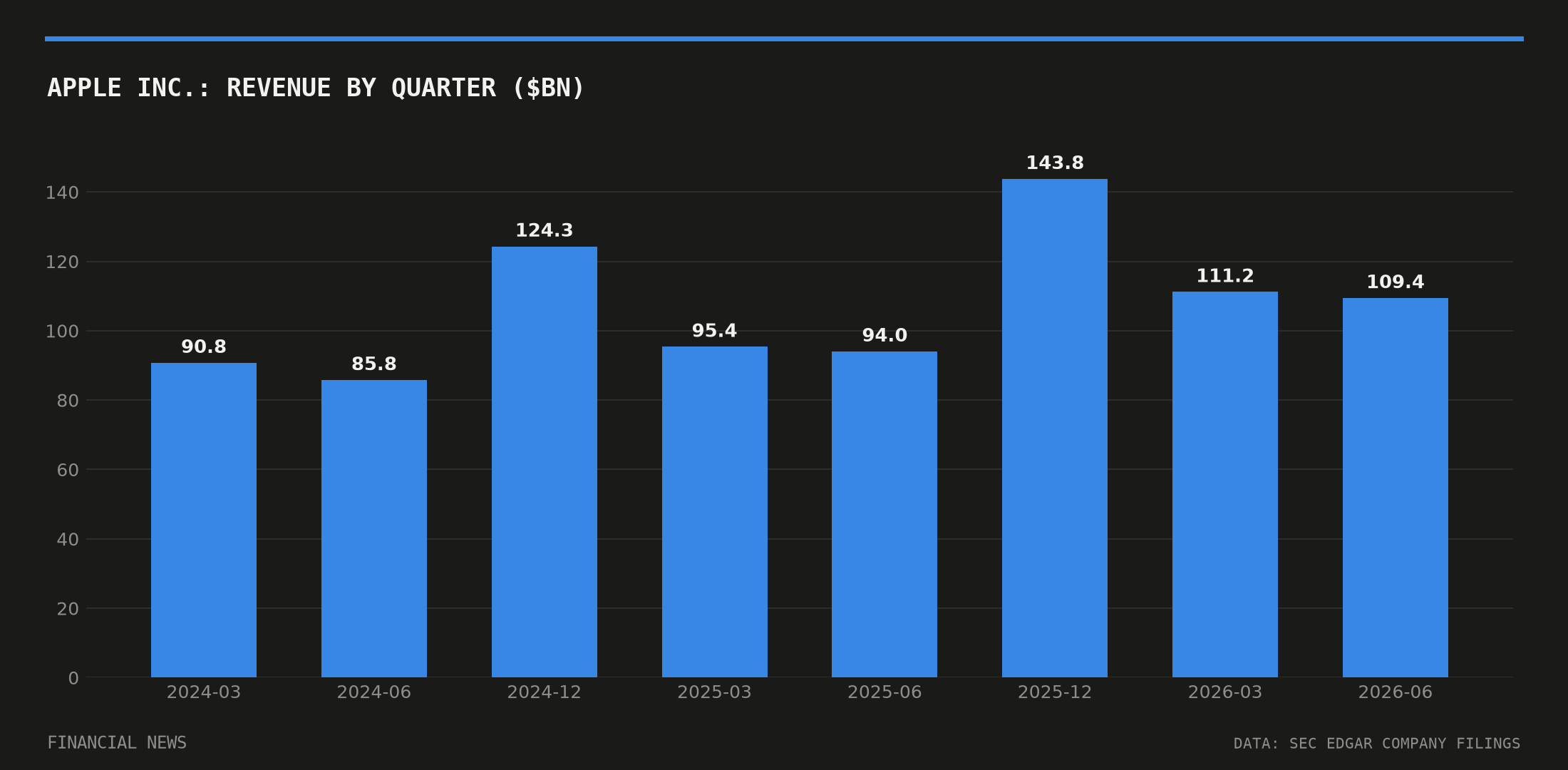
The strike lands as Apple’s most recent quarterly filings show continued growth. The company reported net income of $29,789m on revenue of $109,417m for its fiscal third quarter, the three months to 27 June 2026, according to its 10-Q filed with the SEC. That followed a stronger fiscal first quarter, when net income reached $42,097m on revenue of $143,756m for the three months to 27 December 2025, a period that captured the bulk of holiday-season iPhone sales, per Apple’s filing for that period. Diluted earnings per share came to $2.02 in the third quarter, down from $2.84 in the first quarter but broadly in line with the $2.01 posted in the second quarter to 28 March 2026, according to the same set of filings. Union statements have pointed to that scale of profit when pressing staffing demands, arguing that workload pressures have grown alongside the company’s retail expansion.
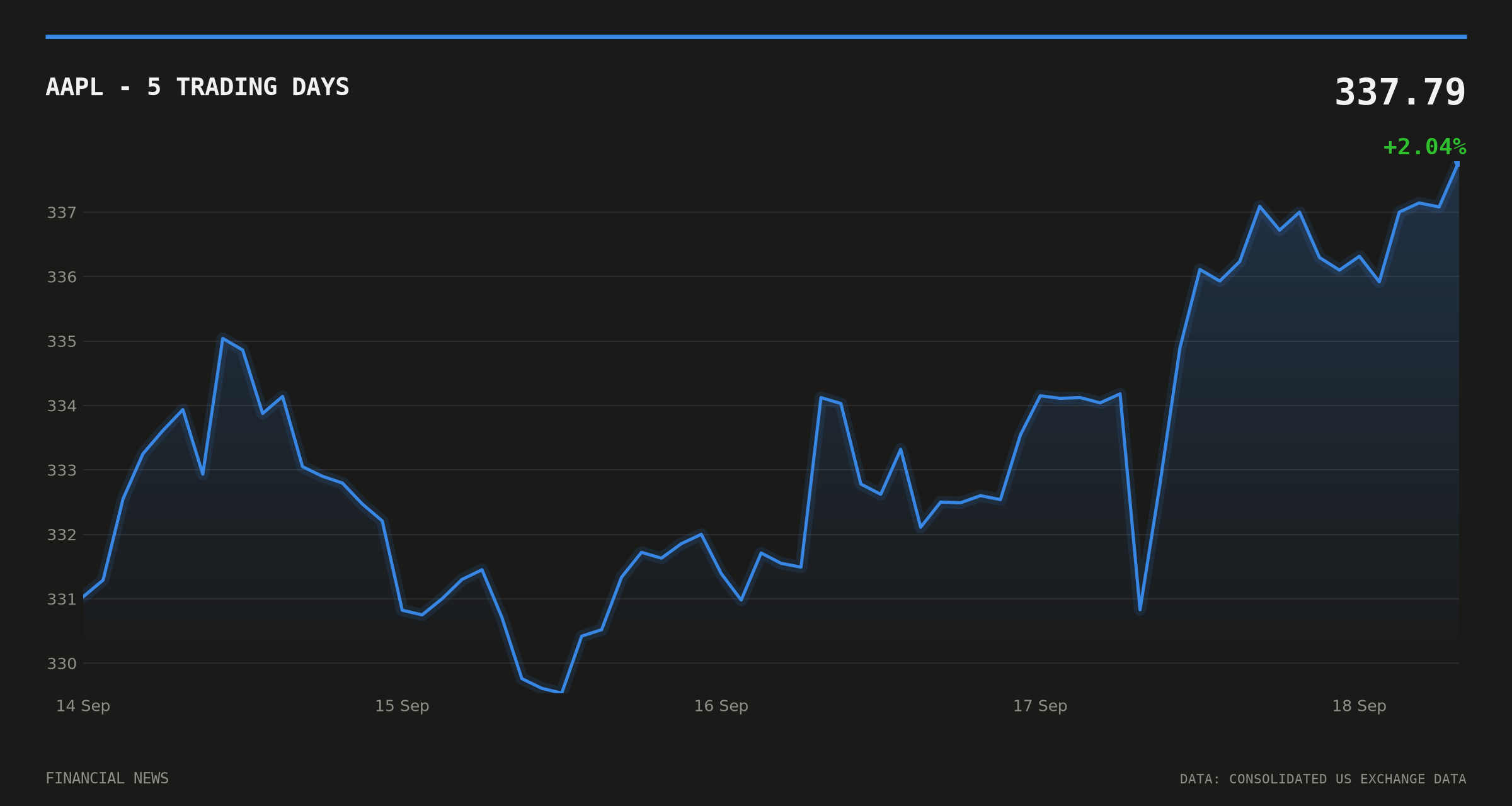
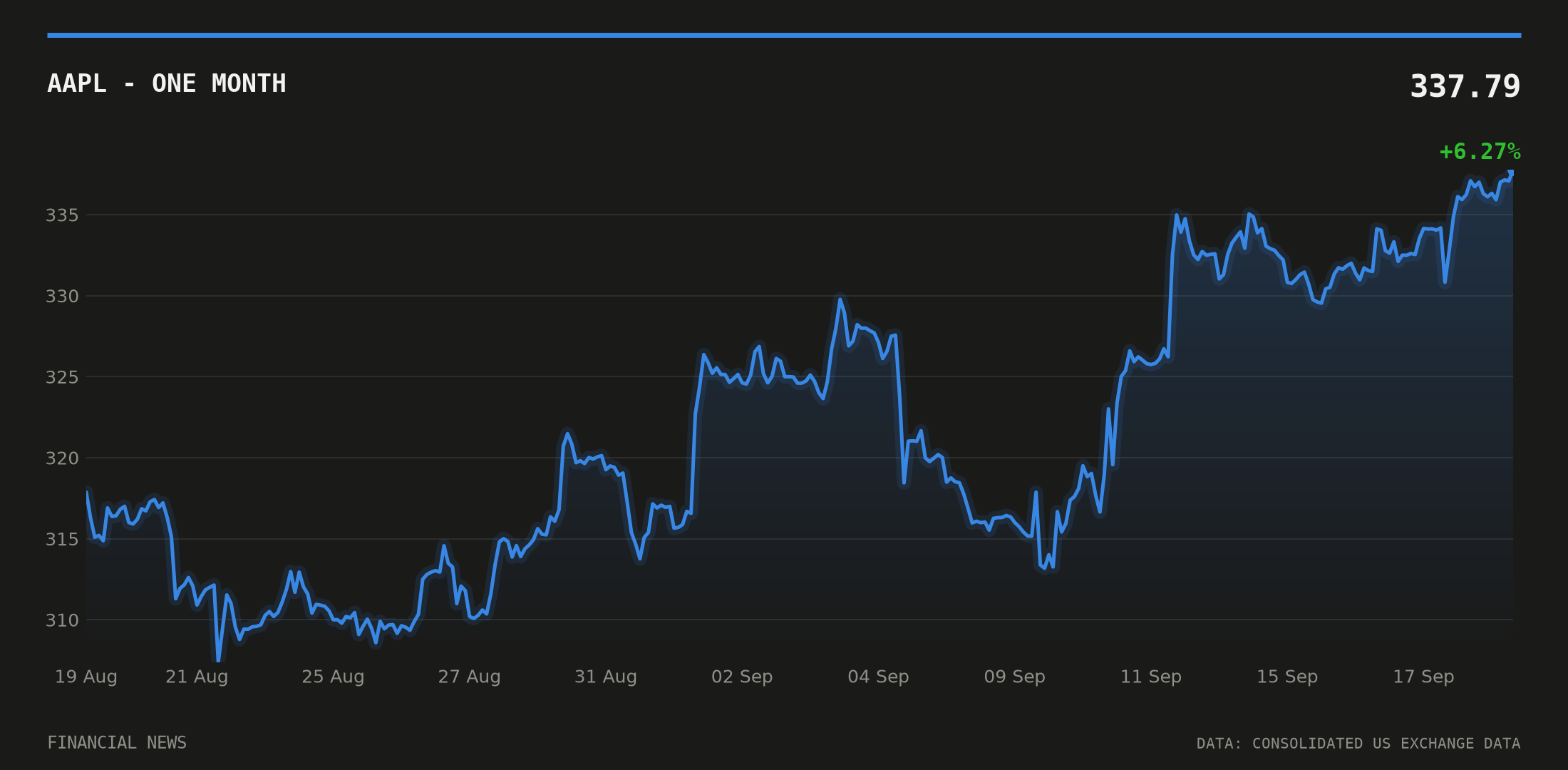
Apple shares closed at $337.57 as of the strike-day snapshot, up 0.38% on the day and roughly 5.26% higher over the prior 20 trading sessions, according to consolidated US exchange data. Daily short-sale volume on the stock had eased slightly into the strike, with FINRA’s ratio at 0.586 on 17 September, down from a high of 0.633 earlier in the month, according to FINRA daily short-sale volume data.
The action also coincided with routine corporate paperwork unrelated to the dispute: Apple General Counsel Jennifer Newstead filed a Form 4 with the SEC on the evening of 17 September, disclosing insider-ownership changes, according to EDGAR records. The filing carries no connection to the Italian labour action.
Broader market conditions offered a steady backdrop to the launch-day disruption. The 10-year US Treasury yield stood at 5.01% and the two-year at 4.74% in the days around the strike, with the 10-year/2-year spread holding at 0.27 percentage points, according to Federal Reserve Bank of St Louis data. US unemployment held at 4.1% in August, unchanged from the prior month, separate Federal Reserve data show.
Apple has not said whether it will make changes to Italian retail staffing levels. The three unions have not announced further action, but the pattern of tying strikes to launch-day publicity – now repeated across at least two major European markets – suggests staffing disputes could resurface around future product cycles, including the Duo’s October debut.
This article is for information only and is not investment advice or a recommendation to buy or sell any asset. Markets move quickly; figures are correct as sourced at the time of writing. Always do your own research before making financial decisions.