

Near Bankplassen in Oslo, there is an unremarkable office building with a grey Nordic facade that you would pass by without giving it a second glance. Inside, a few hundred risk officers, analysts, and portfolio managers spend their days determining who gets to continue constructing factories, drilling wells, refining chips, and renting out skyscrapers on behalf of five and a half million Norwegians. Approximately 1.5 percent of all listed companies worldwide are owned by them. They surpass France’s GDP. Furthermore, very few people outside of finance are able to identify the person in charge.
The peculiar power of a sovereign wealth fund is essentially that. Since 1990, the Norway Government Pension Fund Global has been managing approximately $2.1 trillion in state oil funds, which have been continuously directed offshore to prevent Norway from becoming overly wealthy. The official justification was always macroeconomic, avoiding what economists refer to as “Dutch disease,” which is the gradual decay that occurs in a nation when oil money returns to the domestic economy and pushes out all other factors. However, the result is a fund that now has a greater financial burden than the majority of nations worldwide. It purchases shares in Saudi Aramco, Apple, and Nestlé. It pushes boards to disclose information about climate change. It doesn’t need to speak loudly at this size, so it speaks softly.
| Fund | Norway Government Pension Fund Global (GPFG) |
| Manager | Norges Bank Investment Management |
| Approximate AUM (2025) | $2.1 trillion |
| Approximate GDP of France (2025) | $3.0 trillion (broadly comparable order of magnitude to top SWFs) |
| Founded | 1990 |
| Funding source | Surplus oil and gas revenues |
| Holdings | Equities, fixed income, real estate, renewables |
| Companies invested in | ~9,000 globally |
| Public ownership | Citizens of Norway |
| Governance oversight | Norwegian Ministry of Finance, Storting (parliament) |
| Comparable peers | China Investment Corp, ADIA, Kuwait Investment Authority, GIC Singapore |
| Total global SWF AUM (2025) | Roughly $14 trillion (top 50 funds, per academic estimates) |
| Disclosure standard | Santiago Principles (voluntary) |
The sovereign wealth phenomenon in general is uncomfortable because of the Norwegian model’s exceptional cleanliness. Norway sets the regulations. A budget gap cannot be filled by raiding the fund. Its ethics committee has the authority to blacklist coal majors, tobacco companies, and manufacturers of weapons. The Storting publicly debates its mandate. When you contrast that with the murkier corners of the Gulf, the more opaque branches of China’s state investment apparatus, or the Russian Direct Investment Fund, you start to understand why a recent paper in the Journal of Risk and Financial Management estimated that the world’s top 50 sovereign funds collectively manage somewhere over $14 trillion and referred to the question of who actually controls them as “unresolved.” That word is very effective.
The question that doesn’t quite fit into a finance textbook is the deeper one. By definition, a sovereign wealth fund operates outside of the typical democratic political feedback loop. The fund vanishes into a multi-decade investment horizon where the next election is essentially meaningless after the voters elect the parliament and the parliament drafts the mandate. The point is that. Election cycles have no bearing on patient capital. However, it is also the cause of the discomfort. The lack of direct public accountability begins to feel more like a structural feature than a bug when a single fund can quietly change who owns what across continents, pressure a board into altering its emissions targets, and move stocks by simply walking in the door.
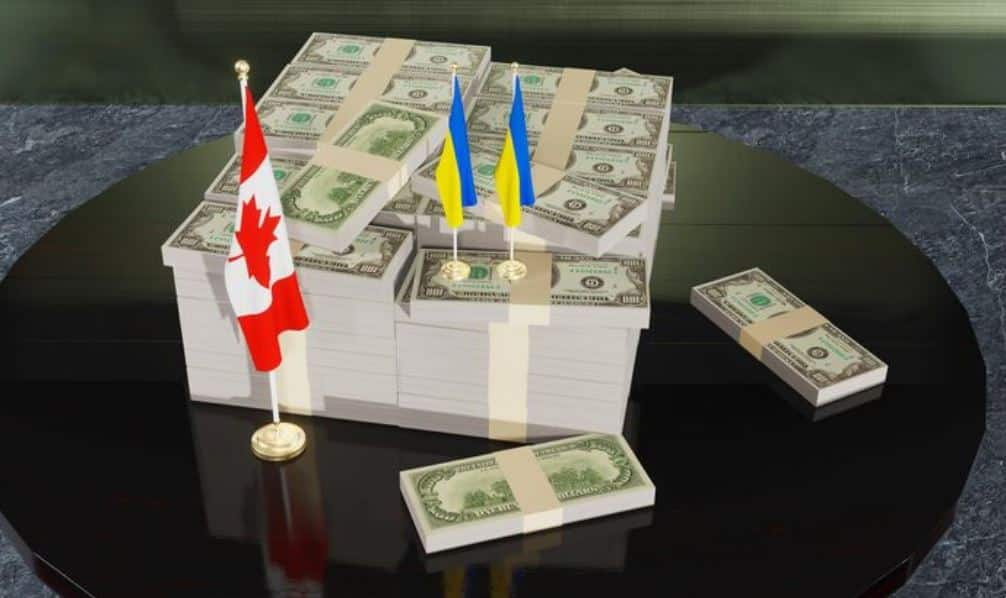
It was instructive to watch Canada attempt to introduce its own version of this last week. When introducing the Canada Strong Fund in Ottawa, Mark Carney made extensive use of the Norway analogy—a comparison that all politicians try to make. However, Norway used surplus to build its fund. With a deficit on the books and tariffs from Washington pushing in from the south, Canada is building one with borrowed funds. Never one to miss a rhetorical opportunity, Pierre Poilievre referred to it as a “sovereign debt fund,” which was at least partially accurate. Even Gareth Davies, a recent writer from Harvard’s Kennedy School, presented the argument in a more tactful manner. He maintained that fiscal capacity and wealth are not the same thing. A lot of heavy lifting is being done by the label.
The contradiction at the heart of all of this is difficult to ignore. To remove politics from finance, the biggest sovereign wealth funds were established. to protect the country’s savings from the temptations of any one government, time period, or crisis. In many respects, that insulation is the whole reason they function. Nevertheless, the very thing that shields them from politics also causes them political discomfort as they develop into trillion-dollar organizations with seats on international cap tables and whisper-power over significant boards. They are public funds acting like private capital, controlled by laws that most voters don’t understand, and managed by individuals that most voters can’t identify.
Perhaps that is the agreement a nation makes when it chooses to invest its windfall rather than spend it. Perhaps this is the only way long-term capital can endure in short-term democracies. But as you pass that peaceful Oslo office, you get the impression that the world has created something that it is still unsure of how to manage. The trillions do exist. The governance has yet to catch up.
