

Hewlett Packard Enterprise (NYSE: HPE) said its AI systems order backlog reached $7.6bn in the fiscal third quarter ended 31 July 2026, up from $6.8bn the prior quarter, as demand continues to outpace what it can ship.
The company booked $3.1bn of new AI orders in the quarter alone, according to The Motley Fool, but AI systems revenue for the same period came to only around $1.6bn, a gap chief executive Antonio Neri attributed to constraints in memory supply.
Orders outrun the supply chain
Neri told analysts on the earnings call that shortages of DDR5 memory, NAND and wafer capacity continue to limit how quickly HPE can turn AI orders into shipped, billable systems, as reported by The Motley Fool’s transcript of the call.
He warned the tightness could persist for longer, with implications for component costs and pricing across the industry, not just at HPE.
The bottleneck is not one HPE can easily engineer around. Memory supply is concentrated among three producers – Samsung, SK hynix and Micron – which together hold more than 90% of DRAM revenue share, according to an SK hynix SEC filing. SK hynix’s own internal analysis suggests the current shortage cycle could run until 2028, Notebookcheck reported, framing HPE’s problem as an industry-wide allocation issue rather than a company-specific stumble.
Record quarter, still constrained
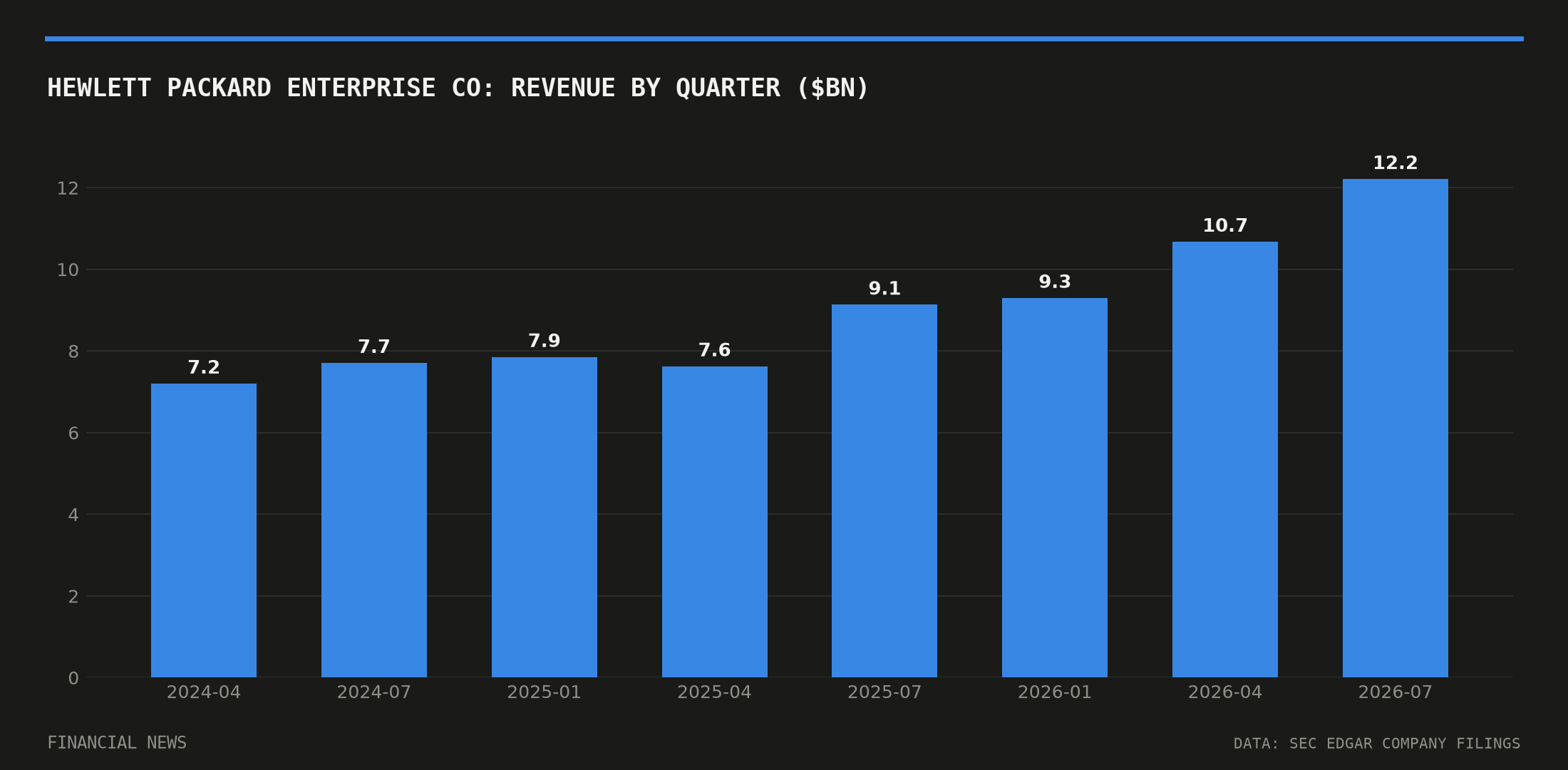
The backlog strain sits alongside what was otherwise a standout quarter. HPE’s 10-Q, filed with the SEC on 3 September 2026, showed revenue of $12,213m, diluted earnings per share of $1.06, and net income of $1,540m for the three months to 31 July.
Revenue has climbed steadily: $7,627m in fiscal Q2 2025, $9,136m in Q3 2025, $9,301m in Q1 2026, $10,678m in Q2 2026, and $12,213m in Q3 2026.
Free cash flow reached $958m in the quarter, HPE’s highest third-quarter figure on record, Yahoo Finance reported. Diluted EPS has also moved unevenly across recent quarters, from a loss of $0.82 in fiscal Q2 2025 to $1.06 now, reflecting swings in charges and mix as much as underlying demand.
Shares near 20-day highs
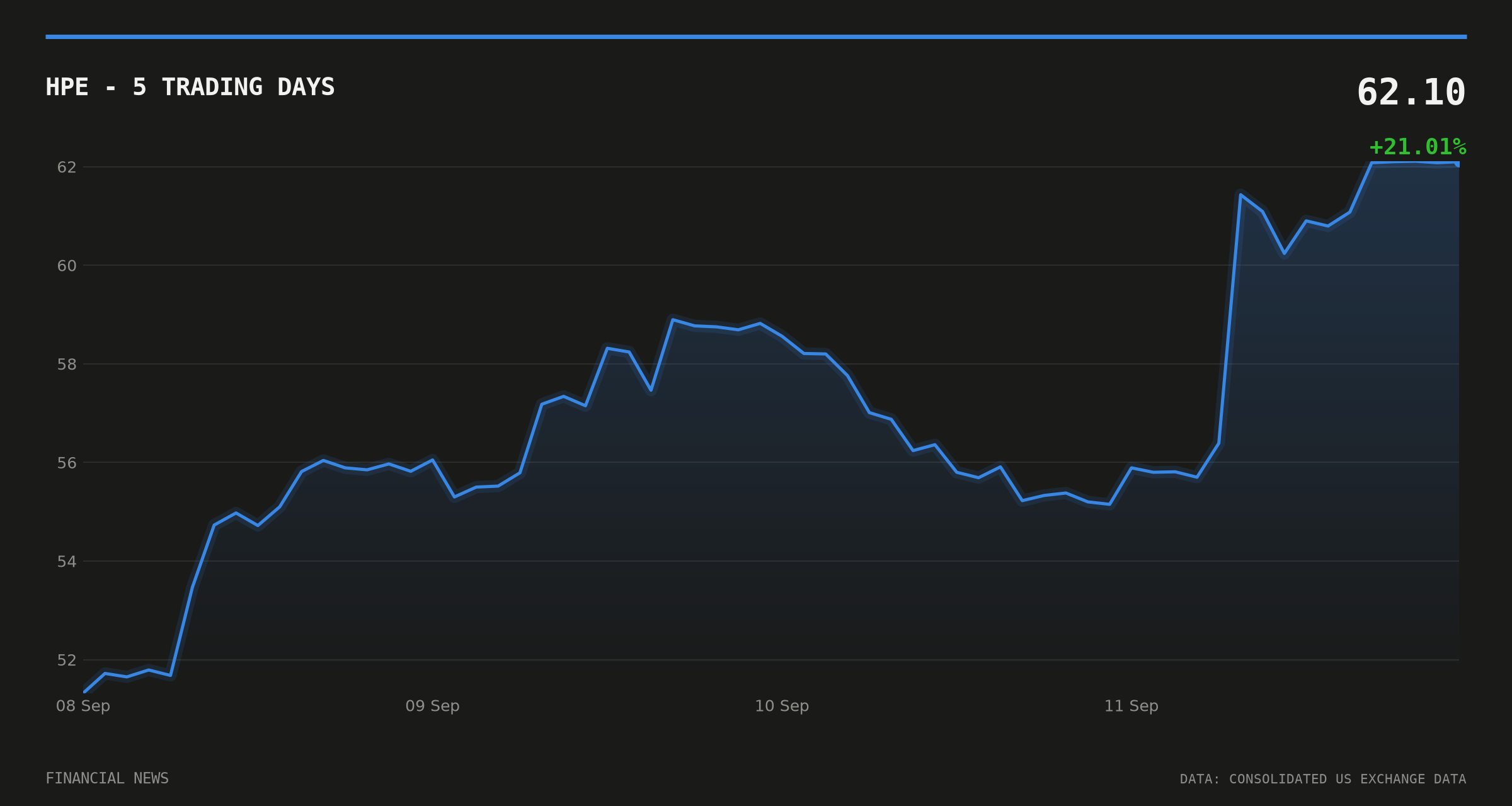
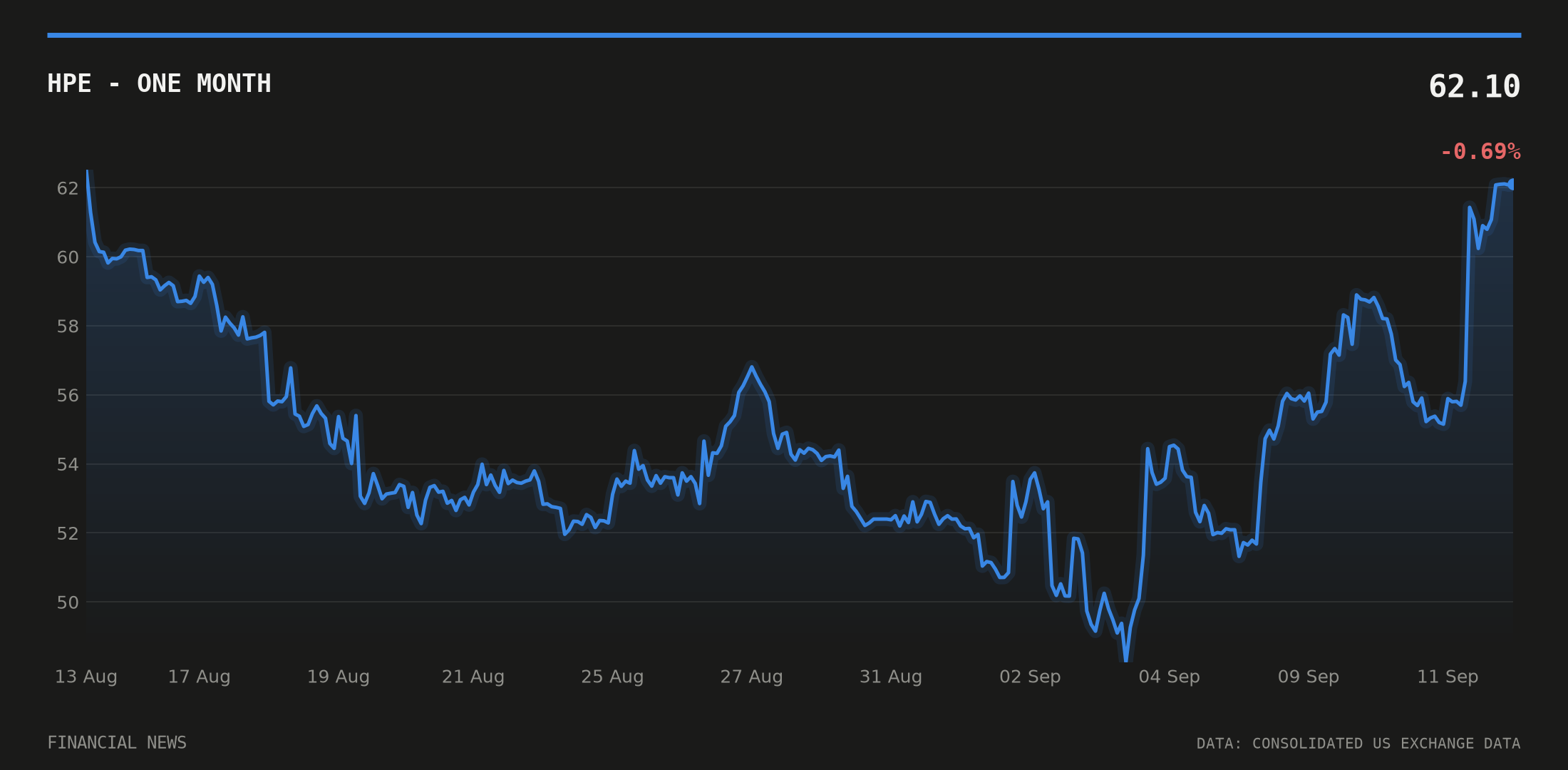
HPE shares closed at $62.10 on 11 September 2026, up 1.97% on the day and 17.55% over the prior 20 sessions, within touching distance of their 20-day high of $62.11. Trading volume ran 1.59 times the 20-day average, consistent with a stock digesting fresh earnings detail rather than one under acute selling pressure.
FINRA’s daily short-sale ratio for HPE held in a range of roughly 0.31 to 0.66 through late August and early September, showing no unusual build-up in bearish positioning around the backlog and supply-constraint headlines, per FINRA data.
What the backlog gap means next
The arithmetic is the story: a $7.6bn AI order book sitting behind roughly $1.6bn of quarterly AI revenue means HPE’s near-term growth trajectory now depends less on its own sales execution than on memory allocation decisions made in Korea, Idaho and elsewhere. Investors watching HPE’s next quarterly disclosures will be looking for whether the backlog keeps widening against shipped revenue, or whether memory supply begins to loosen enough to let conversion catch up.
Broader financing conditions add a further variable. The 10-year US Treasury yield rose to 4.95% by 10 September 2026, from 4.83% previously, according to FRED data from the Federal Reserve Bank of St. Louis, a backdrop that raises the cost of the capital-intensive data-centre build-outs underpinning AI demand industry-wide.
This article is for information only and is not investment advice or a recommendation to buy or sell any asset. Markets move quickly; figures are correct as sourced at the time of writing. Always do your own research before making financial decisions.
