

A satellite silently travels 475 kilometers across a patchwork of wheat fields in northern India’s Punjab. The precise way near-infrared light bounces off the crop canopy below is captured in a split second. This measurement is so accurate that stressed plants—heat-damaged, drought-affected, exhibiting early indicators of a low yield—register differently from healthy ones. The farmers in those fields are unaware that the picture was shot. But it’s already being run through a model by the experts at a Midtown Manhattan quantitative hedge fund. The trade will be made and the position will be strengthened by the time India’s agriculture ministry releases its official harvest forecast.
This is neither particularly novel, nor is it science fiction. The scope, accuracy, and degree to which this type of satellite-based intelligence has moved from the periphery of financial practice to something more akin to standard operating procedure at the most technologically sophisticated end of the hedge fund industry have all evolved in recent years. The time between crop observation and trading decision has been shortened to a degree that would have appeared unimaginable ten years ago because to the combination of less expensive satellite launches, quicker image processing, and machine learning models that can interpret massive visual information.
| Category | Detail |
|---|---|
| Core Technology | Normalized Difference Vegetation Index (NDVI) — measures crop health via near-infrared light reflectance from orbit |
| AI Method Used | Convolutional Autoencoders (CAE) and machine learning algorithms; yield prediction accuracy exceeds traditional government models |
| Lead Time Advantage | Satellite-derived yield estimates can precede official harvest data by up to 30 days in markets like India |
| Return Window | Alternative data signals can generate 4–5% returns in very short windows following new insight releases |
| Key Data Providers | RS Metrics, Kpler, Vortexa — aggregating satellite and logistics intelligence for institutional clients |
| Conflict Zone Monitoring | Ukraine crop loss tracking via satellite — used to model global wheat and sunflower supply disruption |
| Alternative Data Market | Growing rapidly; adoption accelerating across quantitative and macro hedge funds globally |
| Further Reference | Global commodity and agricultural data at UN Food and Agriculture Organization |
Even a basic understanding of the technical architecture underlying all of this is worthwhile. The primary metric is the Normalized Difference Vegetation Index, or NDVI. It operates by contrasting the amount of visible red light with the amount of near-infrared light that plants reflect. Stressed crops reverse that ratio in ways that are evident in satellite data; healthy crops reflect a lot of near-infrared and absorb red. Waterlogging, pest infestation, drought, and extreme heat all leave unique optical signatures.
A yield issue can be detected by analysts using these indexes over sizable agricultural regions weeks before it is apparent to the unaided eye or appears in a government survey. Satellite imaging is now one of the only trustworthy methods to determine how much of the winter wheat crop survived a particular season in areas like Ukraine, where fighting has added a layer of actual catastrophe to typical agricultural risk.
The way hedge funds are set up determines what they do with this data. In order to create a probability distribution of future supply, quantitative funds typically feed the satellite data into more comprehensive predictive models that combine imagery with weather information, shipping logistics, futures pricing, and past yield records.
These models frequently use machine learning architectures known as convolutional autoencoders. It is typically used more sparingly by macro funds as a confirmation signal for bigger thematic investments. The informational advantage is genuine in either case. Returns of 4 to 5 percent have been reported at brief intervals after the receipt of fresh satellite findings. In a market as liquid and competitive as commodity futures, those figures are noteworthy even though they might not seem striking on their own.
Observing the infrastructure being developed around this gives the impression that the data providers are now nearly as significant as the funds themselves. Satellite photography, shipping container tracking, and raw material stockpile monitoring have all been combined by companies like RS Metrics, Kpler, and Vortexa to provide intelligence products that are paid for by institutional clients.
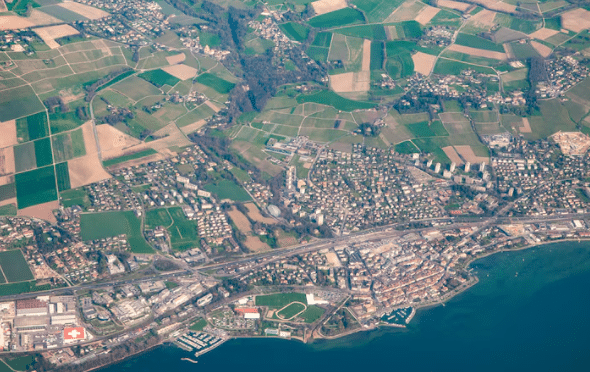
The reasoning goes far beyond the crop itself: before any official data changes, an empty parking lot at a grain logistics company may be a sign of declining demand. The same problem is indicated from a different angle by decreased activity at a Midwest American manufacturer of agricultural machines. The satellite is observing more than just the field. It is keeping an eye on everything related to the field.
However, the cleanliness and dependability of all of this can be overstated. The models have been known to malfunction in ways that result in outputs that appear confident but are actually incorrect, are costly to construct and maintain, and demand a high level of technical competence to perform without producing garbage signals.
The satellite intelligence layer, which encourages compulsive vigilance and penalizes complacency, is actually helpful but necessitates ongoing recalibration, according to a number of fund managers who spoke on background about their alternative data systems. If the training data develops blind spots or the model architecture becomes stale, one person simply called it a “crapshoot.”
It is more difficult to ignore the ethical issues than the sector usually admits. The disparity between financial sophistication and human consequences becomes unsettling when a hedge firm in New York makes money by anticipating a crop failure in a nation with food insecurity. The shortfall is not being caused by the fund. However, it is making money off of knowledge that those most impacted by rising food costs lack and are unable to act against. In financial markets, this asymmetry is nothing new. However, it is more acute when the underlying commodity is corn or wheat instead of the quarterly profits of a software business.
The technology is here to stay. If anything, well-funded investors will have an even greater informational advantage because to the next generation of commercial satellites, which offer higher resolution, quicker revisit periods, and multispectral photography that goes beyond basic NDVI. There is still much to learn about who else gains from that capability and whether any of it goes to the farmers and food systems most at risk from the anticipated shortages. Regardless of what happens to the data it gathers, the satellite continues to fly overhead.
