

In 2026, a certain type of discourse is taking place at American suburban kitchen tables, and its tone has shifted in ways that elder homeowners may not always notice. After looking at his Zillow estimate, which is currently hovering over $850,000, a parent who paid $180,000 for a four-bedroom house in 1998 quietly decides he’s done well.
When his twenty-eight-year-old daughter watches the same television, she sees something completely different. She sees a number that she will most likely never be able to reach. Two distinct stories have been created from the same asset when seen from two different perspectives.
| Topic Snapshot | Details |
|---|---|
| Subject | Home equity as the dominant wealth driver and the affordability crisis blocking new buyers |
| U.S. Millionaire Households (2026) | Over 24 million |
| Housing Share of Millionaire Wealth | Roughly 30% |
| Average Homeowner Equity | About $300,000 |
| Median U.S. Home Price | Over $420,000 by mid-2025 |
| 2017–2023 Price Appreciation | Roughly 35% |
| Wealth Gap | Median homeowner net worth nearly 40 times that of renters |
| States with $1M Starter Homes | More than half of all U.S. states by early 2026 |
| Mortgage Rates | Hovering near 7% for several years per Freddie Mac data |
| Homeownership Cost vs 2002 | Roughly 270% more expensive in major cities |
| Source for Federal Wealth Data | Federal Reserve Survey of Consumer Finances |
On paper, the numbers supporting American riches in 2026 are astounding. The country currently has the highest number of wealthy households in contemporary history—more than 24 million. According to the most reliable figures, housing accounts for about 30% of the wealth.
The average American homeowner has roughly $300,000 in equity, most of which was amassed by just living in the same home for ten or fifteen years as the market quietly compounded. The median net worth of homeowners is almost 40 times greater than that of renters. This figure is so high that policy briefings frequently repeat it without much discussion because there isn’t much to say.
The problem is that the engine that generates money has effectively stopped at the point of entry. Midway through 2025, the median US home price surpassed $420,000 and hasn’t significantly decreased since. The average starter house now costs $1 million or more in more than half of all states—a statement that would have seemed ridiculous to a buyer in 2010 but is now commonplace in real estate writing.
The strain is exacerbated by mortgage rates, which have been around 7% for years. High prices and costly financing have combined to create what some economists are referring to as the longest-lasting affordability problem since the postwar housing boom.
When the numbers underlying the pattern are examined, they become unsettling. The cost of homeownership in major U.S. cities has increased by over 270% since 2002. This increase reflects both the rising cost of borrowing against property values and the rise of property values.
Over the past 20 years, owner rates among Americans under 35 have significantly decreased. In many communities, luxury townhouse buildings and high-density condo towers that builders find more viable to manufacture have quietly supplanted the starter home, that legendary first asset that previous generations relied on.
Speaking with younger tenants in locations like Denver, Nashville, or the Atlanta suburbs gives the impression that the cultural script has been disrupted. The formula was explained to them. Ride the equity surge, secure a mortgage, and save for a down payment. The hardest part of that formula is now the first step.
A 20% down payment on a $750,000 house equates to $150,000 in cash, on top of an income that most professionals in their early careers find difficult to save. Some are completely abandoning pricey markets. Some are abandoning the timeline that their parents adhered to. Some are establishing pooled-purchase agreements with pals, which are innovative financial arrangements that were uncommon ten years ago.
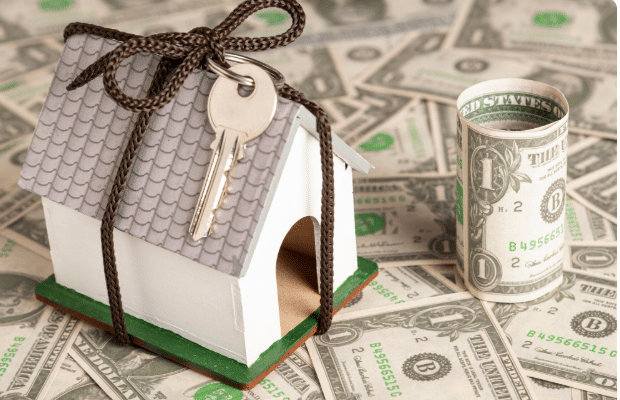
Cultural critics have begun referring to this as the “paper wealth gap,” and the term has endured because it encapsulates the peculiar discrepancy at the center of the situation. Current homeowners feel more affluent than before. Every year, property tax statements arrive with assessed values that occasionally appear to be made up.
Some of them owners are quite wealthy, especially if they own several houses or reside in coastal markets. Others, on the other hand, are merely residing in an asset that they are unable to purchase today; this is a subtle kind of grandfathered prosperity that is only effective if no one asks them to perform the calculations from scratch.
The forecast for 2026 provides some respite. Over the course of the upcoming year, several analysts predict small drops in mortgage rates along with slower price rise in markets that have gone too far. A few cities have been experimenting with zoning reform, which may eventually result in additional inventory at the entry level. It is actually unclear if these actions will make a difference for the present generation of prospective consumers.
There is a systemic issue with supply. Existing owners have anchored price expectations. Furthermore, in a market where the foundation itself has become a luxury, the cultural belief that a home is the cornerstone of middle-class wealth has not changed.
The historical echo is difficult to ignore. Housing wealth was concentrated in a small number of hands during the early 20th century, frequently as a result of inheritance and stringent lending regulations. With its veterans’ loans, growing suburbs, and easily accessible mortgages, the subsequent mid-century boom was an anomalous democratic chapter rather than a permanent one.
The decisions that have not yet been made will determine whether the 2020s and 2030s settle into a more stratified form of homeownership or whether new legislation, new development, or new financial mechanisms eventually open the door once again. As of right now, home equity is still the most dependable route to become a millionaire in America, but the route has become extremely difficult.
