
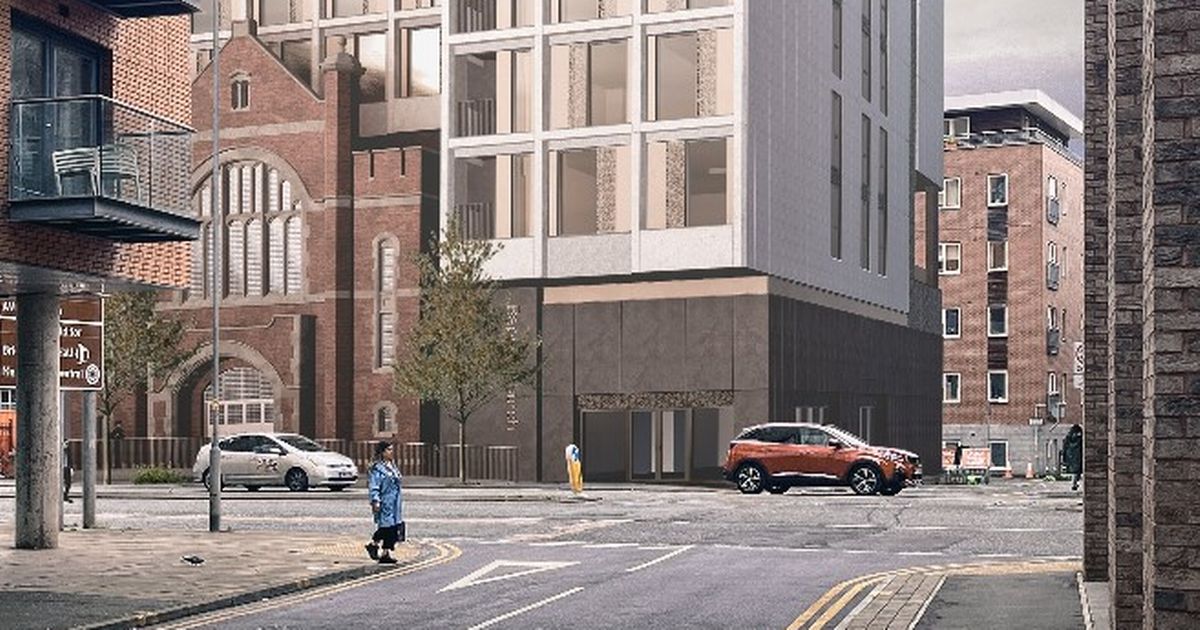

Recent plans propose enclosing a historic chapel with a contemporary tower.
- The Particular Baptist Chapel, dating back to the 1840s, will be preserved externally.
- Developers promise a blend of historic and modern architecture in Manchester.
- 133 residential flats are planned around the chapel, integrating original features.
- Questions about affordability and housing categories remain unanswered.
Recent development plans aim to integrate the historic Particular Baptist Chapel with a new 23-storey residential tower. Located on Rochdale Road in Manchester, the chapel, constructed around 1840, is set for a transformation that retains its facade while embedding it within a modern residential complex. The plans include 133 apartments and propose to preserve the chapel’s prominent architectural features.
The developers, Cynergy, have committed to maintaining the chapel’s external facade as the entrance to the new residential development. They plan to integrate the chapel’s historical elements, such as the cast-iron columns and balustrades, into the reception and co-working spaces. Cynergy’s approach intends to merge the chapel’s rich historical architecture with the emerging modern design, thereby achieving a synergy of old and new aesthetics.
Cynergy’s proposed design intends to extend the architecture of the chapel through the entire development, using structural components that respect the chapel’s original character while incorporating modern stylistic elements. This endeavour aims to highlight historical preservation while introducing contemporary residential facilities, offering future residents a unique living environment that combines heritage with modernity.
The tower will house 40 one-bedroom, two-person apartments, 92 two-bedroom, three-person apartments, and a single two-bedroom, four-person apartment. Additional amenities are set to include a concierge service, gym, and social spaces, alongside communal roof terraces highlighting the tower’s residential appeal. However, there is no clear provision of how many apartments will be classified as affordable housing, leaving a gap in addressing potential residents’ economic diversity.
While these plans signify a forward-thinking integration of the historic and the modern, the lack of information regarding the affordability of the housing raises concerns about the accessibility of these properties to a diverse demographic.
The ambitious integration of the historical chapel into a modern residential complex raises questions about housing accessibility and historical preservation.

