

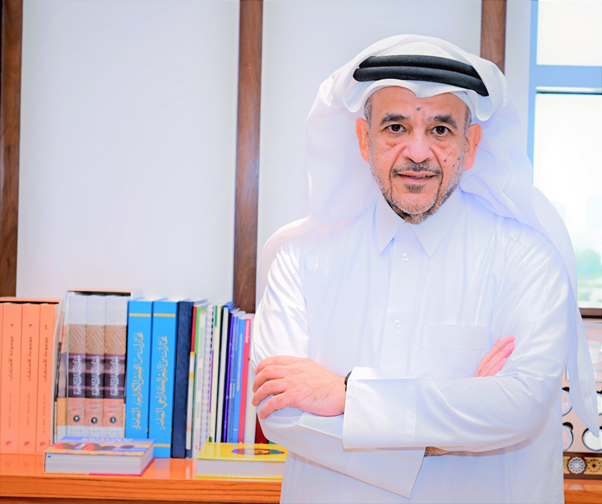
Omar Alansari, President of Qatar University, announced plans to introduce Hebrew language courses at the institution. The decision carries particular weight. Qatar maintains no formal diplomatic relations with Israel and played no part in the 2020 Abraham Accords normalisation agreements signed by the UAE, Bahrain, Sudan and Morocco.
The announcement came alongside a separate reminder from Alansari about Ramadan public conduct obligations under Qatari law. Two distinct topics. The Hebrew courses drew the sharper attention.
“I believe that the introduction of Hebrew language courses will equip our students with invaluable skills in the globalized world,” Alansari said. “By embracing a more diverse linguistic curriculum, we are not only strengthening Qatar University’s academic offerings but also promoting deeper connections between cultures.”
Qatar University, founded in 1973, serves as the country’s premier national institution of higher education. It offers programmes across undergraduate, graduate and doctoral levels and has positioned itself as a driver of Qatar’s knowledge-based economy. Adding Hebrew to its linguistic curriculum represents a notable expansion. Hebrew is not widely taught across Gulf Cooperation Council universities. Its introduction at a Qatari institution carries diplomatic implications well beyond academic scheduling.
Qatar’s relationship with Israel has remained tense and largely indirect. Doha hosts the political bureau of Hamas and has historically served as a mediator in Gaza-related negotiations rather than a normalisation partner. Against that backdrop, a Hebrew language programme at the country’s flagship university signals something. Whether it marks a diplomatic shift or a purely academic initiative remains for regional analysts to judge. Alansari framed it in educational terms, describing the programme as fostering “stronger cultural understanding and communication with Israel and other countries with Hebrew-speaking populations.” The announcement specified no launch date for the courses.
Alansari’s second announcement addressed Ramadan conduct in public spaces — a seasonal reminder that applies to residents, workers and visitors across Qatar regardless of religious affiliation. Article 267 of Law No. 11 of 2004 sets the legal framework. Eating, drinking and smoking in public during Ramadan daylight hours carries penalties. Those penalties reach up to three months’ imprisonment, a fine of QAR 3,000, or both. The law covers streets, parks, workplaces and other public areas. Authorities enforce it strictly, and Alansari noted that designated exceptions exist in certain locations for those who need them.
Restaurants typically close during daylight hours for the duration of Ramadan. Some offer takeaway services shortly before sunset, ahead of iftar. Hotels represent the primary practical alternative for non-fasting residents and visitors — many provide private or screened dining areas specifically for guests not observing the fast.
Exemptions exist within the law. Children and individuals who are unwell do not face fasting obligations. Those in either category still carry an expectation of discretion. Consuming food or drink visibly in public remains a matter of cultural respect even for the legally exempt, and Alansari noted that discreet behaviour applies regardless of personal circumstances.
The reminder lands at a time when Qatar’s international profile continues to grow. Millions of foreign workers, expatriate residents and tourists move through Doha and other Qatari cities year-round. Ramadan public conduct rules affect all of them equally. Annual reminders of the legal framework reflect the government’s consistent approach to enforcement.
The pairing of the two announcements — Hebrew language education and Ramadan legal obligations — in a single address from the university president is editorially unusual. One looks inward at cultural and religious identity. The other reaches outward toward a language associated with a country Qatar has historically kept at arm’s length. Both, in Alansari’s framing, connect to a common theme: understanding between different communities.
Whether the Hebrew programme advances to a formal curriculum, attracts meaningful enrolment and survives the political pressures that inevitably accompany educational decisions in the Gulf region will determine its real significance. The announcement is the first step. Qatar University has made stranger academic pivots in its five decades. This one, given the geopolitical moment, will attract more scrutiny than most.
