
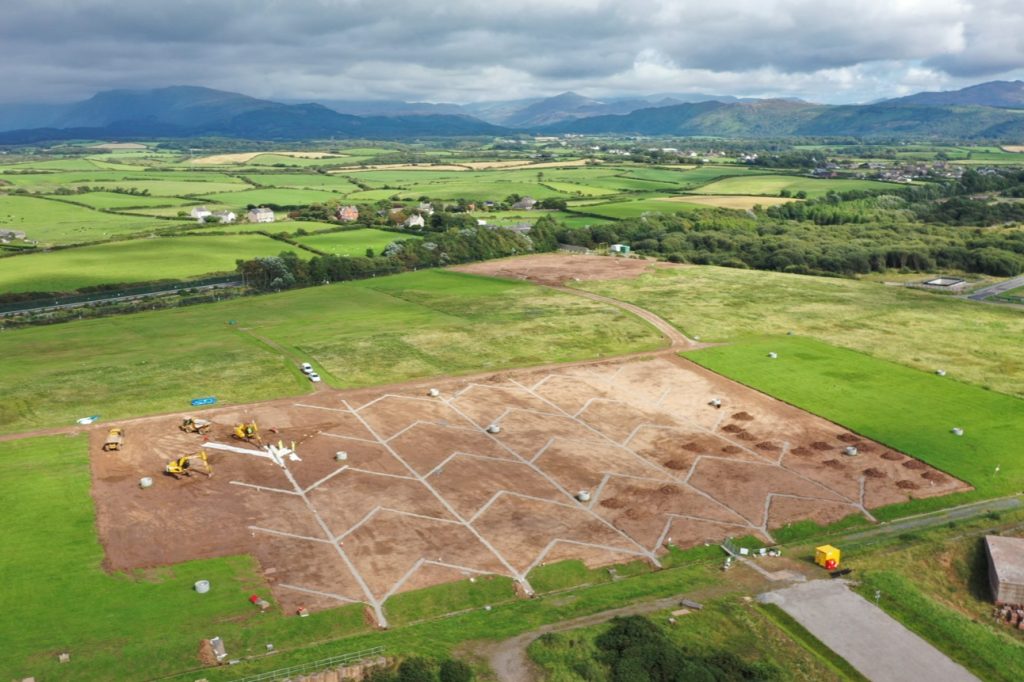

The UK is advancing nuclear waste management with Graham Construction’s involvement in a major containment project.
- Graham Construction has been awarded a four-year contract by Nuclear Waste Services (NWS) to install a 10-meter-thick engineered cap over waste repositories at the UK’s Low Level Waste Repository (LLWR) in Cumbria.
- The cap will cover trenches at LLWR, which began storing nuclear and radioactive waste in 1959 and has since integrated modern disposal techniques.
- NWS aims to provide long-term environmental protection and ensure safe disposal of nuclear waste through this innovative engineering project.
- The project marks a continuation of efforts to secure nuclear waste, aligning with the UK’s broader nuclear strategy, including plans for a geological disposal facility.
Nuclear Waste Services (NWS) has orchestrated a strategic partnership with Graham Construction to embark on an ambitious project at the Low Level Waste Repository (LLWR) in Cumbria. This initiative focuses on constructing a formidable 10-meter-thick engineered cap atop legacy waste trenches, reinforcing the site’s commitment to secure and sustainable nuclear waste management. The LLWR, positioned near the village of Brigg, is pivotal in hosting Europe’s most extensive repository of nuclear and radioactive materials, which emerged from both power generation and defence sectors.
The disposal operations at LLWR commenced in 1959. Initially, nuclear waste was deposited in lined trenches, later transitioning during the late 20th century to advanced, concrete vaults. This evolution signified a shift towards employing sophisticated methodologies for the treatment and secure storage of low-level radioactive waste, ensuring these materials are encapsulated within specially crafted metal containers housed in reinforced concrete vaults.
Taking on this critical task, Graham Construction will spearhead the installation of the Southern Trench Cap Interim Membrane (STIM), integral to the site’s ongoing waste management lifecycle. The design and finalisation of this capping initiative are instrumental, promising to enhance the repository’s environmental protection capabilities. As of February 2025, the project will transition into its most significant construction phase. Supplementing the membrane, diverse construction materials will progressively advance the site towards its definitive capping state, as stipulated by planning regulations.
Furthermore, the project involves extensive logistical frameworks orchestrated by Nuclear Transport Solutions, a subsidiary of the Nuclear Decommissioning Authority. This encompasses designing innovative rail transportation strategies to efficiently manage the importation and deposition of thousands of tons of construction materials, adhering strictly to planning authority prerequisites.
Graham Construction and NWS’s collaborative effort is underscored by mutual recognition of this enterprise’s unprecedented scales within the nuclear sector. Alastair Lewis, director at Graham, iterates the profound significance of this undertaking, acknowledging its essential role in guaranteeing LLWR’s environmental safeguarding for future generations. Jonathan Evans of NWS further echoes these sentiments, emphasising that this capping project is uniquely transformative for the UK.
Parallelly, the UK’s strategy for higher-level waste disposal is recognised globally for its potential efficacy. Discussions continue with Cumbrian communities and Lincolnshire for potential sites for developing a geological disposal facility (GDF), designed to house high-level waste securely for millennia. The UK Government supports these advancements, alongside nuclear power expansions, underscoring the need for robust, long-term waste management solutions.
This project exemplifies a significant step in enhancing the safety and sustainability of nuclear waste management in the UK.

