
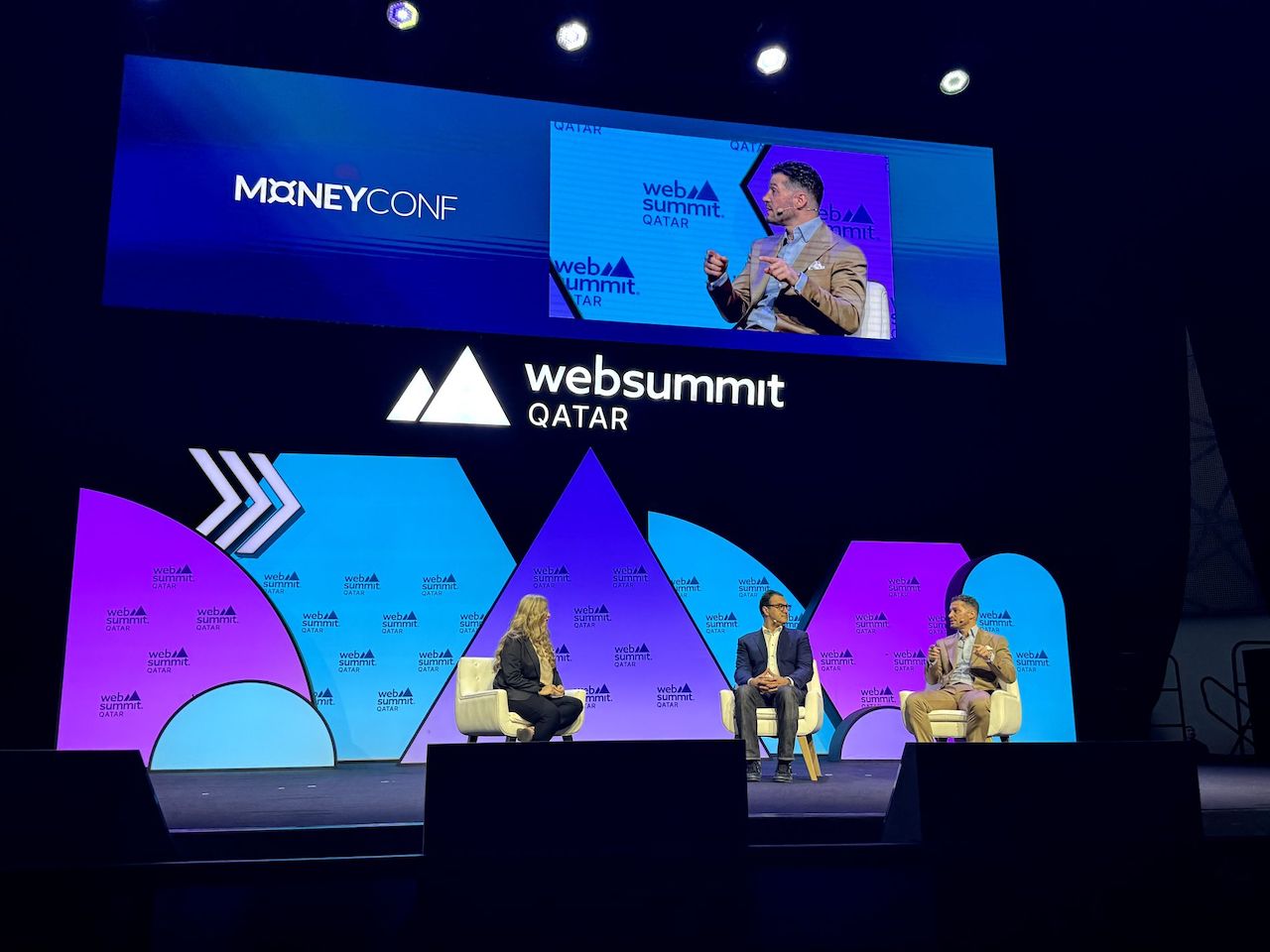

Global fintech founder Dr Ozan Ozerk joined the Qatar Web Summit 2024, which took place in Doha from February 26 to 29. Dr Ozerk and his co-panellist Edward Achtner, Head of AI at HSBC, offered their views in the ‘Utilising AI in Fintech’ sessions on how AI is currently used and how it may affect how fintech companies think and work. Over four days, this year’s web summit featured over 300 speakers and panellists, informing a significant gathering of global business leaders.
Ozan Ozerk shared entrepreneurial perspectives on AI as the founder of many successful financial institutions, namely banking-as-a-service provider Openpayd, European Merchant Bank (EMBank), and Ozan Electronic Money (Ozan Elektronik Para), Turkey’s fastest-growing payment service provider for businesses.
He identified customer onboarding, handling risk and compliance, and transaction monitoring as the areas where AI provides significant help to fintechs. Fintechs can get easily overwhelmed with the colossal processing workload as they aspire to grow at scale unless service providers using AI support them or they handle it internally with AI. Otherwise, rapid and healthy growth is near impossible for fintechs. The use of AI reduces the risk of human and algorithmic errors, as well as speeding up operations.
Another question was whether AI could help us take better care of our money more securely. Ozan Ozerk’ was confident in this matter but not without reserve. He granted that AI should and would successfully help guide us towards the best financial products and improve trading decisions, lightening the task of going through huge chunks of information.
On the other hand, he questioned how inclusive the process would be. Could the unbanked and underbanked masses reap the financial benefits of AI similarly? Financial institutions are regulated to apply KYC/AML procedures effectively and must employ state-of-the-art cybersecurity. Yet utilising AI in these procedures could go against the inclusivity of their services if the AI element were not handled skillfully.
Dr Ozerk reflected: “I am worried about the flip side of the coin. I’m concerned that AI could become a tool to exclude an increasing number of people for risk management concerns. The amount of data we can capture on an individual or an enterprise, it’s a threshold that’s becoming too high. People who have good data points, and a good CV, will get even better services, and people who have weak data points for some reason will get worse services or none at all. I understand that criminal entities or individuals who want to abuse a service by making AI their accomplices pose threats. But I’m also concerned about a widening gap in access: Basically, people may get left behind just because a robot told you they should not be banking with you.”

Talking about how to maximise AI’s benefits, Dr Ozan Ozerk stated that in terms of institutions and their technology, all the links in the chain must be connected to deliver AI’s full benefits to customers: “For example, international payments are a landscape where various parties rely on each other. If you’re moving money or assets across businesses and institutions, you have a lot of pieces that need to come together in the right way. As more entities use AI, companies that do not will become bottlenecks. Let’s say I work with Bank XYZ, a client of theirs. They have AI, and I have AI, great. But suppose their corresponding bank or my client on the other end doesn’t use AI. In that case, we might end up with money or a transaction stuck with Bank XYZ or at my payment institution because the non-AI institution is not ready to process the funds or the data with the same diligence the two of us can.
The expected changes in the workforce and talent pool that the extended use of AI would impose on fintechs were next in the panel discussion. Dr Ozan Ozerk embraced the likely changes from a historical perspective and was confident that society would adapt successfully. He said, “Well, much manual work today will be replaced by technology, and AI will be a big player in that space. Obviously, the employees doing the manual work will no longer have a future in those areas. But somebody needs to take care of AI and technology too. So, I think there will be a shift to new professions and new positions opened within each company and society in general that govern and utilise AI. So, I’m not that worried. If you look at how the internet and phone networks have replaced many things, it’s clear we will adapt to AI as well. In many countries, the population and workforce are declining. So, maybe adopting AI is especially beneficial for companies in those countries to maintain their competitive advantage and grow.”
In addressing how they applied and administered AI within their organisation, Ozan Ozerk explained: “So, the way we see it, AI is in its very early phase. The regulation isn’t precise. The technology isn’t proven in many aspects. And jumping into it, pioneering it is a big unknown when running financial services because you cannot just break things and move on. So, what we do is, we try to see the practices in non-regulated industries, how they are using AI, and assess if we can adapt them.
The panel finally explored what the speakers were most curious about happening in 5 years. Dr Ozerk was excited about the potential of AI and technology to level the competitive field between big, legacy financial institutions and younger ones in the eyes of retail clients. He said, “Five years into the future, I wonder how retail clients will choose who they work with. Who has the best engines, best robots, best algorithms? The older and the younger institutions will face off in a much more challenging way than today.”

