
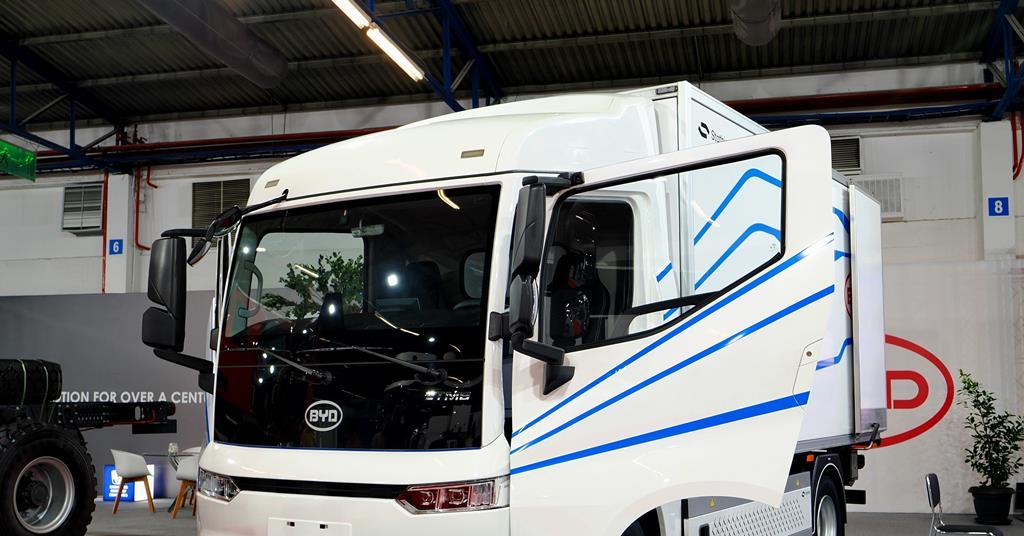

Recent research highlights China’s lead in global sales of electric commercial vehicles, overshadowing Europe and the US.
- China accounts for over 80% of global electric truck sales, with adoption nearing 5.5% in early 2024.
- Europe’s leading markets, Germany and the UK, show limited sales compared to China, with the UK selling over 600 units.
- The United States exhibits minimal growth in electric commercial vehicle sales, lagging behind global trends.
- Despite challenges, emerging business models and financing strategies aim to tackle cost and refuelling issues.
The latest Bloomberg NEF report underscores China’s significant dominance in the realm of electric commercial vehicles, starkly contrasting with the slower uptake in European and American markets. China’s adoption rate has surged, accounting for more than 80% of the global sales volume of approximately 38,000 units, with an impressive adoption rate approaching 5.5% in the first half of 2024. In comparison, Germany and the UK lead Europe, with sales figures coming in at around 1,900 and over 600 units, respectively.
In the United States, the growth in sales of medium and heavy-duty electric trucks remains sluggish. The report highlights limited market penetration, indicating a broader challenge in aligning with global advancements. Battery prices, although declining, have not yet resulted in substantial market growth, pointing to the need for enhanced economic models and infrastructural support.
China’s market benefits from low-cost batteries, priced at approximately $100 (£75) per kilowatt-hour, which are integral to the affordability and scalability of electric trucks. The report indicates that European battery prices are declining more rapidly, potentially reaching $88 per kWh (£66/kWh) by 2030. This trend is expected to drive competitive pricing across markets, particularly as electric trucks start achieving total cost of ownership parity with diesel vehicles, especially on shorter routes.
The Bloomberg NEF report indicates a bright future for battery-electric trucks, due to improving economic viability and potential cost parity with diesel alternatives before 2030. However, despite these advancements, fuel-cell trucks face uncertainty regarding cost reductions, and the report cautions about ongoing capital and infrastructural challenges. Such hurdles necessitate innovative solutions, as reflected in the emerging partnerships and financing models designed to extend the profitability of vehicle batteries and improve refuelling infrastructure.
The study concludes that early movers in the electric vehicle sector, particularly fleet owners and investors leveraging new opportunities, are likely to establish significant scale for sustainable market growth. Such developments highlight the essential role of strategic partnerships and financial arrangements in overcoming current obstacles and stimulating further advancements in zero-emission vehicle adoption.
China’s lead in the electric commercial vehicle market calls for strategic efforts globally to enhance adoption and infrastructure.

