

Broadcom (NASDAQ: AVGO) chief executive Hock Tan and Intel (NASDAQ: INTC) chief executive Lip-Bu Tan told delegates in Singapore on Monday that access to capital, not shortages of chips, memory or power, now poses the biggest risk to the AI buildout.
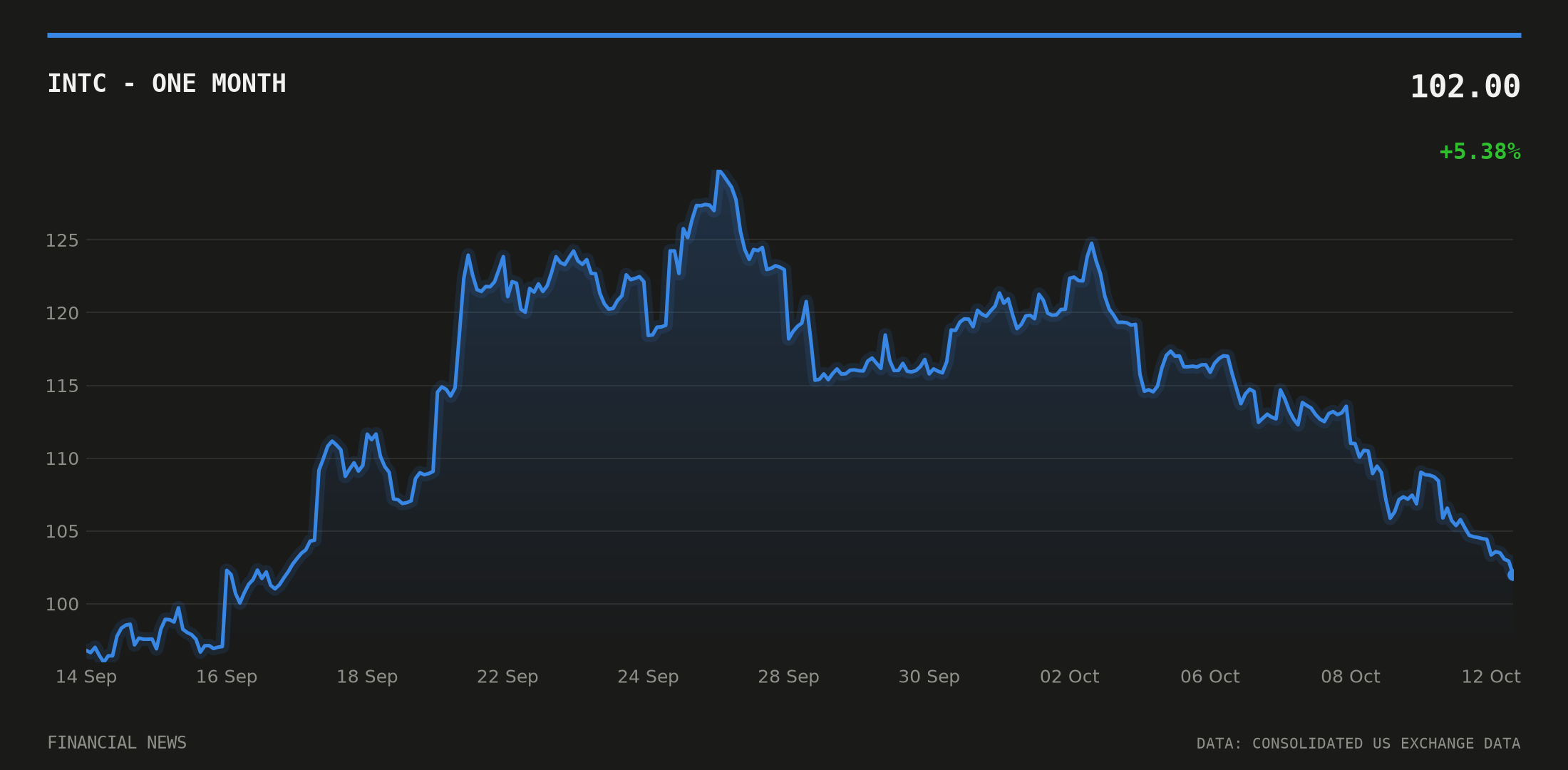
Intel shares have fallen 16.74% over the past 20 trading sessions, closing at $101.88 on 12 October, as investors weigh the chipmaker’s volatile earnings against its AI spending plans, according to consolidated US exchange data.
Financing, not hardware, tops the worry list
Speaking at the DBS Asia Future Forward Conference, Tan said the industry’s constraint was shifting away from physical supply. ‘[What] I think might be the biggest constraint is capital,’ he said, as reported by CNBC.
Tan argued that raising the money to keep funding AI infrastructure could prove harder than solving shortages of semiconductors, memory chips or electricity — the bottlenecks that have dominated the sector’s narrative for the past two years. Intel’s Lip-Bu Tan, appearing at the same event, pointed separately to elevated borrowing costs and doubts over whether AI spending is generating returns to match it.
Tan went further in comments reported separately, likening some AI investors to casino gamblers who ‘have no clue what they are investing in,’ as reported by Bloomberg. The remark sharpens his capital-constraint warning into something closer to a caution about speculative excess among the industry’s own backers.
Intel’s own numbers show the stakes
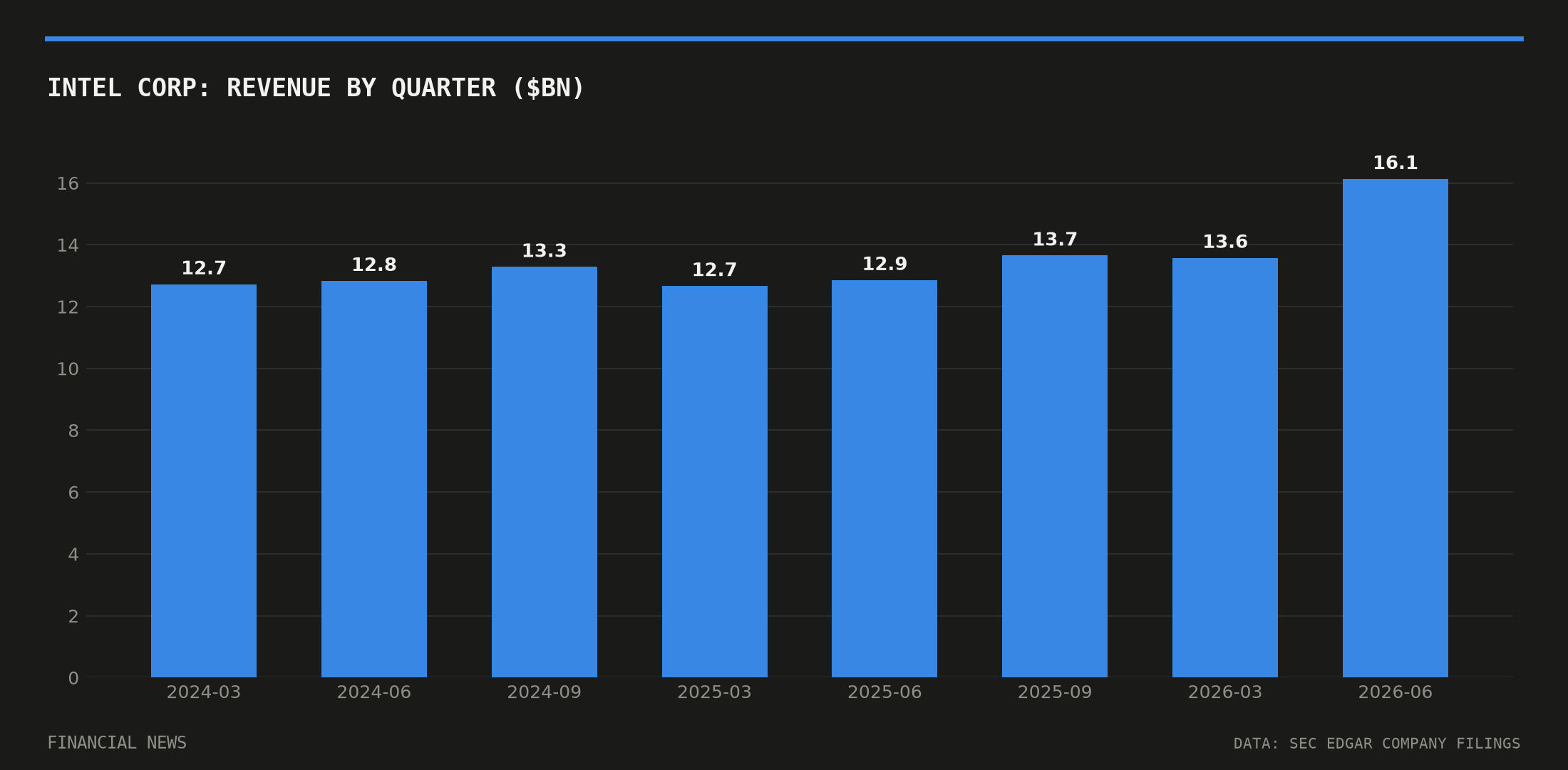
Intel’s recent filings illustrate why its chief executive might be focused on capital discipline. The company reported a net loss of $11.033bn on revenue of $16.128bn for the quarter ended 27 June 2026, according to its 10-Q filing with the SEC.
That followed a $3.728bn loss in the prior quarter and a rare $4.063bn profit in the July–September 2025 period, a swing that took diluted earnings per share from a $0.90 gain to a $2.16 loss within three quarters, the filings show. The oscillation underscores the uncertainty Lip-Bu Tan referenced when he spoke of the difficulty in proving AI investment generates adequate returns.
Quarterly revenue has stayed within a narrower band, running from $12.667bn to $16.128bn across the past eight reported quarters, filings show, even as net income has swung from multibillion-dollar losses to brief profitability and back again.
Borrowing costs stay elevated
The CEOs’ comments on the cost of capital land against a backdrop of still-high US borrowing costs. The 10-year Treasury yield stood at 5.22% on 8 October 2026, down only marginally from 5.28% the prior reading, according to data from the Federal Reserve Bank of St. Louis.
Yields at that level keep financing expensive for capital-intensive AI infrastructure projects, lending weight to Tan’s framing of capital access — rather than physical supply — as the constraint now facing the sector. Independent reporting from Reuters via Yahoo Finance and TokenPost carried similar accounts of the remarks, with both outlets describing capital access as a potentially larger drag on AI infrastructure growth than chip, memory or power shortages.
Intel’s share-price slide this month has been attributed by market commentary largely to a separate sector-wide sell-off on 8 October tied to a Financial Times report questioning OpenAI’s revenue trajectory, rather than to Monday’s remarks. The stock’s 20-day range has run from a high of $129.84 to the current low of $101.88, with trading volume running at roughly a tenth of its 20-day average as of the latest session.
What markets will watch next
Investors will be watching Intel’s and Broadcom’s next quarterly filings for signs of how the companies are managing financing costs against continued AI capital expenditure. Comments from other large AI infrastructure spenders, including cloud providers and private capital firms financing data centre build-outs, could add to the picture of how widely the capital crunch concern is shared across the sector.
This article is for information only and is not investment advice or a recommendation to buy or sell any asset. Markets move quickly; figures are correct as sourced at the time of writing. Always do your own research before making financial decisions.
