
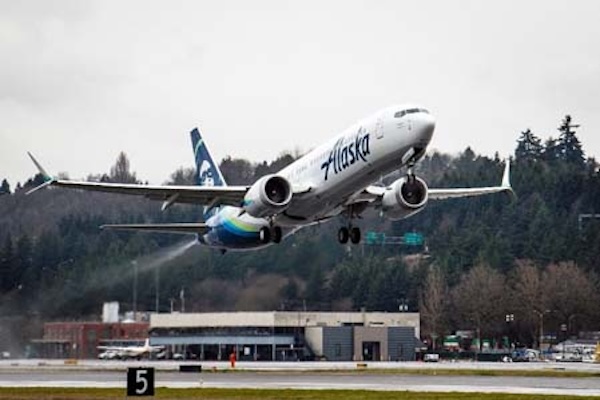

Boeing’s chief executive, in response to a recent Alaska Airlines incident, acknowledged the need for substantial improvements in safety and quality processes.
Amid ongoing evaluations of operations, Boeing’s financial results reveal a reduced net loss but emphasize the primary focus on safety enhancements.
Boeing’s Financial Position
The financial performance of Boeing in the final quarter of 2023 showed signs of recovery. The company announced a substantially reduced net loss of $30 million compared to $663 million in the same period of the previous year. Annual losses were also halved to $2.2 billion, while revenues increased by 17% to $77.8 billion.
Boeing’s commercial aircraft division notably returned to profitability. This was evidenced by earnings of $41 million in the last quarter of 2023, contrasting with a loss of $603 million in the previous year. Revenue for the division rose by 13% to reach $10.5 billion. Aircraft deliveries saw an increase, with a total of 528 units delivered over the year, signifying a 10% enhancement.
Quality and Safety Enhancements
In light of the recent Alaska Airlines accident, Boeing is under pressure to ensure its safety and quality assurances meet the highest standards. The company acknowledged the necessity for immediate actions to boost quality on the 737 programme. These include heightened inspections at both its facilities and those of key suppliers, coupled with enhanced oversight from airline customers.
Additionally, Boeing has paused production of the 737 for a singular day to concentrate employee efforts on quality improvements. An independent expert has been enlisted to lead a comprehensive review of Boeing’s quality management system.
Regulatory Cooperation and Transparency
Boeing’s CEO, Dave Calhoun, conveyed a strong message to employees, stressing that now is not the time to review financial and operational targets but to focus on quality enhancement.
Calhoun admitted the company has faced difficult discussions with customers, regulators, and legislators post-incident, emphasizing the need for action over slogans.
Commitment to Future Performance
A total of 157 aircraft were delivered in the last quarter of 2023, with a significant backlog of over 5,600 jets valued at approximately $441 billion.
Boeing has continued its 737 productions at a rate of 38 units per month, though no forecasts for 2024 financial or delivery performance have been issued.
The emphasis on listening, transparency, and demonstrable action is set as the core strategy for Boeing’s path forward.
Stakeholder Engagement
Boeing is committed to strengthening its relationships with clients and stakeholders through increased transparency and action. The need to regain stakeholder trust has been stressed, with emphasis placed on clear communication and demonstrated improvements in safety and quality protocols.
Calhoun emphasised the importance of internal communication within Boeing, urging employees to engage openly. He reinforced the belief in Boeing’s capability to meet this challenge head-on with the support of a dedicated workforce.
Impact of Alaska Airlines Incident
The Alaska Airlines accident has significantly influenced Boeing’s current focus and strategy. The incident has driven home the need for heightened safety and quality oversight.
Calhoun stated, “The accident has made it absolutely clear that we have more work to do,” continuing Boeing’s dedication to quality. This incident has spurred further introspection within the company, motivating immediate corrective actions and longer-term strategic adjustments.
Boeing’s immediate and transparent response following the accident reflects an acute awareness of the challenges ahead, with a commitment to avoid similar occurrences in the future.
Despite positive financial indicators, Boeing faces significant challenges in restoring confidence post-incident.
The company is poised to demonstrate tangible improvements through enhanced safety measures and transparent stakeholder engagement.

