
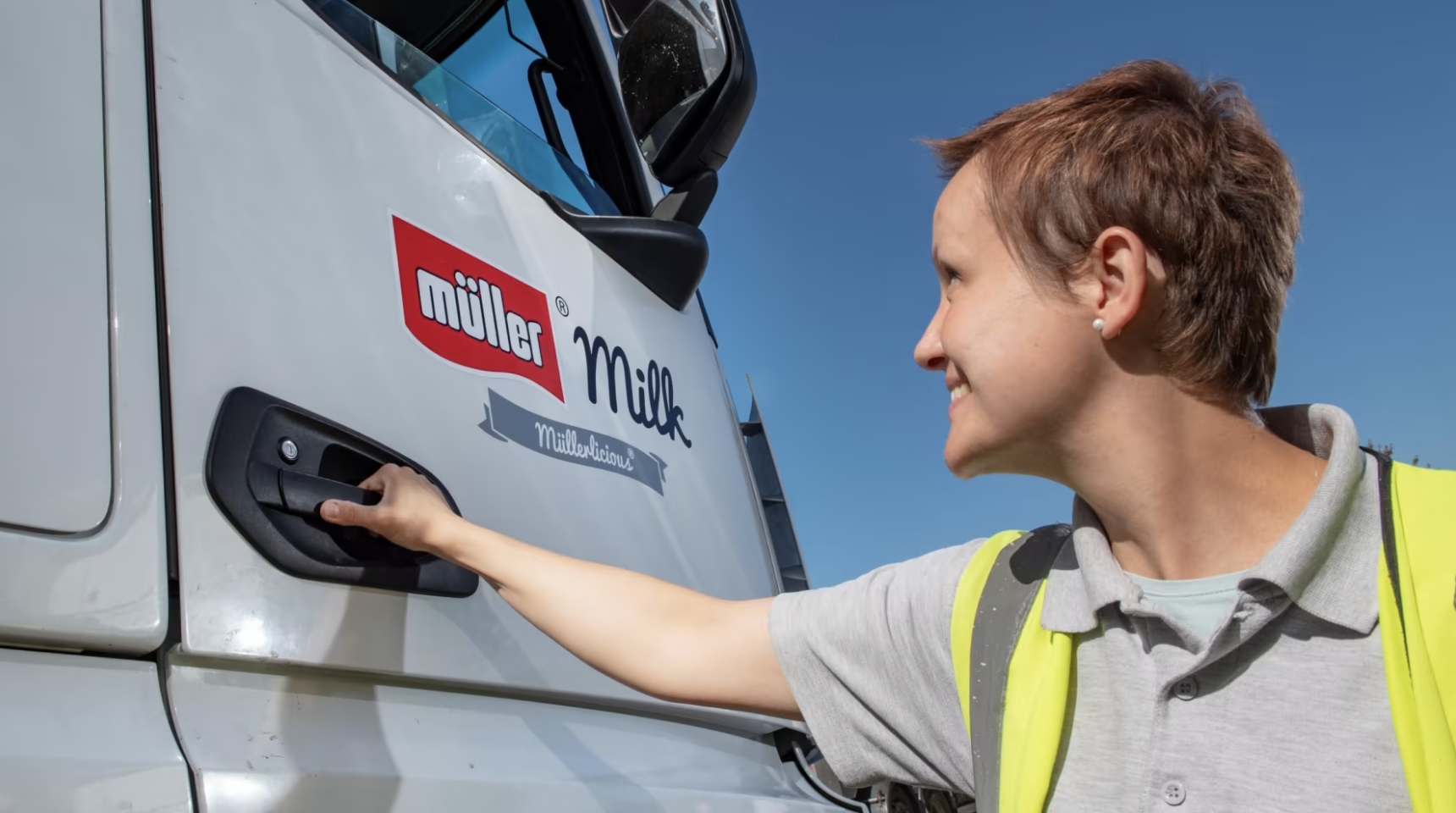

Müller Milk & Ingredients pioneers a new era in logistics with its innovative zero-emission refrigeration trials.
Utilising solar and kinetic energy, the company aims to significantly cut down its carbon footprint.
Innovative Energy Solutions for Refrigeration
Müller Milk & Ingredients is embarking on an ambitious journey to revolutionise the refrigeration of its heavy goods vehicles (HGVs). The company is experimenting with solar panels and kinetic energy to significantly decrease the carbon emissions of its transport fleet. These innovations are part of a broader strategy to utilise sustainable energy alternatives to traditional diesel-powered refrigeration systems.
In collaboration with Sunswap, the renowned dairy producer is testing refrigerated trailers powered entirely by solar and battery energy. Solar panels installed on the trailers harness sunlight, generating all the energy required for refrigeration. In parallel, another trial involves a system developed with Carrier Transicold, which employs kinetic energy. This system converts energy from the trailer’s axle and braking actions into electricity to power the refrigeration unit.
Impact on Carbon Footprint
This innovative approach seeks to establish whether the adoption of renewable energy solutions can sustain quality and efficiency in logistics operations. The new technology promises to eliminate the use of diesel in refrigeration, which could save approximately 3,700 litres per trailer annually and mitigate nine tonnes of carbon emissions every year.
Carrier’s kinetic energy system stands to eradicate the carbon emissions traditionally generated by auxiliary engines in refrigeration units, presenting a formidable alternative to diesel engines in the industry.
Commitment to Sustainability
According to Dan Hamby, Müller’s head of distribution, the trials are part of a strategy to innovate continuously, reduce environmental impact, and meet customer expectations. The balancing act between innovation and operational excellence is central to Müller’s vision for a sustainable future.
Potential Challenges and Future Prospects
While the potential benefits of this technology are substantial, challenges remain in scaling these solutions across the entire fleet. The initial investment in infrastructure and technology, as well as the integration into existing logistics processes, will require careful planning and execution.
Nevertheless, the prospects for success are promising. Continued research and development, combined with strategic partnerships—such as those with Sunswap and Carrier Transicold—could pave the way for widespread adoption in the transportation sector.
With the increasing demand for environmentally friendly solutions in the logistics industry, Müller’s trials could set a precedent for other companies. The company’s proactive approach demonstrates that sustainability and efficiency can coexist.
Strategic Partnerships
The partnership with Sunswap and Carrier Transicold plays a pivotal role in Müller’s strategy to overhaul its refrigeration systems. Sunswap’s solar-powered technology complements Carrier’s kinetic energy solution, offering a multi-faceted approach to zero-emission logistics.
These alliances not only bolster Müller’s capacity for innovation but also underscore the importance of collaboration in driving environmental change. Aligning with partners who share a similar vision enhances the potential for breakthrough developments in the logistics sector.
Such collaborations highlight the significance of collective effort in tackling climate change, a sentiment echoed across the industry.
Customer Expectations and Industry Implications
Customers today, more than ever, expect businesses to focus on sustainability while delivering high-quality products. Müller’s trials align with these consumer demands, reflecting an ongoing shift towards environmentally responsible business practices.
This initiative could potentially influence industry standards and encourage other organisations to adopt renewable energy solutions. By prioritising sustainability, Müller sets an example that could have far-reaching implications for the logistics and transport industries.
Conclusion
Müller’s efforts hold promise for a future where logistics operations are both efficient and environmentally friendly. Through strategic innovation and commitment to sustainability, the company is redefining what it means to transport goods responsibly.
The trials not only reiterate Müller’s dedication to reducing its carbon footprint but also highlight the broader potential for transformation within the logistics sector.
Müller’s trials in renewable refrigeration technology showcase a promising shift towards sustainable logistics.
The initiative signifies potential for profound environmental benefits across the transport industry.
