
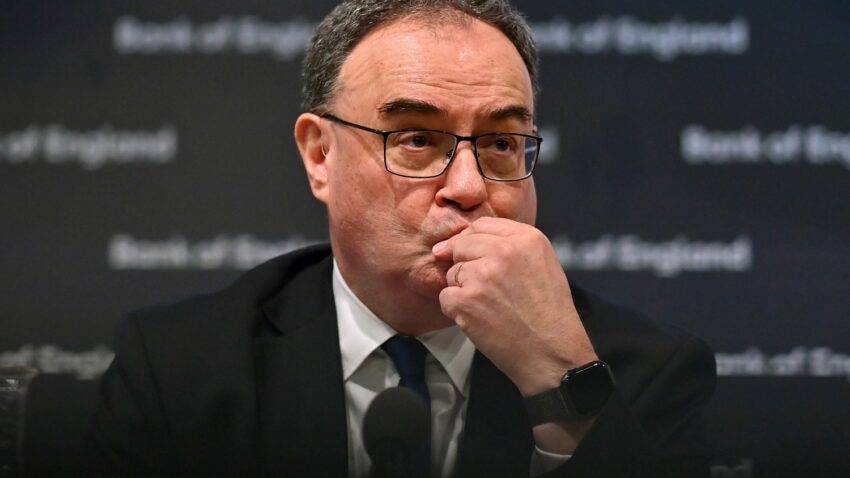

The Bank of England has raised concerns about a looming credit crunch in the United Kingdom, driven by a multitude of global market vulnerabilities and geopolitical tensions.
Interest rates have begun to ease, but market volatility continues to pose significant risks. Issues such as rising borrowing costs and substantial hedge fund bets against US Treasuries exacerbate these challenges.
Global Economic Uncertainty
The Financial Policy Committee (FPC), led by Governor Andrew Bailey, has identified several global risks impacting the UK economy. These risks include sluggish economic growth, escalating geopolitical tensions, and significant bets against US bonds. The approaching US elections further complicate this precarious situation.
Andrew Bailey highlighted that while there has been a recent decline in interest rates, which could potentially ease financial pressures on millions of UK households, the overall market remains highly unstable. With share price valuations described as ‘stretched’, the committee has cautioned that any market correction could severely limit the availability of credit.
Geopolitical Tensions and Economic Risks
Geopolitical instability, particularly the recent conflict between Israel and Iran, has contributed to volatile oil prices and negatively impacted US stock markets. The Bank’s systemic risk survey reveals that finance executives regard geopolitical instability as their principal concern, surpassing even cyber threats and a slowing UK economy.
Despite these challenges, there is some relief for mortgage holders. Approximately 1.7 million borrowers have benefited from a reduction in the Bank’s base rate to 5%, resulting in lower borrowing costs.
There remains concern for the additional 3 million borrowers expected to refinance by 2027—a group likely to experience smaller rises in monthly payments compared to previous forecasts.
Hedge Fund Activities and Market Stresses
The rise in hedge fund bets against US Treasuries, now exceeding $1 trillion, is a major concern for the Bank of England. The FPC warned that an unwinding of these trades could exacerbate future market stresses.
The entwined financial ecosystem underscores the fragility of global markets. Events such as the August share sell-off, triggered by weaker-than-expected US jobs data, have highlighted significant vulnerabilities within the system.
These episodes of volatility, although short-lived, expose the disconnection between high share valuations and underlying growth concerns. Financial institutions are urged to brace for severe shocks in a climate of persistent uncertainty.
Preparing for Market Corrections
Against the backdrop of these risks, the Bank of England has advised financial institutions to bolster their preparedness for severe market shocks. The FPC acknowledged the current economic landscape as extremely uncertain and stressed the need for readiness for sudden downturns.
The warning comes as a stark reminder of the need for vigilance and robust contingency plans in the face of potential unpredictability.
With markets remaining susceptible to abrupt changes, the Bank underscores the importance of strategic planning and risk management.
Impact on Borrowers and Consumers
The reduction in the Bank’s base rate to 5% has brought some relief to UK households, particularly those with mortgages. This change is significant as it directly affects borrowing costs and disposable income.
For the additional 3 million borrowers expected to refinance in the coming years, the outlook is cautiously optimistic. These individuals are projected to face smaller increases in monthly payments than initially feared.
However, the overarching concerns about market instability and potential credit constraints continue to loom large, with financial institutions and consumers urged to remain vigilant.
Long-Term Market Considerations
The fragility of the global economy requires sustained attention and proactive measures from all stakeholders. The Bank of England’s warnings serve as a call to action for both financial institutions and policymakers.
As geopolitical tensions and economic uncertainties persist, the importance of strategic financial planning cannot be overstated. The need for robust risk management strategies is more pressing than ever.
The interconnected nature of global markets means that localised issues can have far-reaching consequences, underscoring the necessity for comprehensive and coordinated responses.
Proactive Measures and Strategic Planning
Financial institutions are urged to implement proactive measures and robust risk management strategies to navigate the uncertain economic landscape. The Bank of England’s advisory underscores the crucial need for preparedness against potential market shocks.
As uncertainties persist, maintaining flexibility and readiness is paramount for both financial institutions and consumers.
The Bank of England’s warnings highlight the importance of vigilance and preparedness in the current volatile economic climate.
Financial institutions and consumers alike must remain alert to potential market shifts and ensure robust risk management strategies are in place.
