

Europe’s drugs regulator has recommended a less frequent dosing schedule for Regeneron Pharmaceuticals’ (NASDAQ: REGN) cancer immunotherapy Libtayo, the company said on 16 October 2026.
The European Medicines Agency’s Committee for Medicinal Products for Human Use (CHMP) adopted a positive opinion that would let patients move from an infusion every three weeks to one every six weeks, after an initial 12-week period, Regeneron said in a statement. The change would apply across all of Libtayo’s approved cancer indications in the EU.
What the Libtayo dosing regimen change involves
Libtayo, known generically as cemiplimab, is a PD-1 inhibitor used to treat several solid tumour types. A wider dosing interval typically means fewer hospital visits for patients and lower administration costs for health systems, though Regeneron’s statement did not quantify any commercial impact.
The announcement was separately reported by Benzinga, which attributed the detail directly to Regeneron rather than to any independent regulatory confirmation. The European Commission, which has final say on CHMP recommendations, typically acts within two months of a positive opinion, though Regeneron’s statement did not give a specific date for that decision.
No filing yet ties the news to Regeneron’s books
No 8-K or other SEC filing in the public record references the CHMP opinion. The only recent filing tied to the company is a Form 4 for insider Andrew J. Murphy, filed on 15 October 2026, the day before the dosing announcement, and unrelated to the regulatory news, according to SEC EDGAR.
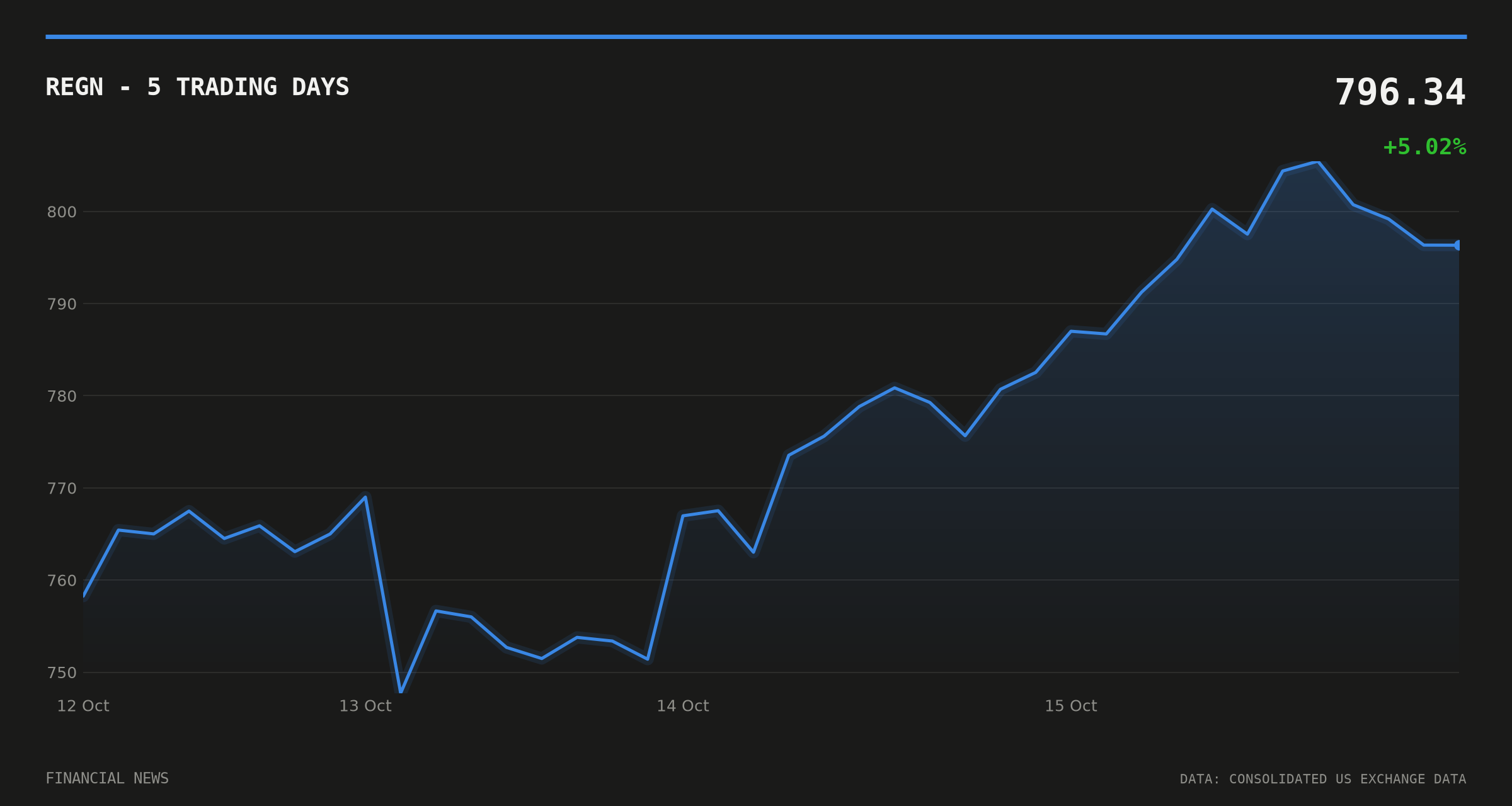
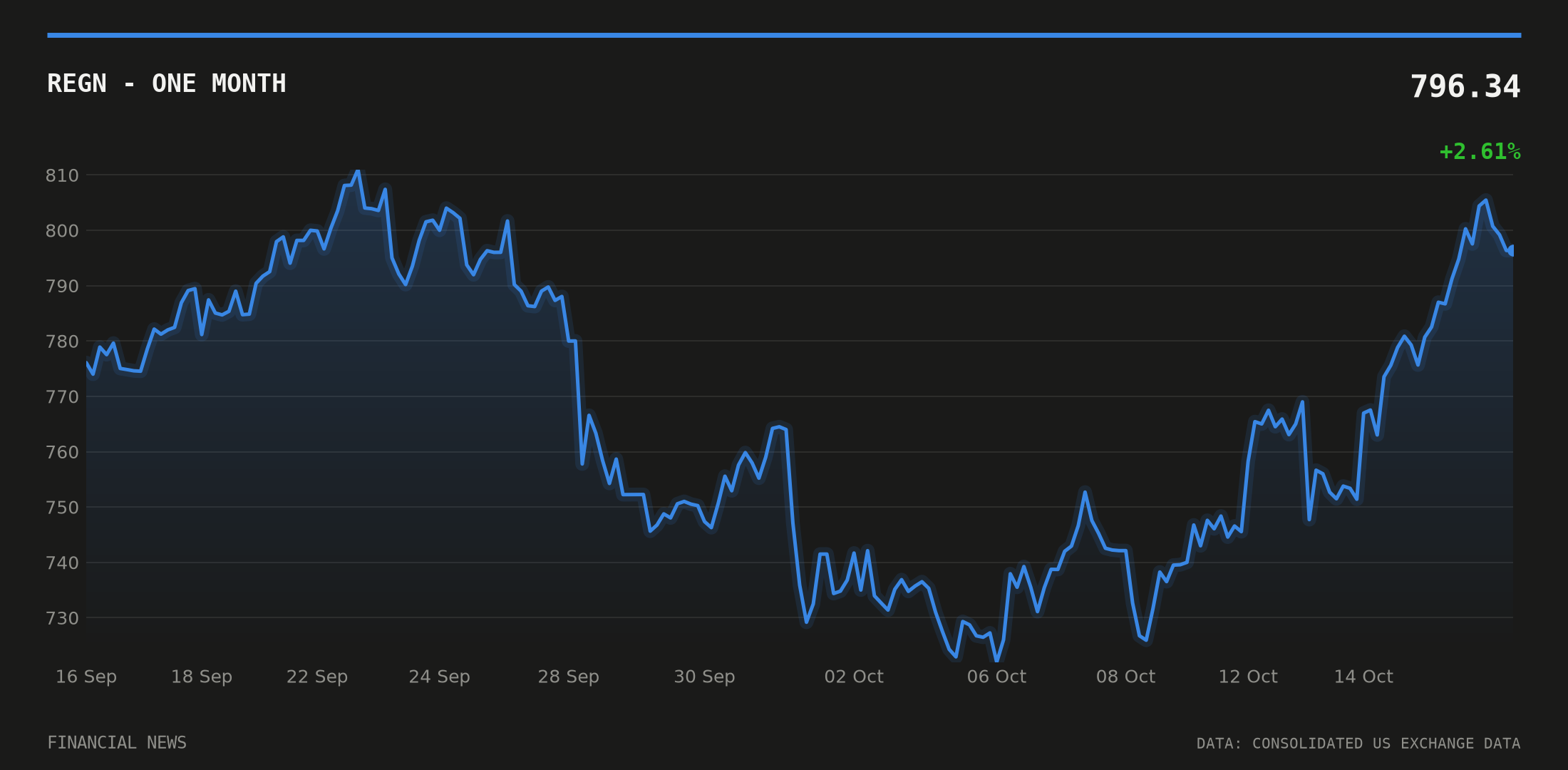
Regeneron shares last traded at $796.34, down 0.49% over 24 hours, according to consolidated exchange data timestamped at 20:00 UTC on 15 October 2026 – before the press release went out. That leaves no read yet on how investors are pricing the dosing update.
Earnings backdrop
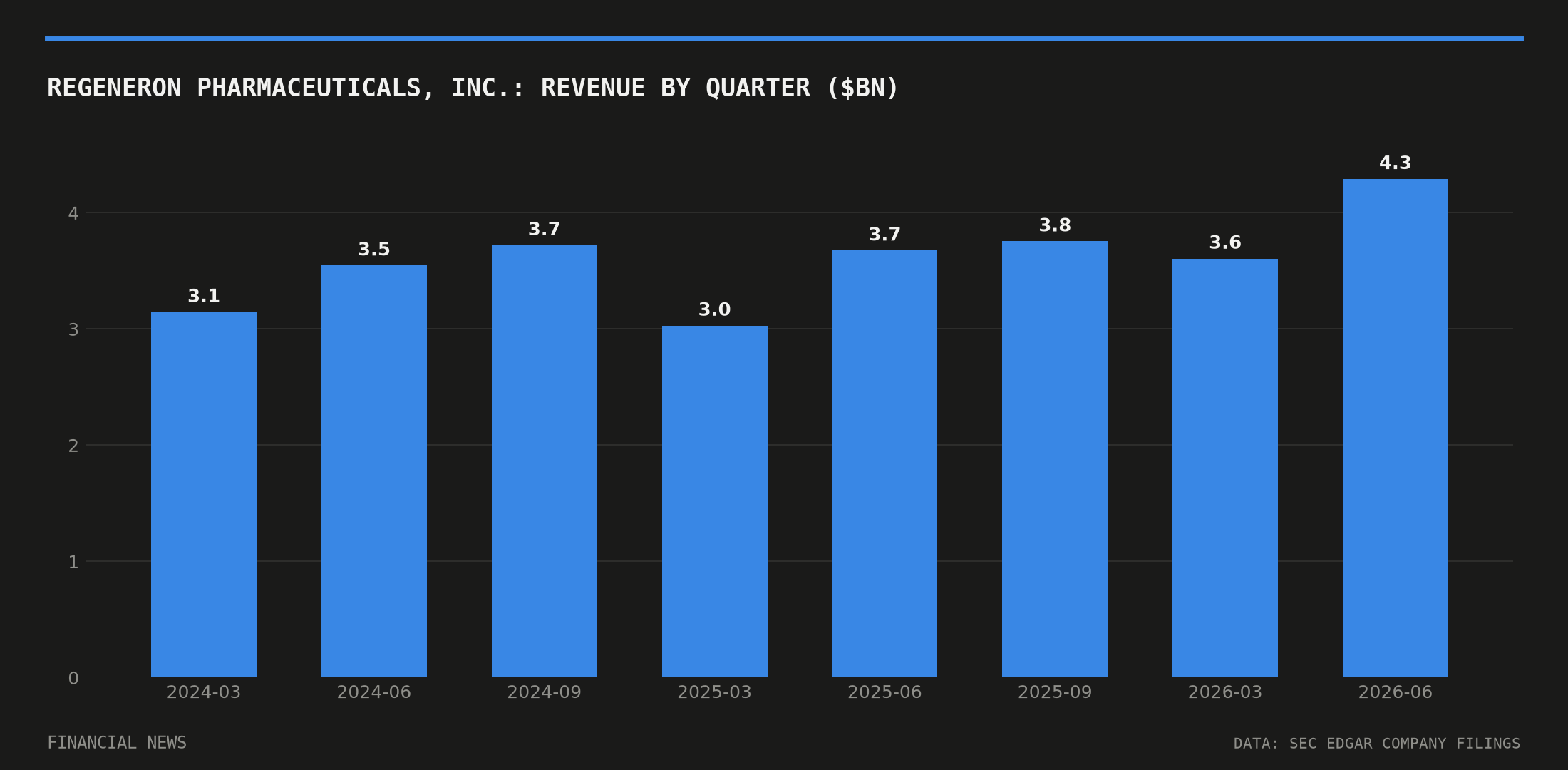
The update lands against a backdrop of steady, if uneven, quarterly earnings. Regeneron reported second-quarter 2026 revenue of $4.29bn, up from $3.61bn in the first quarter, according to 10-Q filings with the SEC. Net income for the quarter came in at $1.3bn, with diluted earnings per share of $12.23.
That marks a sharp step-up from the first quarter’s net income of $727.2m and diluted EPS of $6.75, continuing a pattern seen across prior years: Regeneron’s quarterly net income has swung between roughly $700m and $1.46bn over the nine quarters from the start of 2024 through mid-2026, filings show. Second-quarter results have consistently outpaced first-quarter figures in each of the past three years, a seasonal pattern tied partly to the timing of Libtayo and Eylea sales recognition rather than this dosing change specifically.
Libtayo itself is one product within a broader portfolio that also includes Eylea and Dupixent, meaning any single label change – even one covering all approved indications – sits within a far larger earnings base. The scale of Regeneron’s quarterly net income, running into the hundreds of millions to over a billion dollars, gives some sense of how a single product’s commercial terms might register against the group’s overall results, though the company has not disclosed Libtayo-specific revenue impacts tied to the new regimen.
Positioning and macro context
Short-selling activity in Regeneron stock ticked higher in the run-up to the announcement. The FINRA daily short-sale ratio rose from 0.392 on 12 October 2026 to 0.50 on 15 October, the day before the CHMP statement, according to FINRA data. A ratio near 0.5 is not an extreme reading on its own, and the shift predates any market reaction to the dosing news.
The news also arrives alongside a slightly firmer US rate environment. The 10-year Treasury yield stood at 5.19% on 14 October 2026, down marginally from 5.21% the prior session, while the unemployment rate for September rose to 4.2% from 4.1% a month earlier, according to data from the Federal Reserve Bank of St Louis. Neither series bears directly on the Libtayo decision, but both form part of the broader macro backdrop against which pharmaceutical earnings are being read this autumn.
Attention now turns to the European Commission, whose endorsement would be needed before the new six-weekly regimen can be prescribed across the bloc. Regeneron has not said when it expects that final decision.
This article is for information only and is not investment advice or a recommendation to buy or sell any asset. Markets move quickly; figures are correct as sourced at the time of writing. Always do your own research before making financial decisions.
