
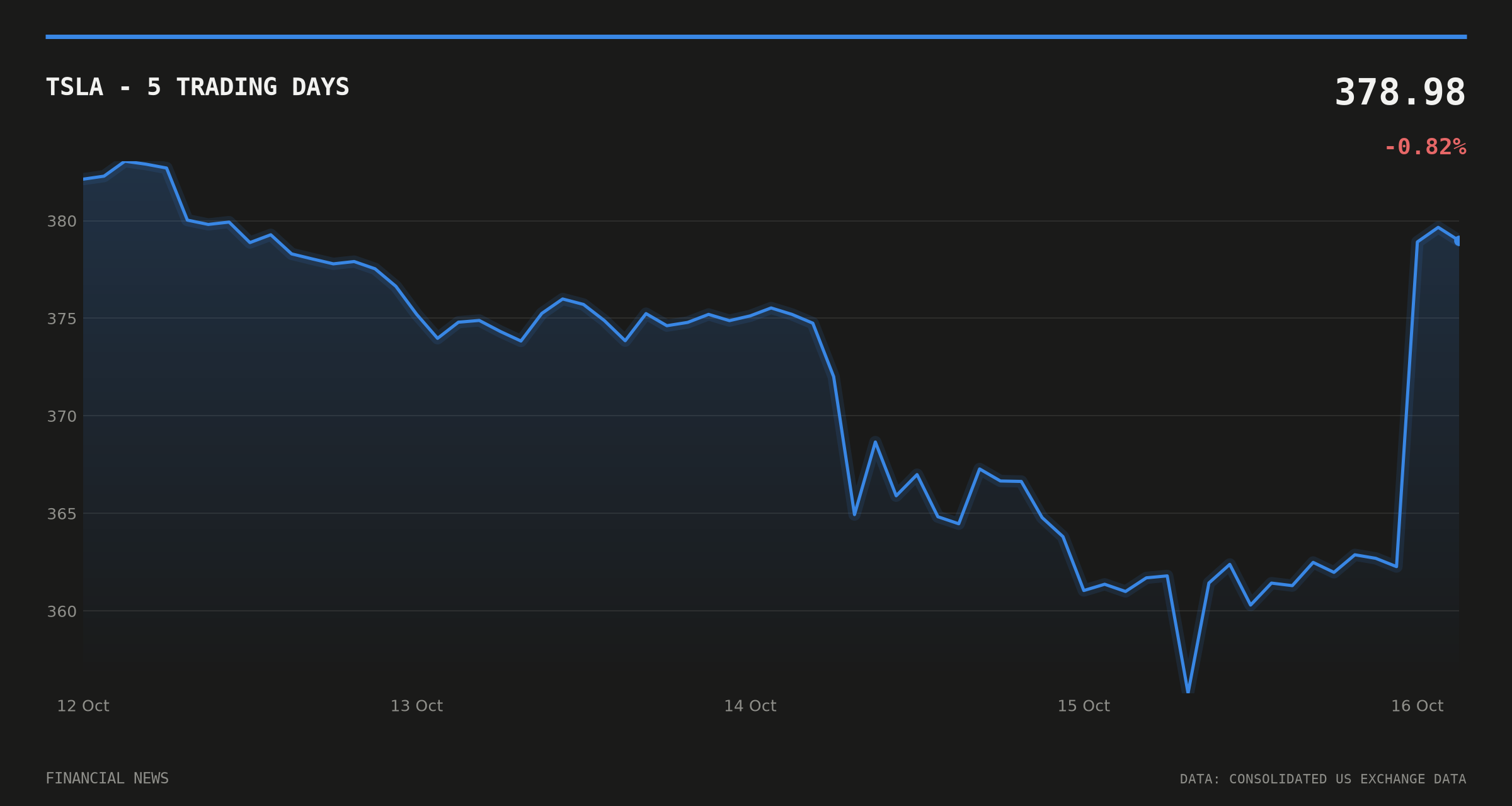

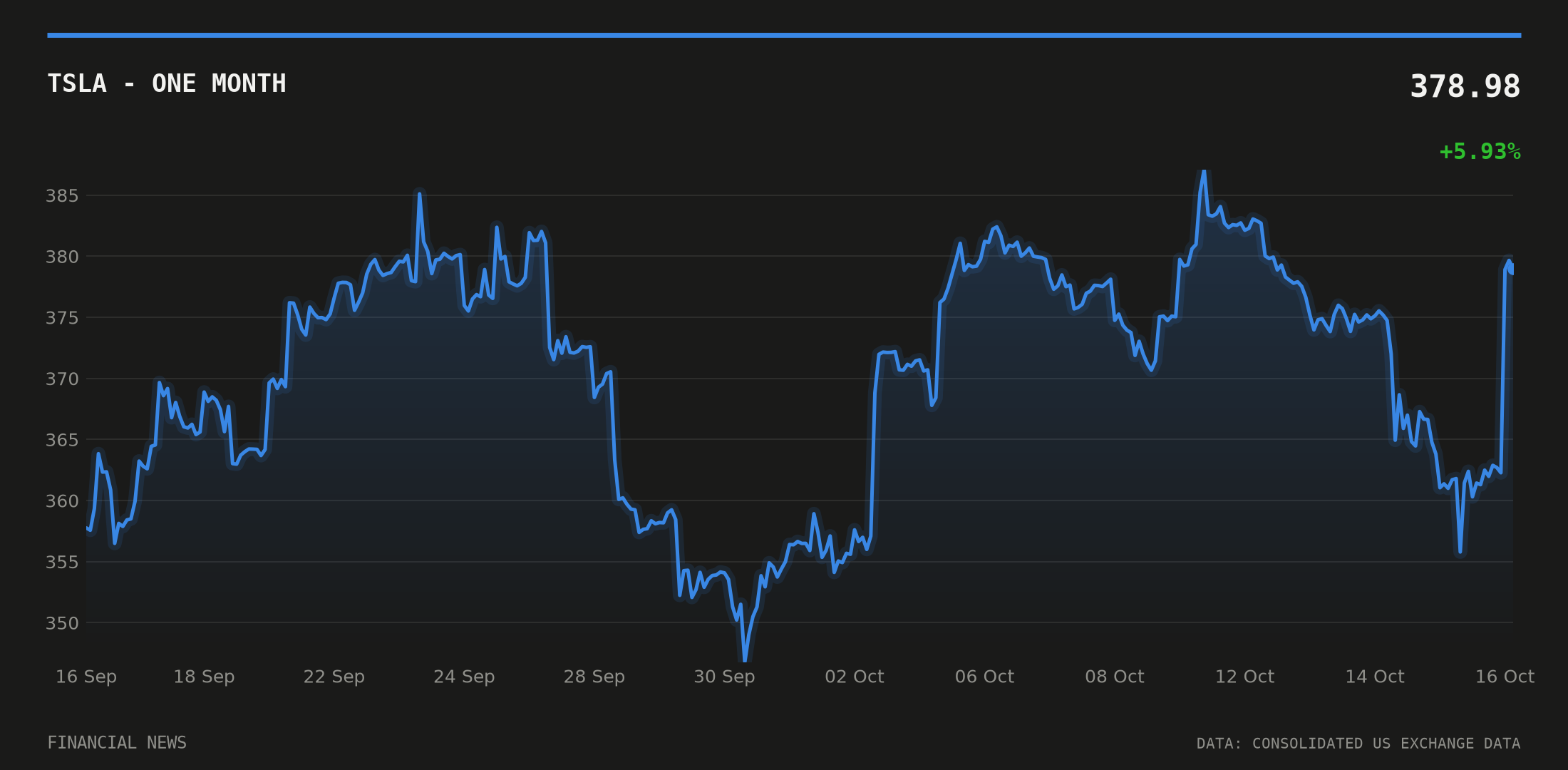
Tesla (NASDAQ: TSLA) shares rose on Friday 16 October 2026, a day after the carmaker unveiled a redesigned Roadster built with SpaceX technology. The stock gained 4.51% to $378.85 by mid-morning, according to consolidated exchange data.
The move came within Tesla’s recent trading range, between a 20-day low of $346.77 and a high of $387.11. Premarket trading had already shown the stock up 4.76% to $379.70, TipRanks reported, while GuruFocus put the gain at 5%.
What the Tesla Roadster reveal showed
Tesla and SpaceX staged the event on 15 October at a SpaceX test site near McGregor, Texas, according to CNBC. The prototype drove up an inverted ramp, held in place by a fan-based suction system, then used cold-gas thrusters developed with SpaceX to flip in midair and land. In a second demonstration it vaulted over a line of parked cars and a semi-truck.
Tesla said certain versions of the car can accelerate from zero to 60mph in under a second and exceed 230mph, Reuters reported. Production is not due to start until 2028, and Tesla is taking deposits of $50,000 and $250,000 on two of three trims, the company said, as reported by LiveNOW FOX.
Analysts flag a hype rally, not a fundamentals shift
Not everyone was impressed. Analyst Gene Munster called the demonstration ‘an engineering flex with no commercial value beyond embarrassing traditional car makers,’ according to Reuters.
eToro analyst Josh Gilbert told Reuters that Tesla’s upcoming margin and cash-flow figures would matter far more to investors than the Roadster spectacle, with third-quarter results due within days. Barclays, meanwhile, flagged the possibility of a Tesla-SpaceX merger announcement before December, adding to the day’s interest in the stock, TipRanks reported.
The Roadster itself has a long history of slipped deadlines. Elon Musk first promoted the SpaceX thruster package in 2018, and the car has missed every delivery target set since its initial concept debut in 2017, CNBC noted.
The numbers behind the rally
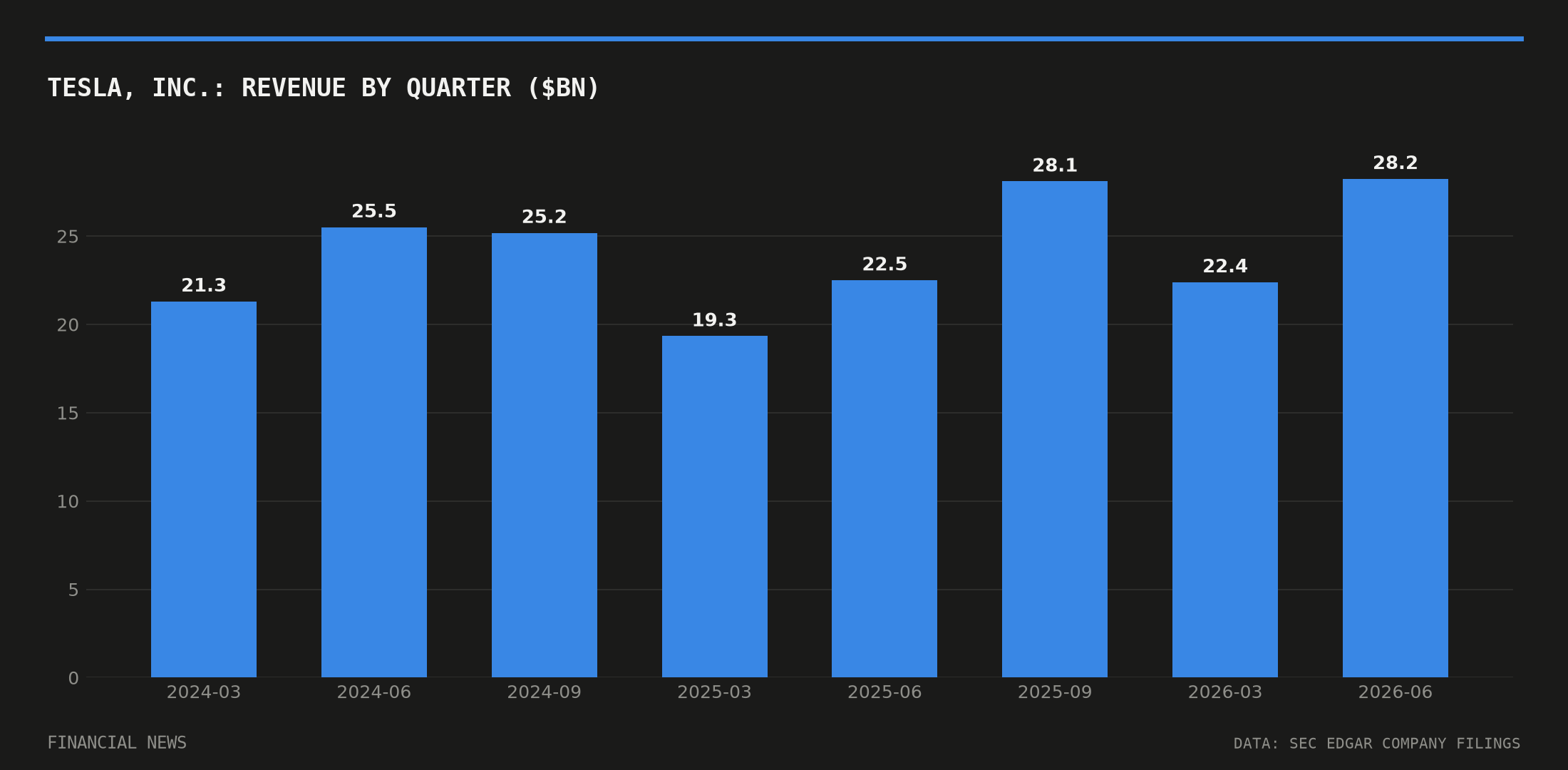
Tesla’s underlying financial trajectory offers some context for why analysts are cautious about reading too much into a one-day pop. The company reported revenue of $28.24bn for the quarter ended 30 June 2026, with net income of $1.11bn, according to its 10-Q filing. That followed a first quarter in which revenue fell to $22.39bn and net income to $477m, continuing a pattern of volatile quarterly results stretching back through 2024 and 2025.
Tesla’s net income swung from $1.13bn in the first quarter of 2024 to $2.17bn by the third quarter that year, before dropping sharply to $409m in the first quarter of 2025. Diluted earnings per share followed the same path, from 34 cents in early 2024 to a low of 12 cents in early 2025, before recovering to 32 cents in the most recent quarter. Against that backdrop, a single product reveal, however striking, does little to alter the revenue and margin trends that will shape Tesla’s next earnings report.
Positioning data gave no sign that the rally was driven by short-covering. The FINRA short-volume ratio for Tesla stood at 0.429 on 15 October, within its recent range of roughly 0.40 to 0.48 over the prior fortnight, FINRA data show. Treasury markets were similarly quiet: the 10-year yield held at 5.19%, barely changed from 5.21% the prior session, according to FRED data from the Federal Reserve Bank of St Louis, suggesting the move was specific to Tesla rather than a broader market shift.
Tesla’s third-quarter results are due within days of the reveal, and Gilbert’s comments point to where investor attention is likely to turn next: not the thrusters, but the margins.
This article is for information only and is not investment advice or a recommendation to buy or sell any asset. Markets move quickly; figures are correct as sourced at the time of writing. Always do your own research before making financial decisions.
