

Wells Fargo’s Q3 earnings beat Wall Street’s profit forecasts on 13 October 2026, but revenue fell short of estimates and the shares dropped anyway.
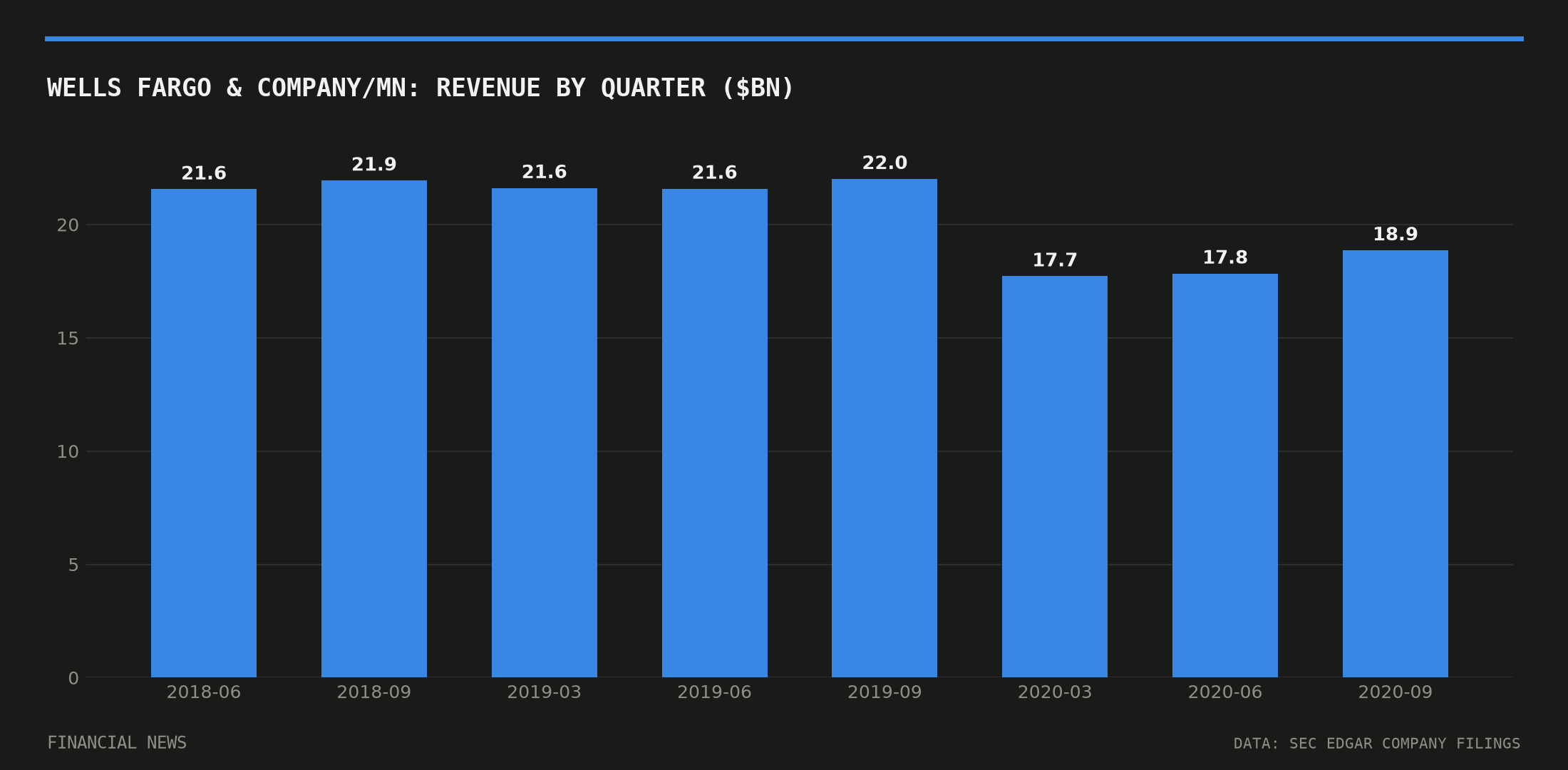
Diluted earnings per share came in at $1.87, up 13% from $1.66 a year earlier. Revenue rose 2% year-on-year to $21.87bn, but that missed the $22.31bn consensus analysts had pencilled in.
Profit up, revenue short
Net income reached $5.95bn, up 6% on the same quarter last year. Return on tangible common equity, a closely watched profitability measure for US lenders, rose to 16.3% in the quarter, extending a climb from 14.7% to 16.2% across the first nine months of the year.
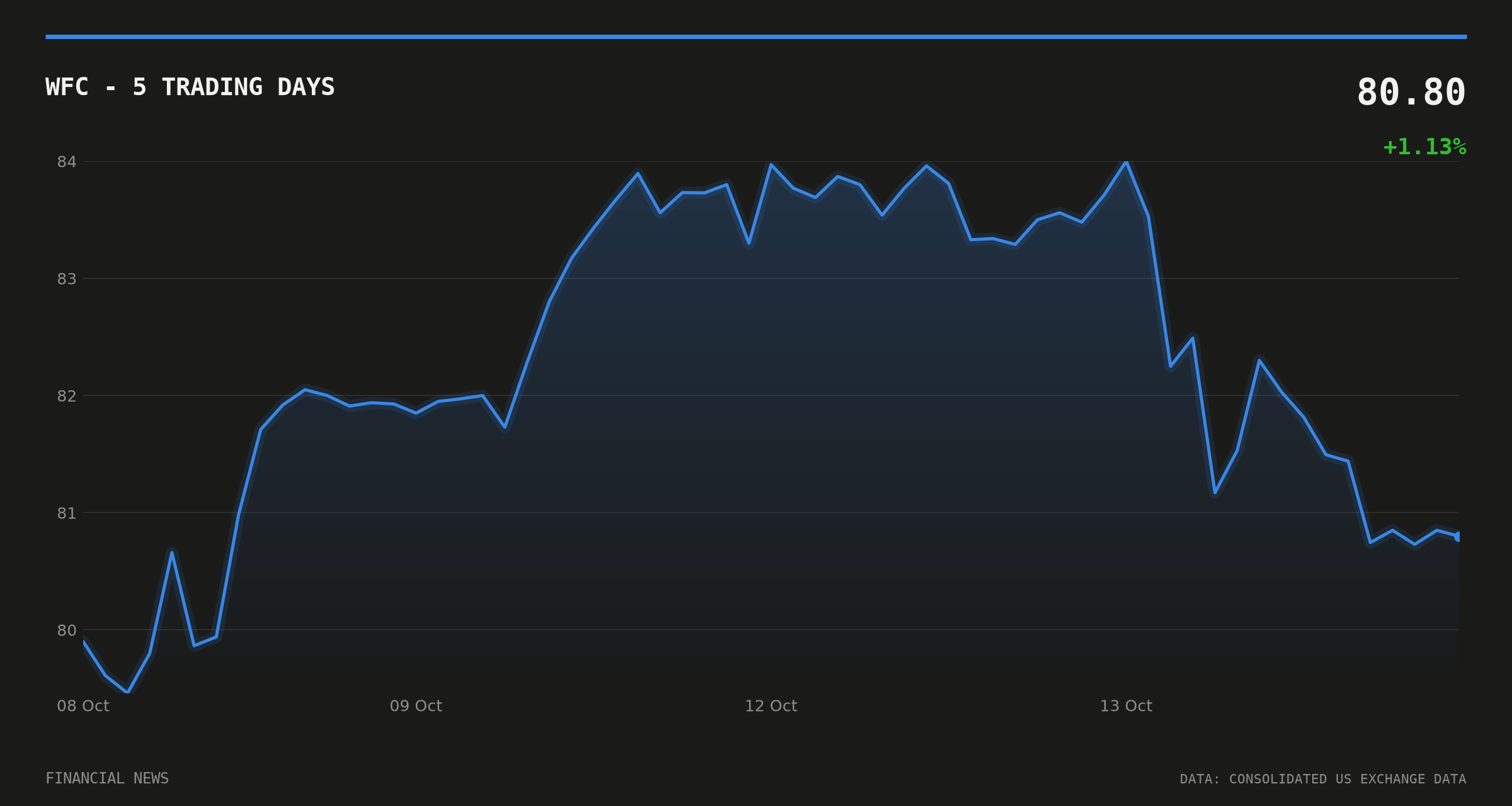
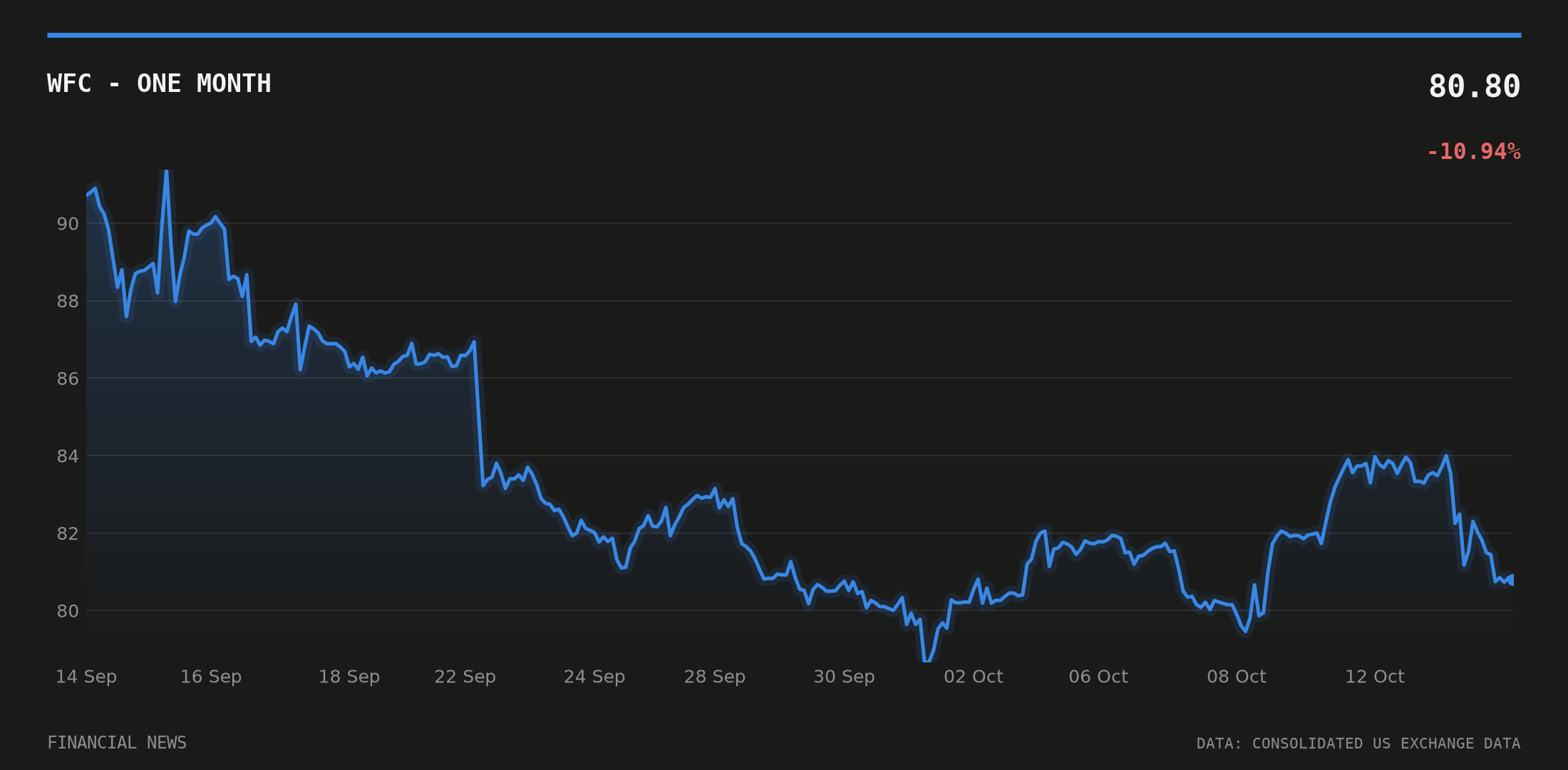
The bank’s shares closed at $80.80, down 1.24% on the day and 3.47% lower over the prior 20 trading days, according to consolidated exchange data cited in the earnings call transcript. The stock had traded as high as $84 and as low as $78.67 over that same 20-day window.
FINRA’s daily short-sale data shows the short-sale ratio for Wells Fargo jumped to 0.433 on earnings day, up from 0.29 the previous session and well above the 0.20-0.26 range seen in the week before results. The move suggests some investors were positioning for exactly this kind of mixed reaction.
Where the growth came from
Segment performance was uneven but broadly positive. Wealth and investment management revenue climbed 12% year-on-year, commercial banking rose 6%, consumer banking and lending added 5%, and corporate and investment banking grew 3%, according to the bank’s earnings release.
Average loans and average deposits each grew 11% from a year earlier, the strongest balance-sheet expansion the bank has reported in recent quarters. Management pointed to that growth, alongside credit performance and expense discipline, as evidence the underlying franchise is strengthening even as headline revenue growth stayed modest.
Working against the top line, noninterest income fell 1% to $9.35bn, dragged down by weaker gains on venture capital holdings and the divestiture of the bank’s railcar leasing business, according to MarketScreener’s analysis of the results. That detail did not feature prominently in the call itself, but it helps explain why a double-digit EPS beat failed to translate into a share-price gain.
Technology push and capital targets
Executives used the call to highlight continued investment in artificial intelligence and digital payments, including a push into tokenised deposits built on blockchain infrastructure. The bank reiterated a target range for its common equity tier 1 ratio of 10% to 10.5%, the regulatory capital buffer that determines how much it can return to shareholders or redeploy into lending.
Management also flagged preparations for potential economic headwinds tied to inflation and interest rates, while describing the broader growth outlook as constructive. That caution lines up with the macro backdrop: the US unemployment rate ticked up to 4.2% in September from 4.1% the month before, according to Federal Reserve data, a modest softening that bears on credit-quality commentary from lenders this earnings season.
Treasury yields, which shape the net interest income banks earn on loans and securities, held close to recent levels into the results. The 10-year yield stood at 5.24% and the 2-year at 4.80% as of 9 October, according to Federal Reserve Bank of St Louis data, with the 10-year/2-year spread narrowing slightly to 0.42 percentage points by the day of the call.
What the numbers tell investors
The quarter leaves a familiar pattern for banks this reporting season: an EPS beat built on expense control and loan growth, set against a revenue line that consensus had expected to run hotter. For Wells Fargo, the loan and deposit growth of 11% each points to genuine franchise momentum, even as the revenue shortfall and the drop in noninterest income gave the market reason to mark the shares down rather than up.
Investors will next look for detail in the bank’s full 10-Q filing on how the tokenised-deposit initiative and AI investment are being funded, and whether the CET1 target range of 10% to 10.5% leaves room for further buybacks as the capital position develops through the final quarter of the year.
This article is for information only and is not investment advice or a recommendation to buy or sell any asset. Markets move quickly; figures are correct as sourced at the time of writing. Always do your own research before making financial decisions.
