
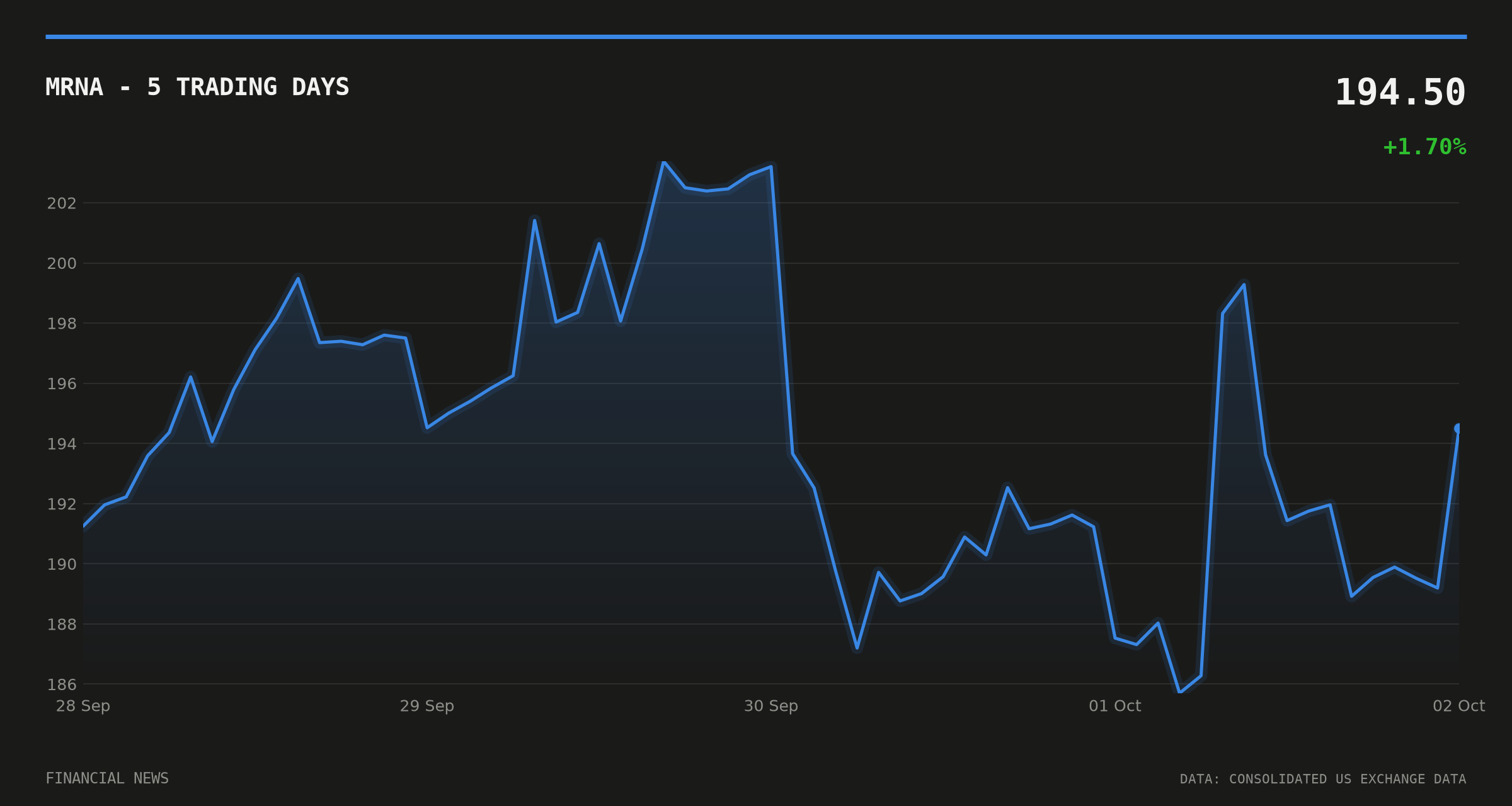

Moderna’s (NASDAQ: MRNA) Nasdaq-100 inclusion takes effect before market open on 9 October 2026, Nasdaq said, with the biotech replacing Warner Bros. Discovery (NASDAQ: WBD) in the index, according to a statement issued on 2 October.
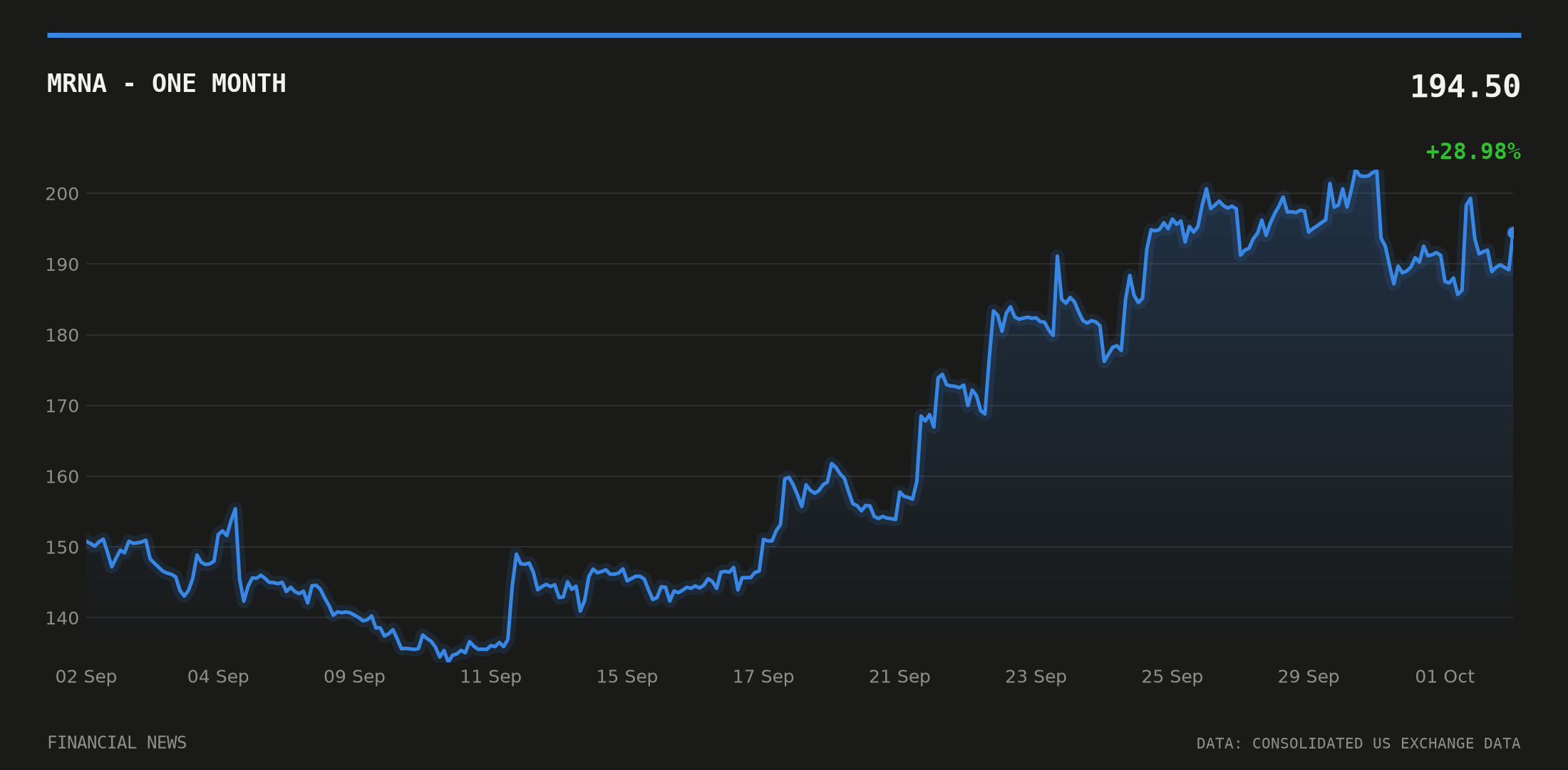
Moderna shares have climbed 42.12% over the past 20 trading days to close at $193.15, even as the company reported a $1.34bn net loss for the first quarter of 2026. The index seat reflects market capitalisation and liquidity rules, not a turn to profitability.
Moderna Nasdaq-100 inclusion driven by trial data, not earnings
The move was first reported by Benzinga ahead of Nasdaq’s own confirmation. Nasdaq-100 membership is determined by market value and trading volume among companies listed on the Nasdaq exchange, reviewed periodically outside the index’s scheduled annual reconstitution.
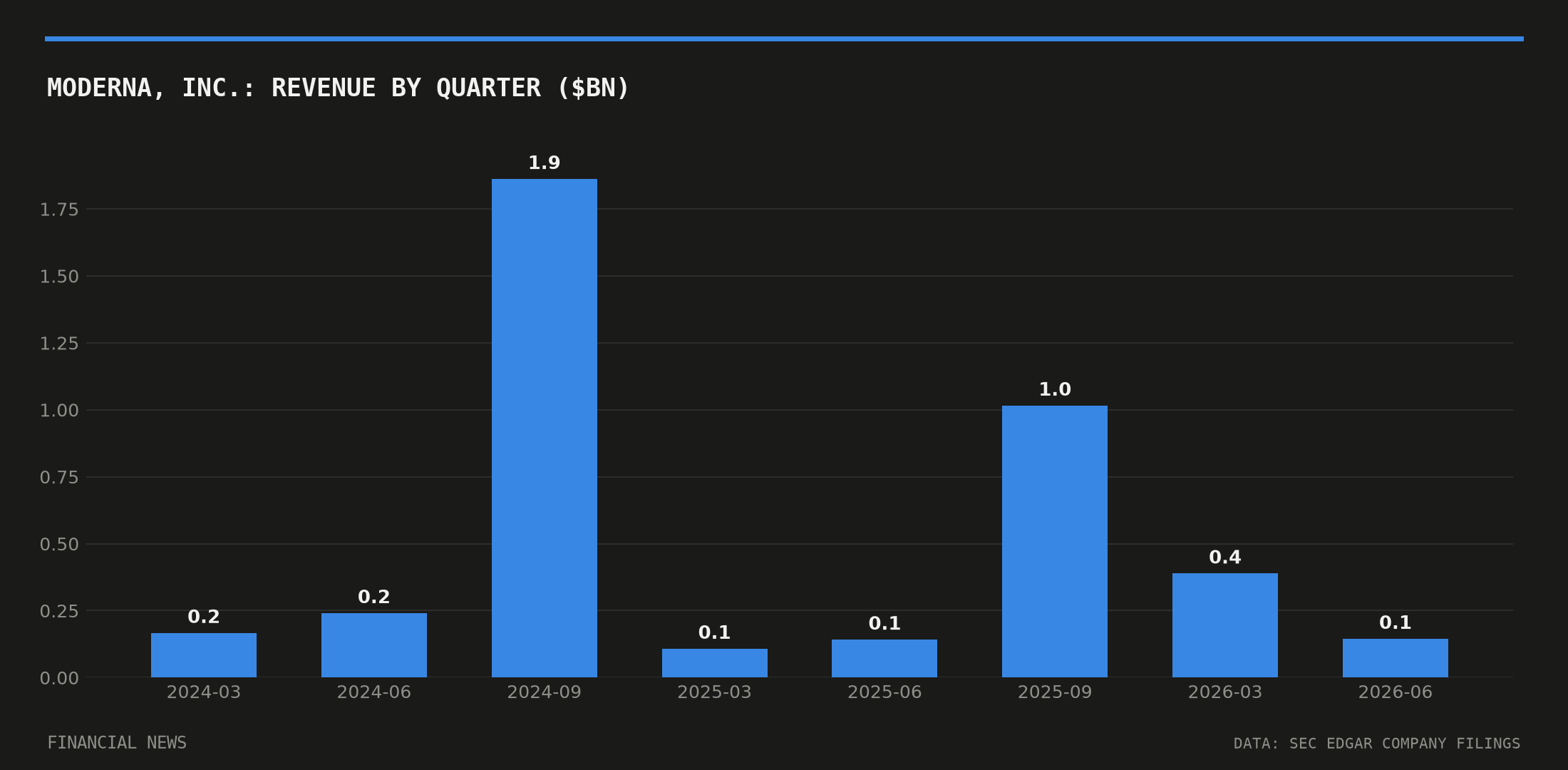
Moderna’s run-up has little to do with its topline. Quarterly revenue has fallen sharply from pandemic-era peaks: the company reported $145m in revenue for the second quarter of 2026, against net losses that have run above $700m in four of the past five quarters, filings show. The first quarter of 2026 alone produced a $1,343m net loss, while the second quarter’s shortfall came in at $782m.
What has moved the share price is clinical, not commercial: positive trial data for a personalised mRNA melanoma vaccine developed with Merck lifted the stock to a 52-week high near $194.82 in late September, according to FX Leaders. The rally has been large enough that some Wall Street analysts have turned more cautious even as the stock climbs; two have cut their ratings to sell-equivalent calls in recent weeks despite a surge the Motley Fool put at roughly 177% from earlier 2026 lows, according to a Motley Fool report.
Why Warner Bros. Discovery is leaving the index
WBD’s exit is not a demotion for underperformance in the usual sense. The company’s pending acquisition by Paramount Skydance is expected to close on 6 October 2026, according to Reuters, via Investing.com, which has already prompted WBD’s removal from other major benchmarks, including MSCI and S&P indexes. Nasdaq’s reshuffle lines up with that corporate timetable rather than any fresh assessment of the broadcaster’s trading performance.
A Form 4 filed with the SEC on 1 October showed insider activity at WBD around the time the index-exit news broke, filed under Anthony Noto’s name as a reporting person. The filing does not itself explain the index change but lands in the same window as the merger’s expected completion.
The wider backdrop
The reshuffle lands against a steepening US yield curve: the 10-year/2-year Treasury spread widened to 0.46 percentage points by 1 October from 0.41 a day earlier, according to data from the Federal Reserve Bank of St. Louis. Index-fund rebalancing tied to Nasdaq-100 changes typically triggers mechanical buying and selling from passive funds that track the benchmark, independent of the fundamental case for either stock.
For Moderna, trading volume has run below its 20-day average even as the shares advanced, with turnover at roughly 71% of that benchmark as of the two most recent sessions. The stock’s 20-day range spans a low of $135.90 to a high of $203.38, underscoring how much ground it has covered since the melanoma-vaccine data emerged in late September.
What happens next
Nasdaq’s change takes effect before the opening bell on 9 October, meaning funds tracking the Nasdaq-100 will need to add Moderna and drop Warner Bros. Discovery by that date. Investors will also be watching whether the WBD-Paramount Skydance deal closes on schedule on 6 October, the event that set WBD’s index exit in motion in the first place.
This article is for information only and is not investment advice or a recommendation to buy or sell any asset. Markets move quickly; figures are correct as sourced at the time of writing. Always do your own research before making financial decisions.
