

FTAI Aviation (NASDAQ: FTAI) has acquired 27 Boeing (NYSE: BA) 737-700 aircraft from Canadian carrier WestJet, the company said on 28 September 2026.
The transaction splits into two parts: a sale-leaseback of 17 aircraft through FTAI’s 2026 special-purpose vehicle, the second investment vehicle under its Strategic Capital business, with the jets remaining on lease to WestJet, and a separate purchase of 10 off-lease 737-700s to feed FTAI’s Aerospace Products engine and parts business.
Deal structure confirmed across reporting
The GlobeNewswire release describing the deal was independently repeated, with matching executive quotes, by RTTNews and other wire outlets, which confirmed the same 17-plus-10 split.
WestJet Group’s chief financial officer, Mike Scott, said the deal marks the start of the airline’s 737-700 fleet retirement, calling it a strategic milestone, according to Investing.com. FTAI president David Moreno said the transaction shows how the company’s Strategic Capital and Aerospace Products units work together to serve airlines, per citybiz.
Neither company disclosed financial terms. RTTNews described the acquisition as one of FTAI’s largest aircraft transactions to date. McGuireWoods advised FTAI and BD&P advised WestJet on the deal.
Stock has fallen through a run of fleet news
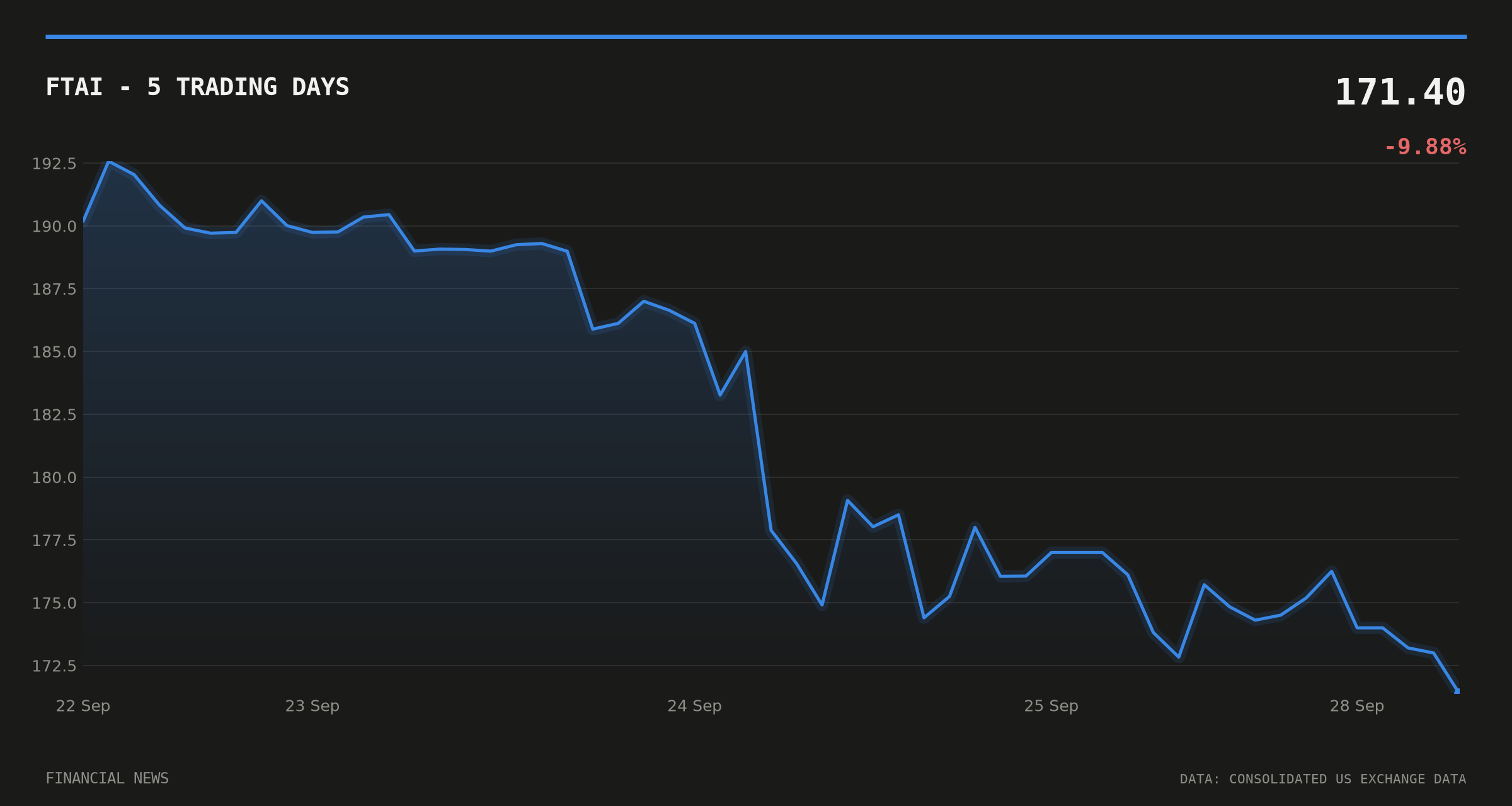
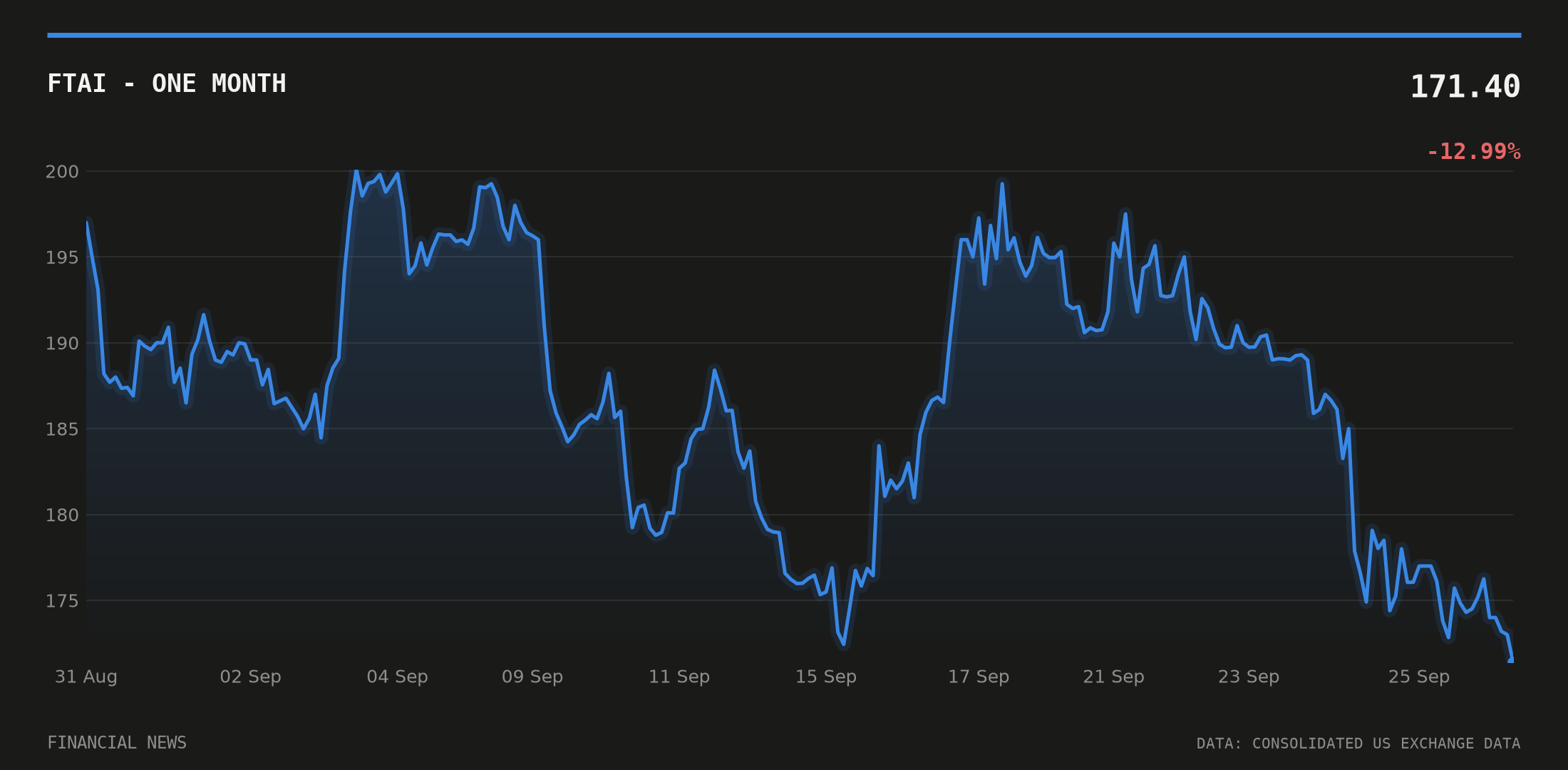
FTAI shares closed at $169.19 on 28 September, down 3.05% on the day and 13.63% over 20 trading sessions, having traded as high as $199.26 in that window. The stock had already fallen 6.2% to $174.53 on 24 September, a decline that predates the WestJet announcement, according to GuruFocus.
Barclays cut its price target on FTAI to $310 from $350 around the same period, a move that reflected broader analyst caution rather than any flaw in the WestJet transaction. FINRA short-sale data show the daily short-volume ratio for FTAI swinging between 0.317 and 0.602 across the ten sessions to 25 September, with no clear directional build-up ahead of the announcement.
Earnings momentum has been strong into the deal
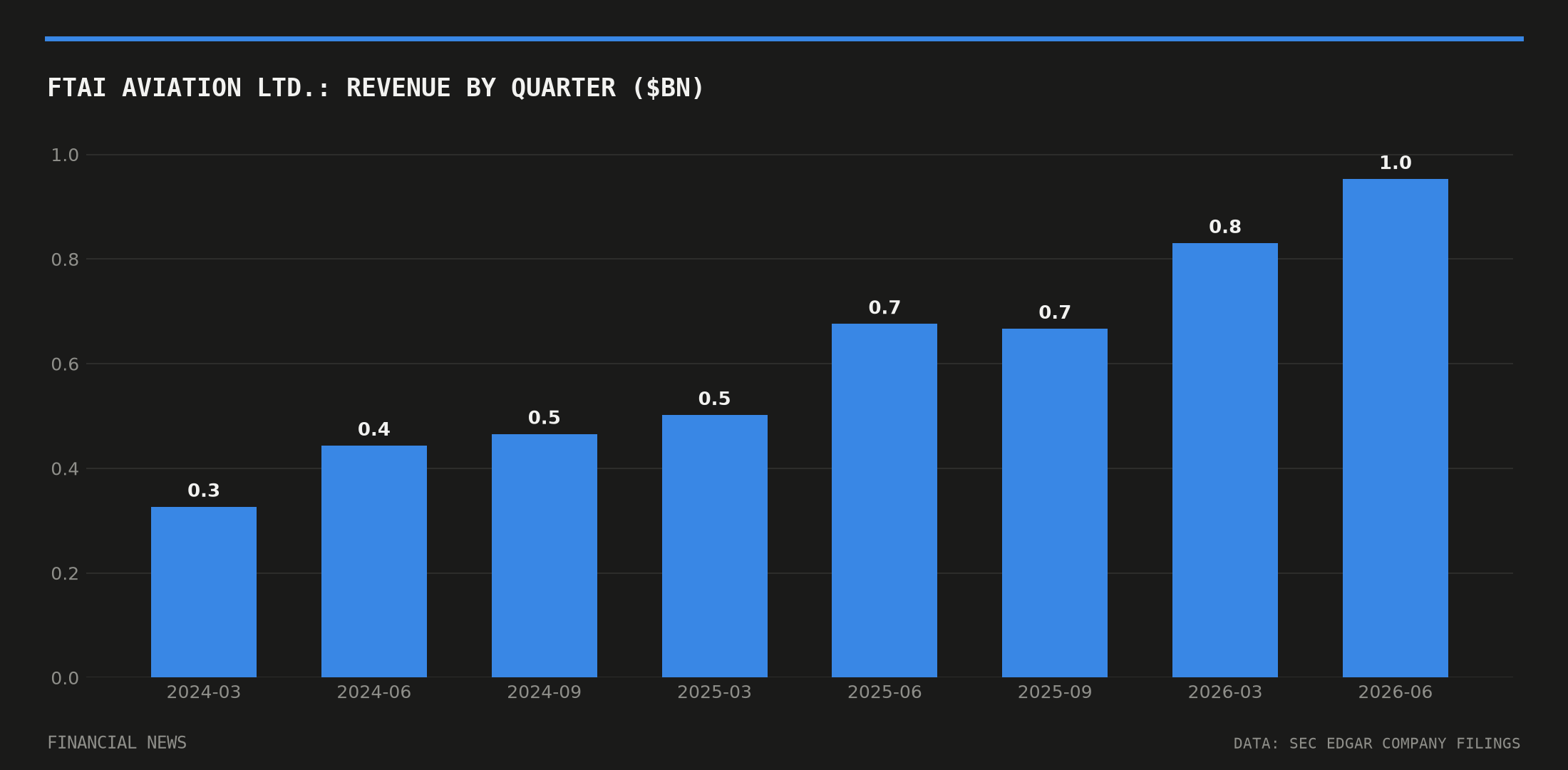
The WestJet acquisition lands against a backdrop of accelerating top-line growth at FTAI. Quarterly revenue rose from $326.7m in the first quarter of 2024 to $953.1m in the second quarter of 2026, more than tripling over roughly two years, according to SEC filings. Diluted earnings per share have also climbed, from $0.31 in the first quarter of 2024 to $1.13 in the second quarter of 2026, with a loss of $2.26 per share in mid-2024 the outlier in an otherwise upward run that included $1.57 in the second quarter of 2025 and $1.29 in the first quarter of 2026.
No standalone filing disclosing the WestJet transaction itself has yet appeared on EDGAR, so the deal’s balance-sheet impact cannot be sized from a primary regulatory document; the historical financials on file predate this announcement and neither confirm nor contradict its scale.
Rates backdrop for leasing deals
The transaction also arrives with financing costs for aircraft lessors edging higher. The 10-year US Treasury yield stood at 5.18% on 24 September 2026, up from 5.11% previously, according to FRED data from the Federal Reserve Bank of St. Louis, while the 2-year yield held closer to flat at 4.87%. The resulting 10-year/2-year spread widened to 0.36 percentage points from 0.31, a modestly steeper curve that raises the cost backdrop against which sale-leaseback structures like FTAI’s 2026 vehicle get priced.
Wider macro data remained steady through the period: US unemployment held at 4.1% in August 2026, unchanged from the prior month, while consumer prices ticked up to an index level of 334.131 from 332.813, according to Federal Reserve data. Neither reading points to an abrupt shift in the conditions facing aircraft lessors, leaving FTAI’s share-price slide this month more a function of analyst positioning than of the fundamentals underpinning the WestJet fleet deal itself.
Investors will next look to FTAI’s third-quarter results for any detail on how the 27-aircraft transaction is booked across its Strategic Capital and Aerospace Products segments.
This article is for information only and is not investment advice or a recommendation to buy or sell any asset. Markets move quickly; figures are correct as sourced at the time of writing. Always do your own research before making financial decisions.
