

Nvidia (NASDAQ: NVDA) said on 28 September 2026 that its board had authorised a $150bn increase to its share repurchase programme. The move takes the company’s remaining buyback capacity to $235bn.
The figure was confirmed independently by Reuters and CNBC the same morning, both citing the $150bn increase and $235bn remaining total set out in Nvidia’s statement.
What the Nvidia share buyback actually changes
Nvidia’s repurchase programmes are typically open-ended, with the company buying back stock opportunistically rather than on a fixed schedule. The new authorisation adds to, rather than replaces, capacity already approved by the board, according to the company’s release.
The Wall Street Journal described the addition as a record for a single buyback increase. That framing is the newspaper’s own characterisation rather than a claim Nvidia’s release backs with a documented comparison against other companies’ repurchase histories, and no such comparison appears in the disclosures reviewed for this article.
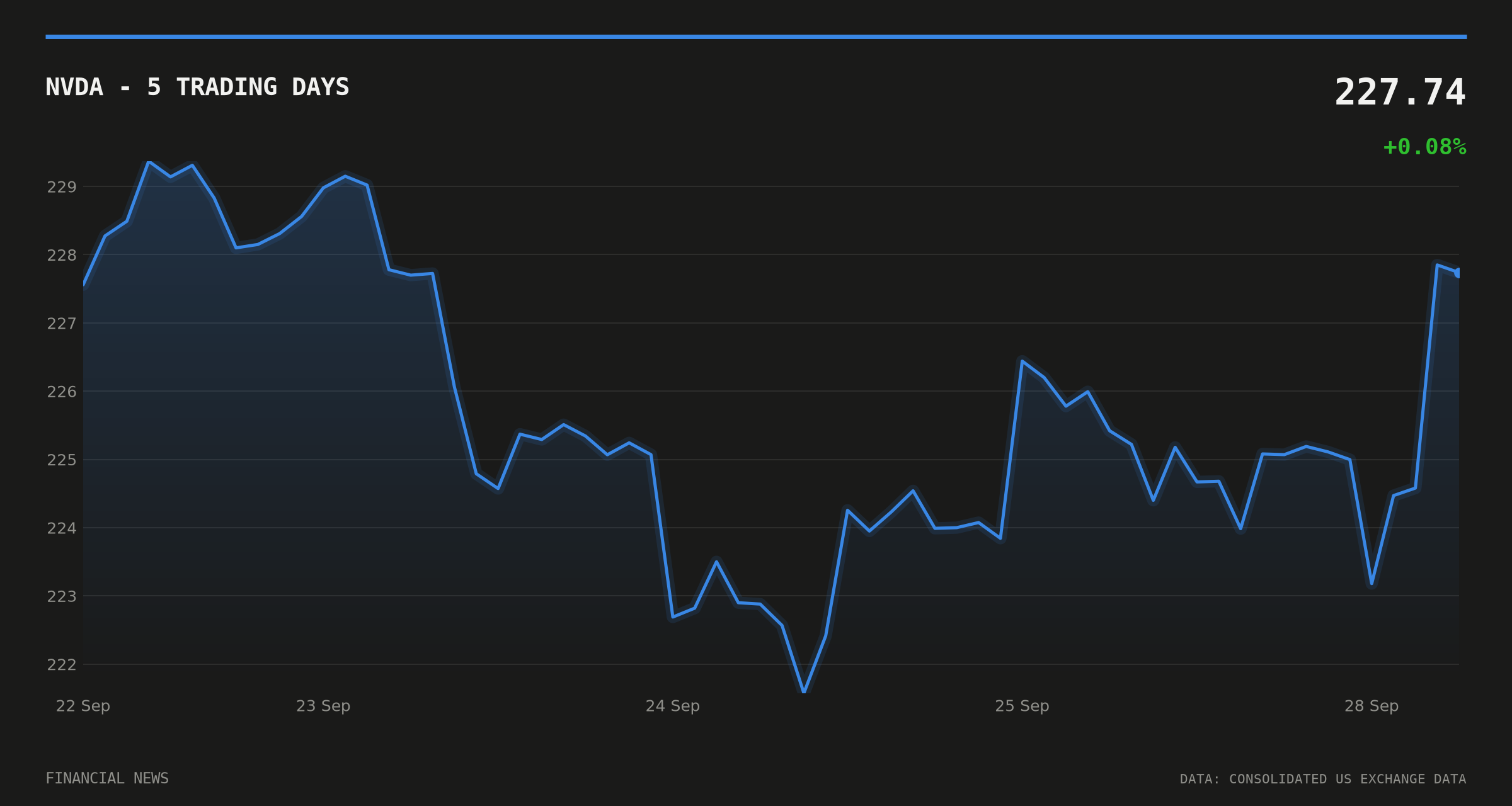
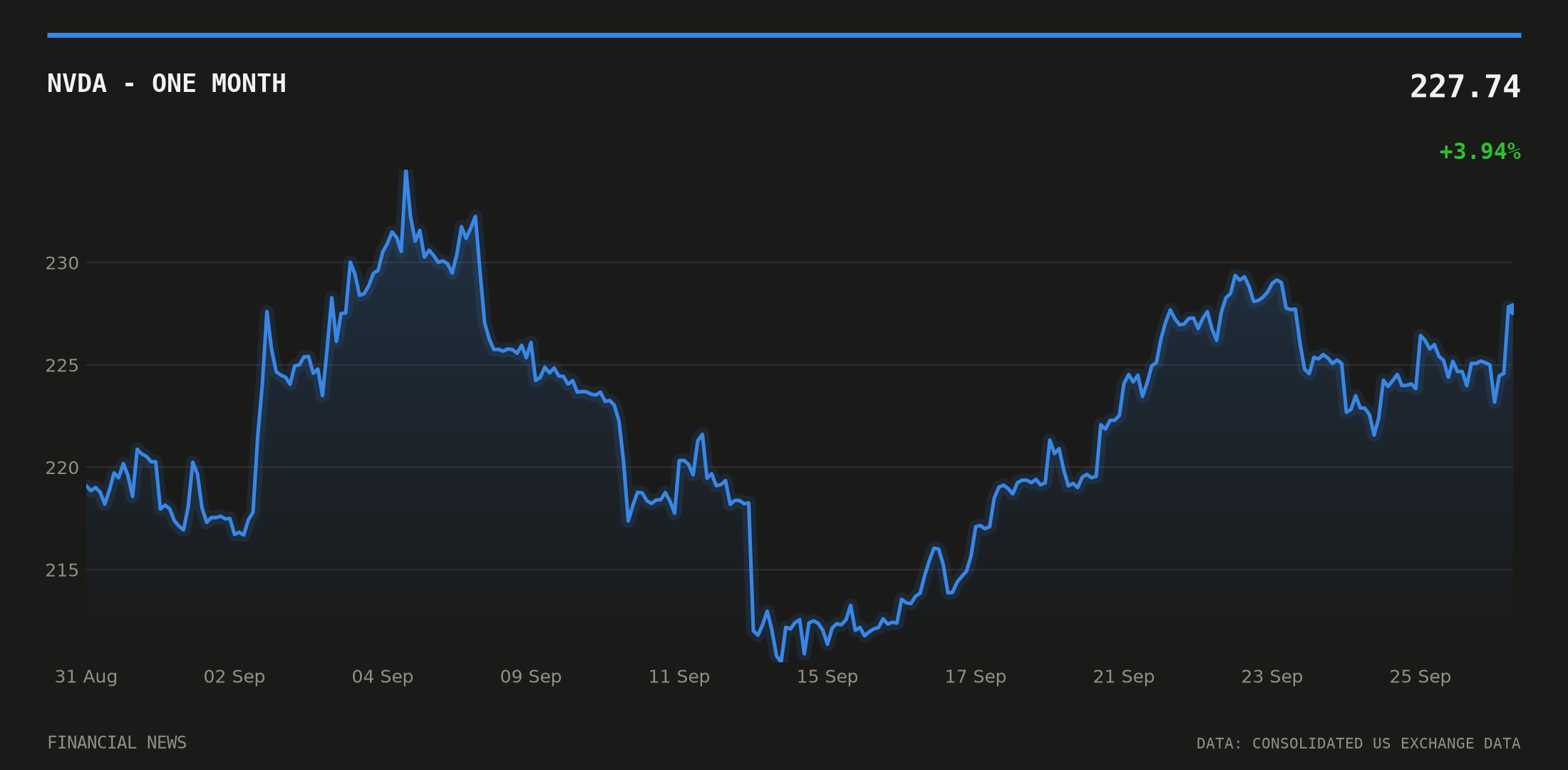
Barron’s reported that Nvidia shares rose on the news. Trading data show the stock at $227.85 as of 11:00 UTC on 28 September, up 1.24% on the day – a gain, but one that came on volume running at roughly 45% of its 20-day average, well short of the surge that would typically accompany a headline-grabbing capital-return announcement.
The earnings base behind the number
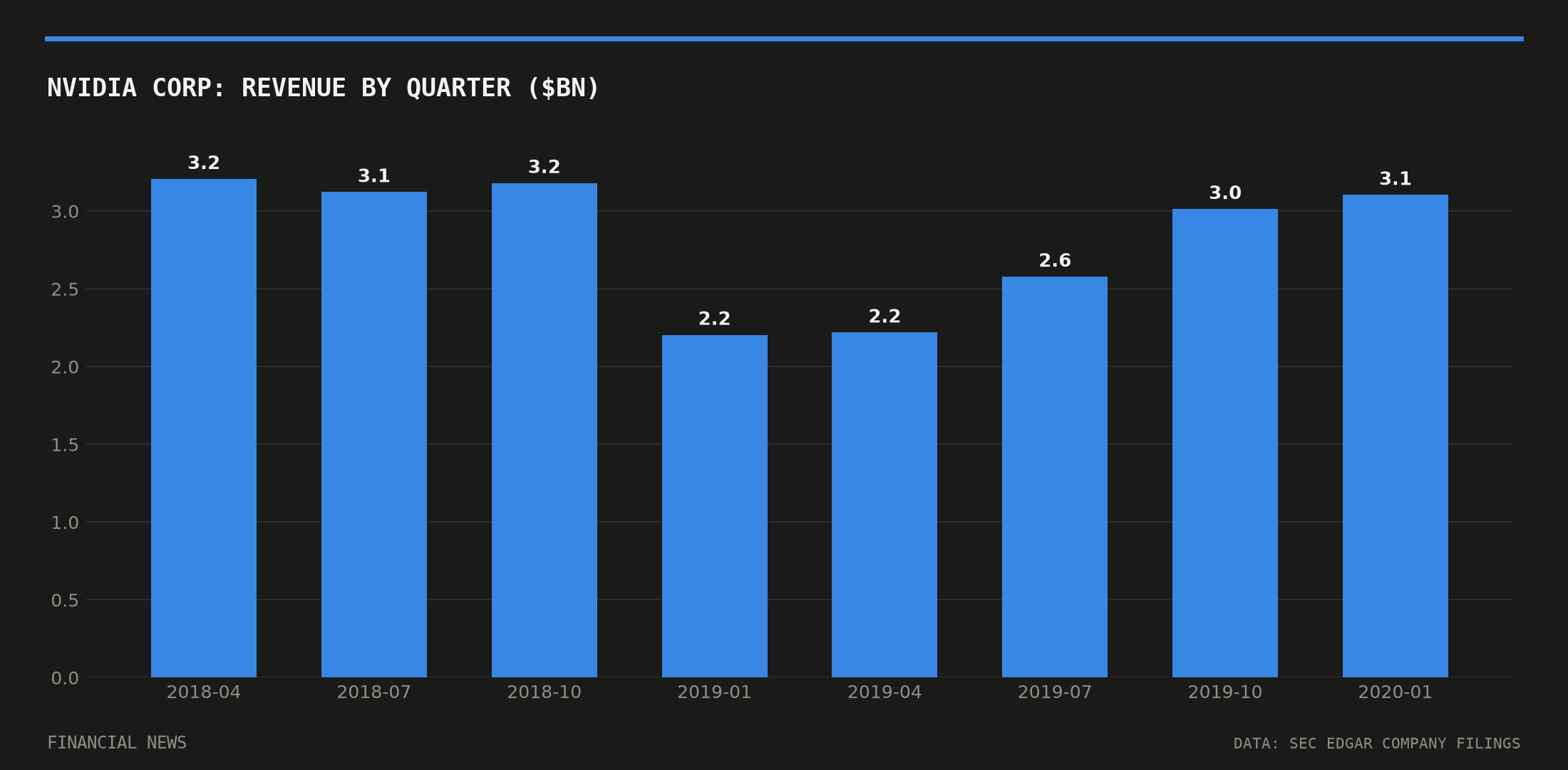
A $235bn authorisation is large by any measure, but it sits against a profit base that has expanded sharply. Nvidia’s quarterly net income rose from $14.881bn in the quarter ended 28 April 2024 to $59.688bn in the quarter ended 26 July 2026, according to the company’s 10-Q filings with the SEC. That scale of quarterly earnings gives the board room to authorise buybacks well beyond what it might spend in any single year.
Diluted earnings per share tell a related but distinct story: EPS fell from $5.98 to $0.67 between consecutive quarters in 2024, a move consistent with Nvidia’s ten-for-one stock split that year rather than any deterioration in underlying profit. The split is relevant context for anyone comparing per-share buyback arithmetic across periods.
No filing in the public record independently documents the board’s resolution beyond the press release and the wire reports that followed it on 28 September. That is not unusual – companies routinely announce buyback authorisations by release before any related disclosure appears in a subsequent filing – but it means the $150bn figure currently rests on Nvidia’s own statement and the news organisations that picked it up, rather than on a separate regulatory document.
Positioning and rates backdrop
Short interest in Nvidia had been easing into the announcement. FINRA’s daily short-sale data show the short-volume ratio falling from 0.44 on 14 September to 0.35 on 25 September, suggesting bearish positioning was already thinning out before the buyback news broke, rather than building against it.
The announcement also lands against a backdrop of rising long-term borrowing costs. The 10-year US Treasury yield stood at 5.18% on 24 September, up from 5.11%, according to Federal Reserve data, while the 2-year yield held closer to flat at 4.87%. Higher yields raise the opportunity cost of holding cash rather than returning it to shareholders, a consideration boards weigh when sizing repurchase programmes.
Nvidia has not set a timetable for deploying the expanded authorisation, and the company’s release gives no schedule for when purchases under the new capacity might begin. Investors will be watching Nvidia’s next quarterly filing for any detail on how much of the $235bn the company has actually put to work.
This article is for information only and is not investment advice or a recommendation to buy or sell any asset. Markets move quickly; figures are correct as sourced at the time of writing. Always do your own research before making financial decisions.
