
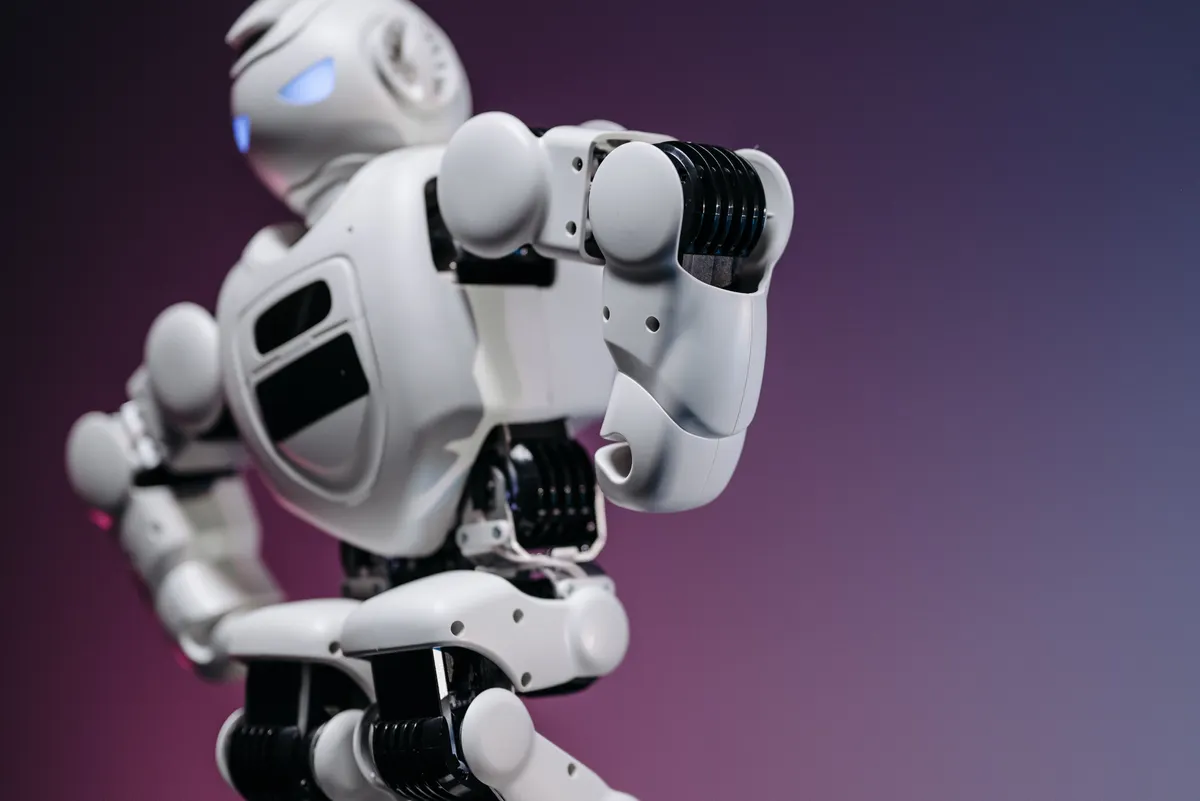

Seeing Machines Physical AI launched on 17 August 2026 as the AIM-listed computer vision group extends its human-centred AI technology from automotive cabins to humanoid and industrial robots. The new platform draws on more than 25 years of human factors research to give robots a richer, real-time understanding of the people and environments around them.
From driver monitoring to robotics
Seeing Machines (SEE), incorporated in Canberra, Australia, built its reputation on driver and occupant monitoring systems now fitted in more than eight million vehicles. The Physical AI Platform transfers that capability to robotics: rather than recognising discrete objects, it constructs a dynamic three-dimensional map of people, objects, and surroundings, enabling a robot to interpret human behaviour and anticipate risk in real time.
Chief executive Paul McGlone said the launch was a natural evolution of the company’s long-standing work in human-machine interaction. He said understanding people and their environment would become as important as the task a robot is performing as machines move out of research labs and into factories, hospitals, homes, and public spaces.
\p>The company’s robotics product page frames the platform as a dedicated product line within its portfolio, positioned to support safe human-robot interaction across multiple sectors.
A commercial contract already in place
The platform’s public debut came five days after a quieter disclosure. According to Seeing Machines’ investor announcements, the company entered an Advanced Robotics Development Contract on 12 August 2026, indicating a paying commercial engagement was already secured before the product was formally announced.
Seeing Machines identifies manufacturing, logistics, healthcare, aged care, warehousing, mining, and industrial automation as target markets, all sectors where robots are increasingly expected to operate alongside people rather than in isolation.
Seeing Machines Physical AI enters a fast-moving market
The humanoid robot sector drew a record $1.2 billion in funding in 2024, according to CB Insights. The research firm projected that figure would reach $2.3 billion in 2025, reflecting the pace at which capital is flowing into human-capable automation.
Seeing Machines is not relying on robotics alone to drive growth. In June 2026, the company disclosed a US$31 million expansion on an existing automotive production programme, and separately announced two new Japanese OEM programmes, both on 15 June 2026, according to its investor announcements page.
The cluster of announcements, a robotics contract, a platform launch, an automotive expansion, and new OEM wins, all within two months, points to a company broadening its revenue base at pace. Whether the robotics opportunity converts at the same rate as its automotive business will be the test investors watch most closely.
