

Oracle (NYSE: ORCL) unveiled a new electronic health record system built specifically for cancer care on 23 September 2026. The company announced the Oracle Health Oncology EHR at its Oracle Health and Life Sciences Summit in Orlando, Florida.
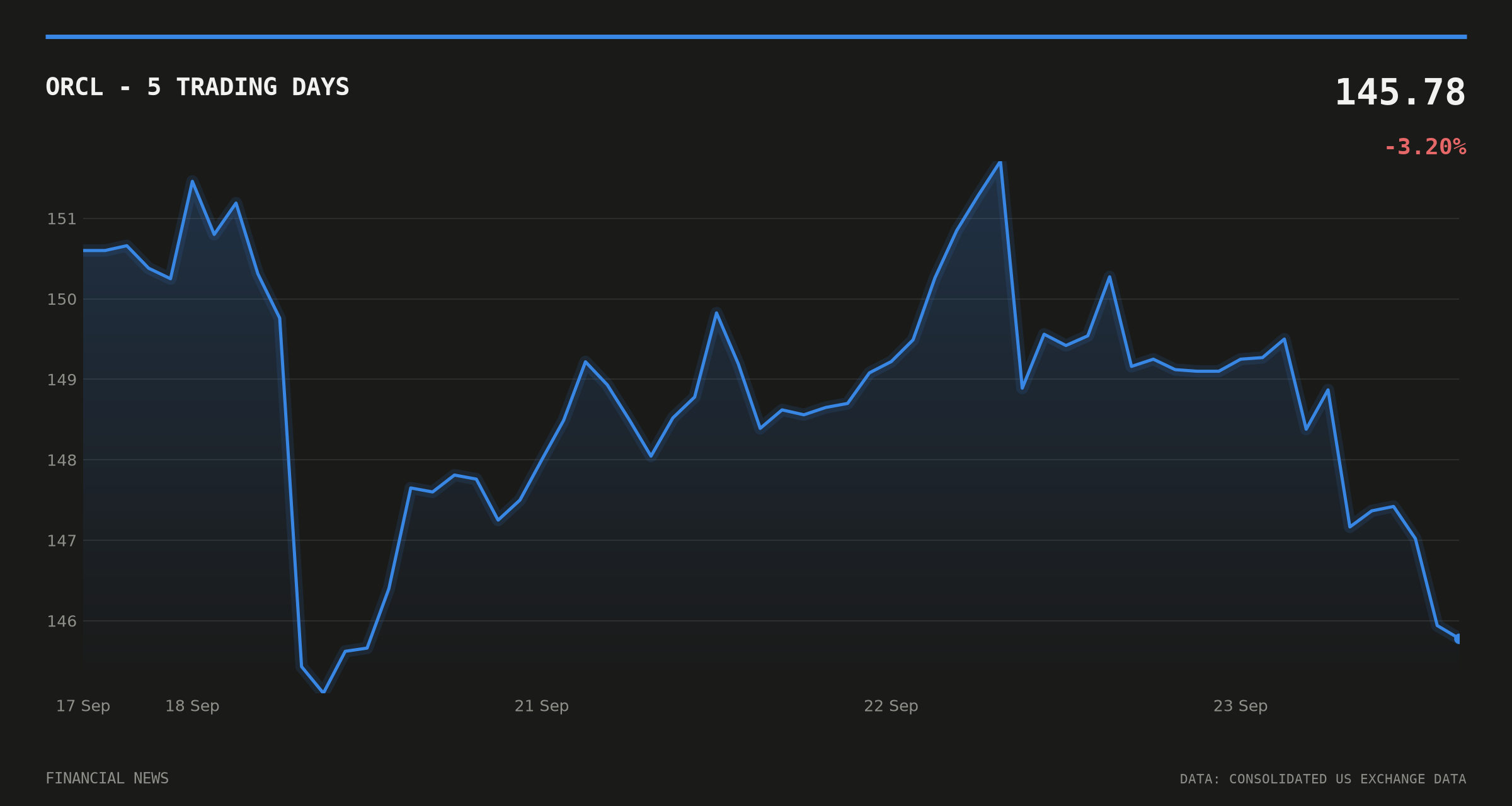
Oracle shares fell 1.85% on the day of the announcement, closing at $145.635, according to consolidated US exchange data. Trading volume ran at 0.69 times the 20-day average, well below the pace typically associated with market-moving corporate news.
What the oncology EHR launch adds
The system is designed to give cancer care teams AI-driven workflows, clinical insights and connected patient information, according to Oracle’s announcement. The stated aim is to help clinicians deliver more personalised treatment by drawing together data that is often scattered across separate systems during a patient’s diagnosis and care.
The launch builds on groundwork Oracle laid over the past year. The company rolled out an AI-powered ambulatory EHR platform in August 2025 with plans to expand functionality through 2026, and in November 2025 it formed a partnership with the Cancer Center Informatics Society to advance AI use and interoperability in oncology records. Both moves point to a steady, telegraphed build-out of Oracle’s healthcare software business rather than a sudden pivot.
Coverage tracked a single press release
Reports from PR Newswire, Benzinga and GuruFocus on the launch all reproduced Oracle’s own release rather than offering independent reporting or additional detail. No SEC filing accompanying the announcement quantifies expected revenue or customer uptake from the new product, leaving the commercial scale of the launch undisclosed for now.
That gap between promotional messaging and market reaction is echoed in the share price move. FINRA short-volume ratios for Oracle ran between roughly 0.27 and 0.46 in the days surrounding the announcement, showing no unusual build-up of short positions tied to the news, according to FINRA daily short sale volume data.
Where Oracle’s numbers stand
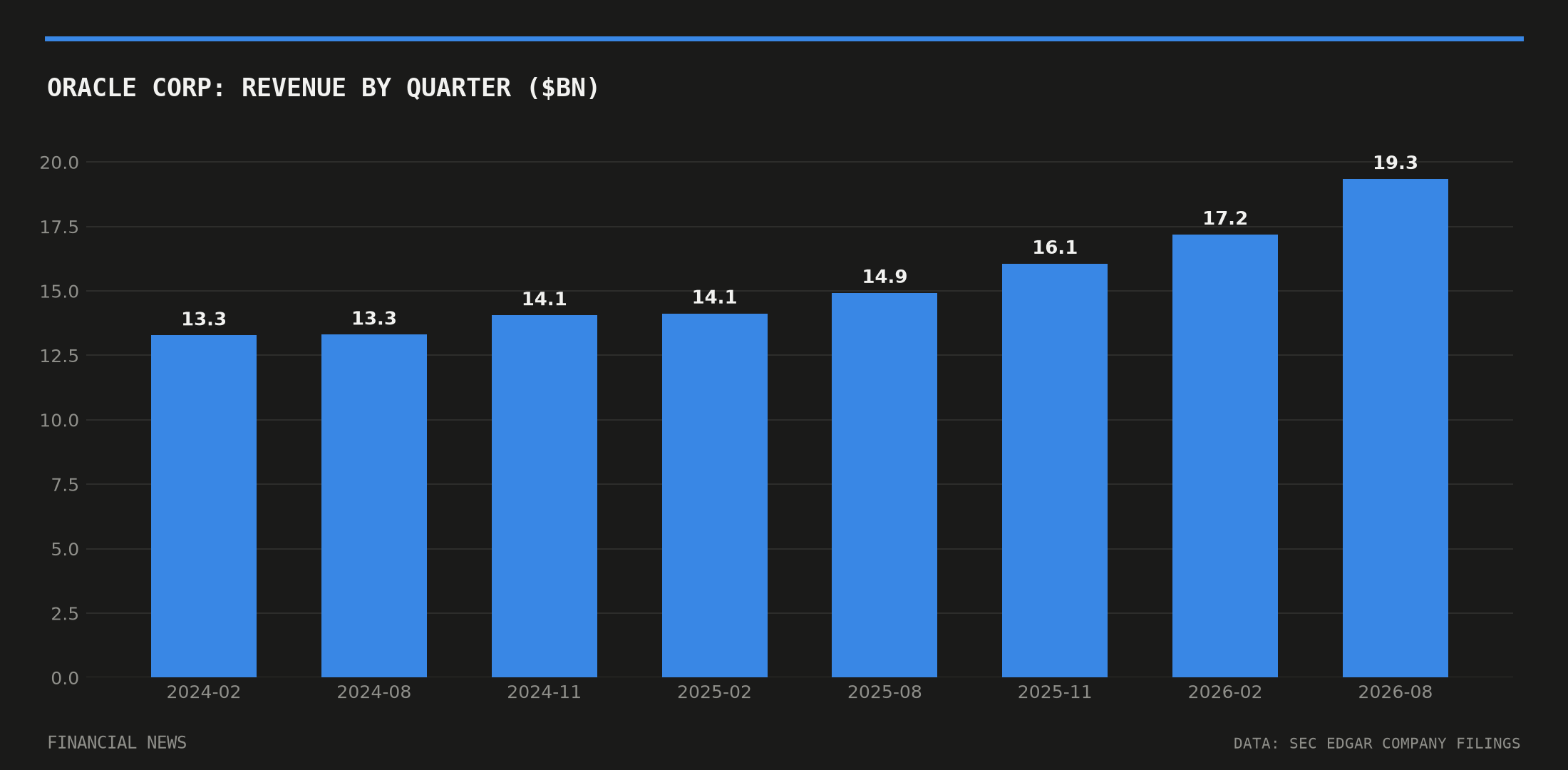
The healthcare push lands against a backdrop of accelerating top-line growth at Oracle. Revenue for fiscal 2026’s first quarter, the three months to 31 August 2026, came in at $19.345bn, up from $14.926bn a year earlier, according to Oracle’s 10-Q filed with the SEC. Net income for the same quarter reached $4.76bn, with diluted earnings per share of $1.56.
That growth trajectory has been building for several quarters. Revenue rose from $13.28bn in the quarter ended February 2024 to $14.059bn by November 2024, then to $14.13bn in February 2025, before jumping to $16.058bn and $17.19bn in the following two quarters, filings show. Net income across that run has been choppier: it climbed to $6.135bn in the quarter ended November 2025, a figure roughly double the $2.927bn reported for the prior quarter, before settling back to $3.721bn in February 2026 and then rising again to $4.76bn most recently.
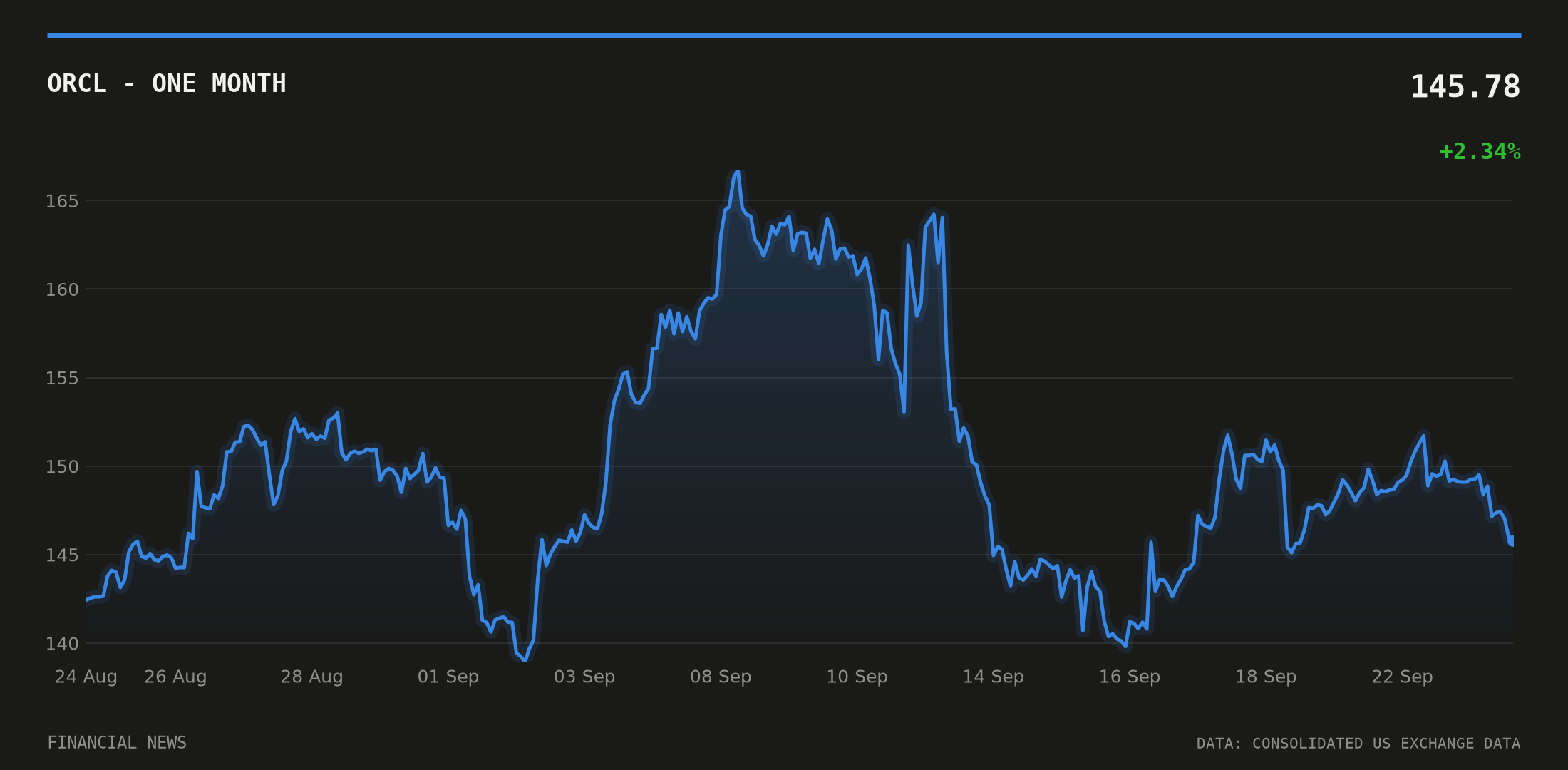
Oracle’s 2026 has been volatile for shareholders regardless of the pace of product announcements. The stock has fallen sharply this year even as at least one Wall Street firm has argued it could more than double from current levels, according to 247wallst.com. Oracle’s own 20-day trading range shows the stock swinging between $139.81 and $166.76, underscoring how much movement has occurred independent of any single healthcare announcement.
Macro backdrop stays steady
Broader market conditions have been relatively calm around the launch. The 10-year US Treasury yield stood at 4.96% as of 21 September 2026, little changed from 5.01% a few days earlier, according to FRED data from the Federal Reserve Bank of St. Louis. The 2-year yield held flat at 4.76%, while the 10-year/2-year spread widened slightly to 0.25 percentage points. US unemployment held at 4.1% in August, with consumer prices continuing a gradual climb, FRED figures show.
None of that macro picture points to unusual pressure on Oracle specifically; the share price move on launch day looks tied more to the stock’s broader 2026 pattern than to reaction against the oncology product itself. Investors will get a clearer read on how healthcare bookings are trending when Oracle next reports quarterly results, the point at which any contribution from the Oncology EHR and related AI health tools would first show up in disclosed figures.
This article is for information only and is not investment advice or a recommendation to buy or sell any asset. Markets move quickly; figures are correct as sourced at the time of writing. Always do your own research before making financial decisions.
