

IonQ (NYSE: IONQ) said on Wednesday that its Superion 256 machine will be the first quantum processor installed at Nvidia’s (NASDAQ: NVDA) Accelerated Quantum Research Center. The IonQ Nvidia quantum deal puts the company at the front of the queue for a facility Nvidia built to test quantum hardware alongside its AI chips.
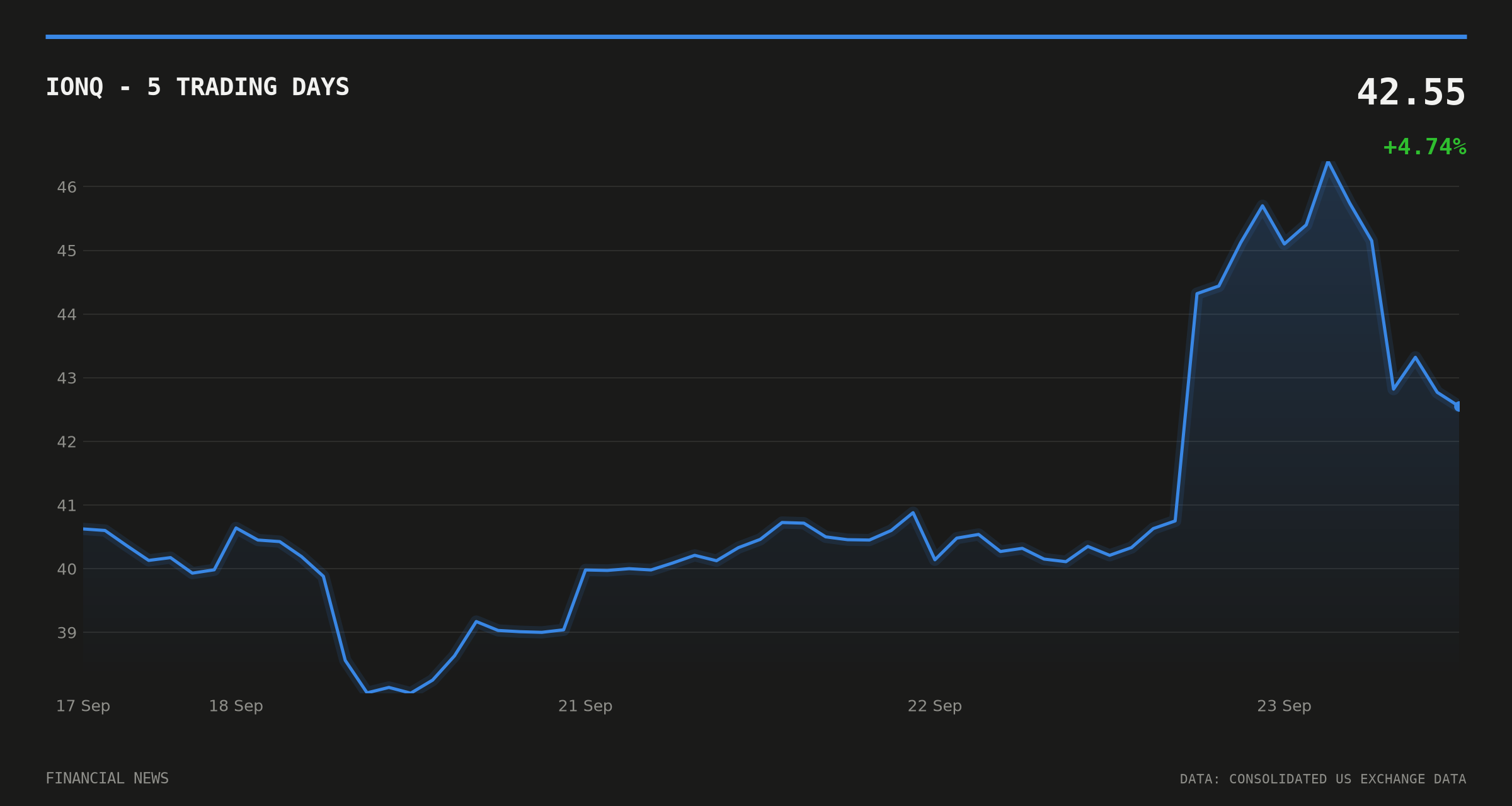
The catch: installation is not scheduled until 2027, according to independent reporting on the announcement, not an immediate on-site deployment as some coverage implied. IonQ shares, which jumped as much as 11% intraday, had fallen 6.25% by 4pm UTC, according to consolidated exchange data tracking the stock’s session.
First on-site slot, but not until 2027
Under the arrangement, IonQ will connect a Superion 256 system directly to an Nvidia GB200 NVL72 platform through Nvidia’s NVQLink, with workloads orchestrated by the open CUDA-Q platform. Nvidia first disclosed plans for the Boston-based research centre as a hub for integrating partner quantum processors with its Grace Blackwell superchips, before naming IonQ as its first hardware partner.
The Superion 256 itself is new. IonQ only launched the sixth-generation Superion platform on 8 September 2026, roughly two weeks before Wednesday’s announcement. Deliveries of the system, including the NVAQC installation, are pencilled in for next year rather than this quarter, a detail confirmed separately by outlets covering the announcement.
A rally that didn’t hold
The stock’s reaction told a messier story than the headline suggested. Some of the early-morning strength was tied to a separate, unrelated quantum error-decoder announcement rather than the Nvidia news alone. By the time US markets had digested both, the gain had reversed into a loss, with the shares changing hands around $42.56 as of the afternoon snapshot – a reminder that quantum-computing stocks have moved on sentiment as much as substance this year.
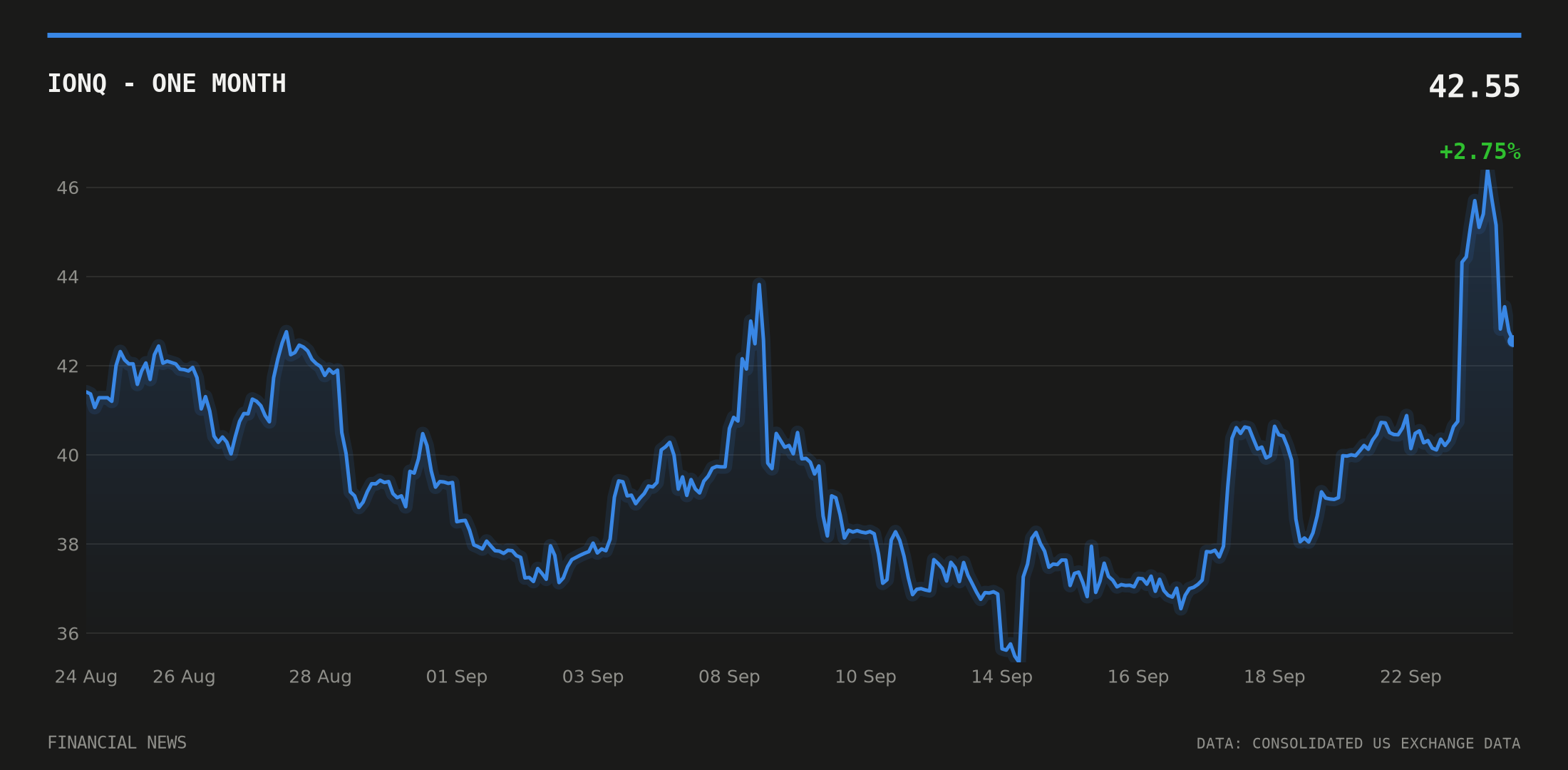
Trading volume ran well above recent norms, at roughly 4.7 times the 20-day average, while the shares remained within a 20-day range of $35.35 to $46.40. Rival quantum names Rigetti and D-Wave also rose in sympathy on the day, a pattern consistent with theme-driven buying across the sector rather than company-specific catalysts.
Financials still swing hard
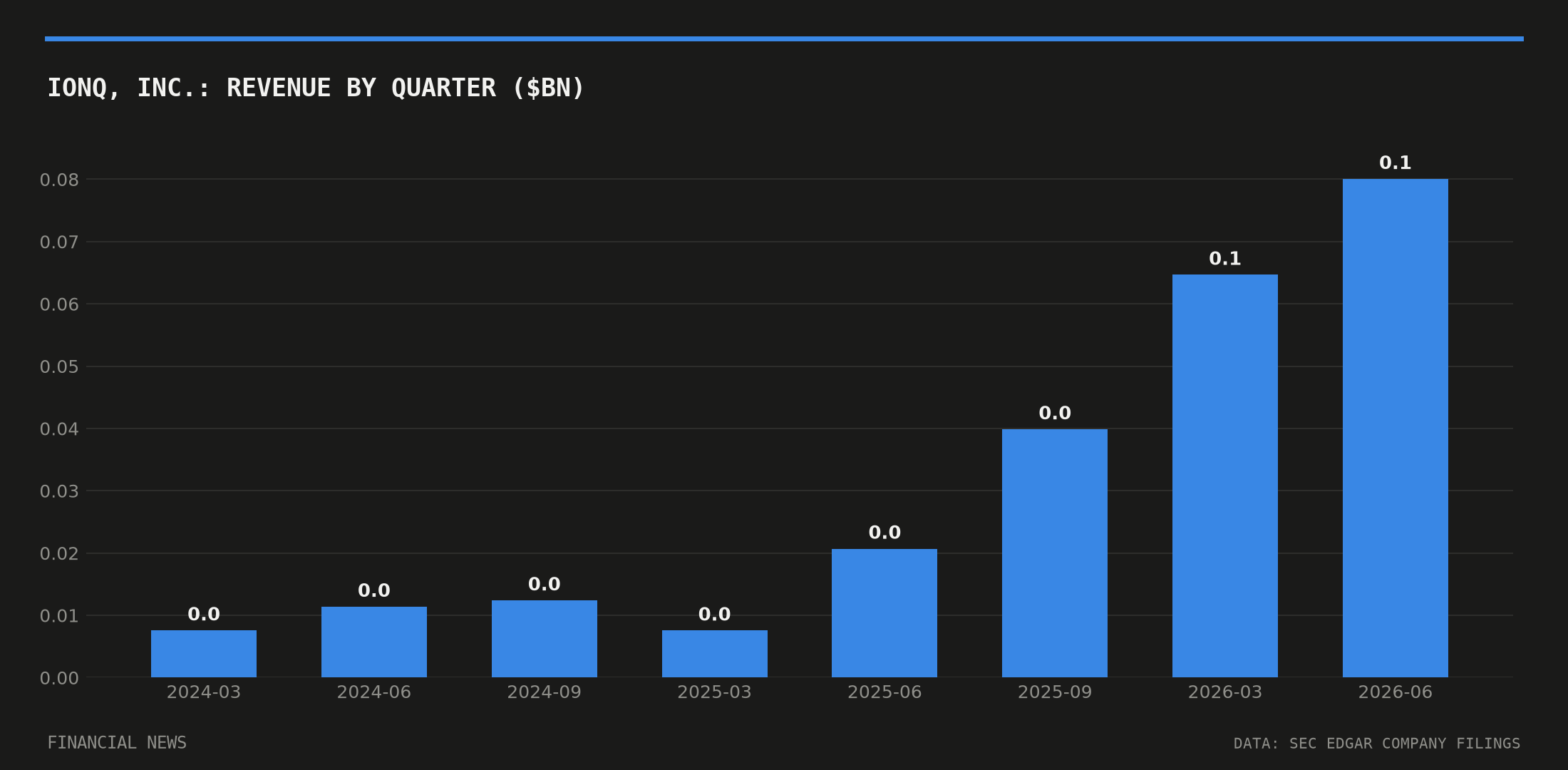
IonQ’s underlying numbers remain volatile enough to complicate any read-through from a single partnership announcement. Quarterly revenue has grown from $7.582m in the first quarter of 2024 to $80.05m in the second quarter of 2026, based on filings with the SEC. But net income has swung wildly across recent quarters – a $805.36m profit in the first quarter of 2026 was followed by a $1.868bn loss in the second, reflecting large non-operating and fair-value movements rather than core operating trends.
Short interest in the stock has stayed relatively contained heading into the announcement. FINRA’s daily short-sale ratio for IonQ ran between roughly 0.51 and 0.65 in the fortnight to 22 September, according to FINRA data, showing no unusual build-up of bearish positioning ahead of the news.
What the deal actually secures
For IonQ, the substance of the announcement is real: securing the first on-premises quantum slot at a facility built and named by Nvidia gives the company a marquee reference customer in a sector still short on large enterprise deployments. What it does not yet deliver is revenue or an installed system – both remain more than a year away, with 2027 the date cited across the reporting on the deal.
Investors will get a clearer read on how the market is pricing that gap when IonQ next reports quarterly results, and again as 2027 approaches and the installation timeline either holds or slips.
This article is for information only and is not investment advice or a recommendation to buy or sell any asset. Markets move quickly; figures are correct as sourced at the time of writing. Always do your own research before making financial decisions.
