

Joby Aviation (NYSE: JOBY) said on 18 September 2026 that an aircraft running its autonomy software completed a fully autonomous flight across the United States, with zero control inputs from its onboard safety pilot.
The aircraft, a converted Cessna Caravan, flew 3,199 miles from California to North Carolina, ending its eastbound leg at Dare County Regional Airport near Kitty Hawk, site of the Wright brothers’ first powered flight, according to Joby’s statement.
What the Joby autonomous flight actually did
The route ran from Buchanan Field in Concord, California, through Phoenix Deer Valley and Fort Worth Alliance airports before a stop at Shaw Air Force Base in South Carolina, then on to the Outer Banks, according to flight-tracking site DroneXL. Controllers on the ground in California and at Shaw supervised the aircraft remotely from as far as 2,323 miles away, AVweb reported.
Joby built the autonomy stack through its 2024 purchase of Xwing’s autonomy division, whose Cessna 208B Grand Caravan had flown without a pilot at the controls since 2020, according to The Robot Report. The company said the system has logged more than 400 flights and 800 automated flight hours in both controlled and uncontrolled airspace.
Joby billed the crossing as the first of its kind. That superlative is the company’s own characterisation; no aviation regulator has independently verified the “first-ever” claim, and rival autonomy programmes have flown long uncrewed routes before, though not this specific coast-to-coast run.
Shares steadied, despite reports of a sell-off
Some coverage on the day framed the news as a disappointment for investors. GuruFocus reported JOBY fell roughly 2% in morning trading even as the flight milestone landed.
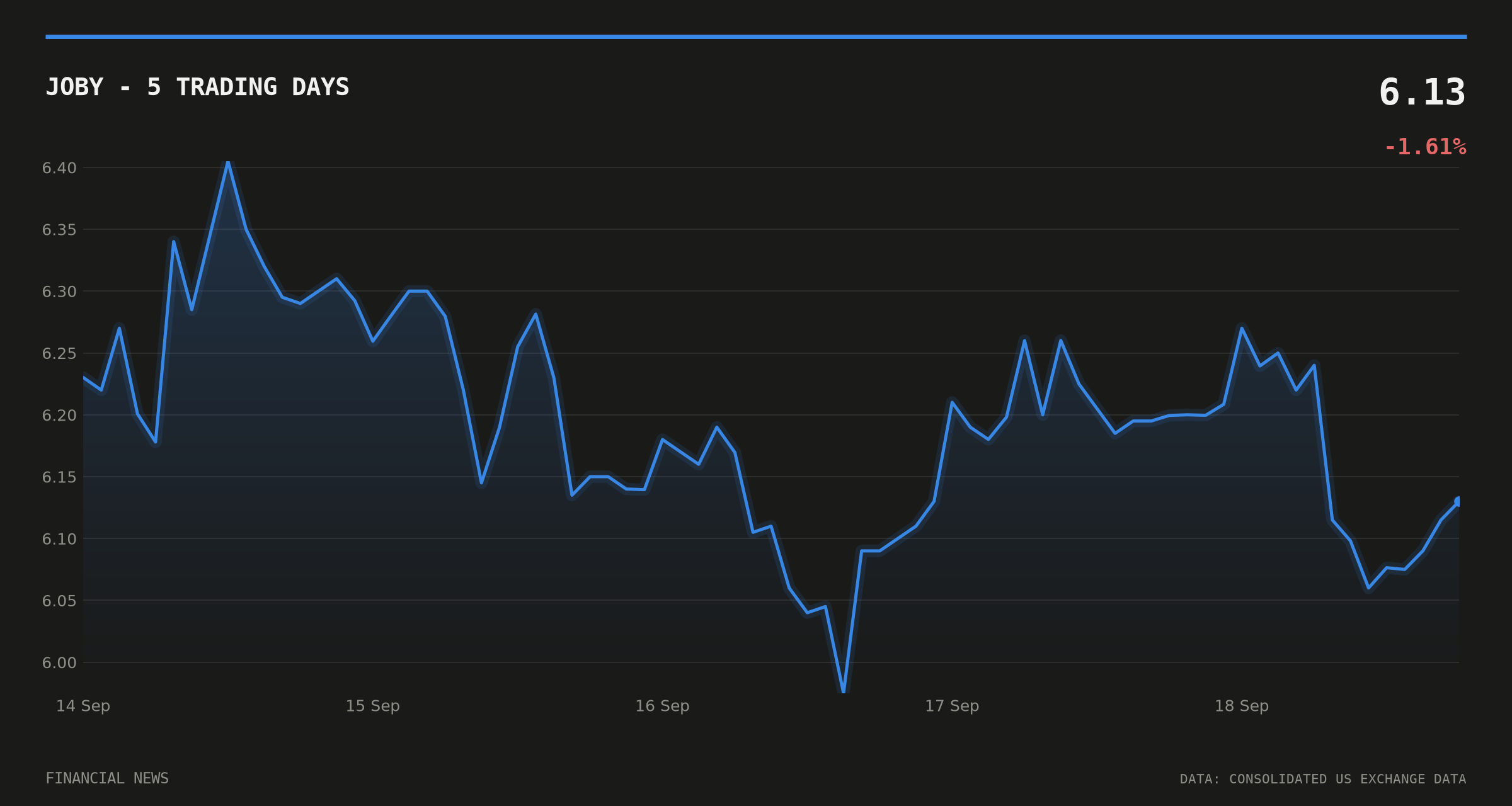
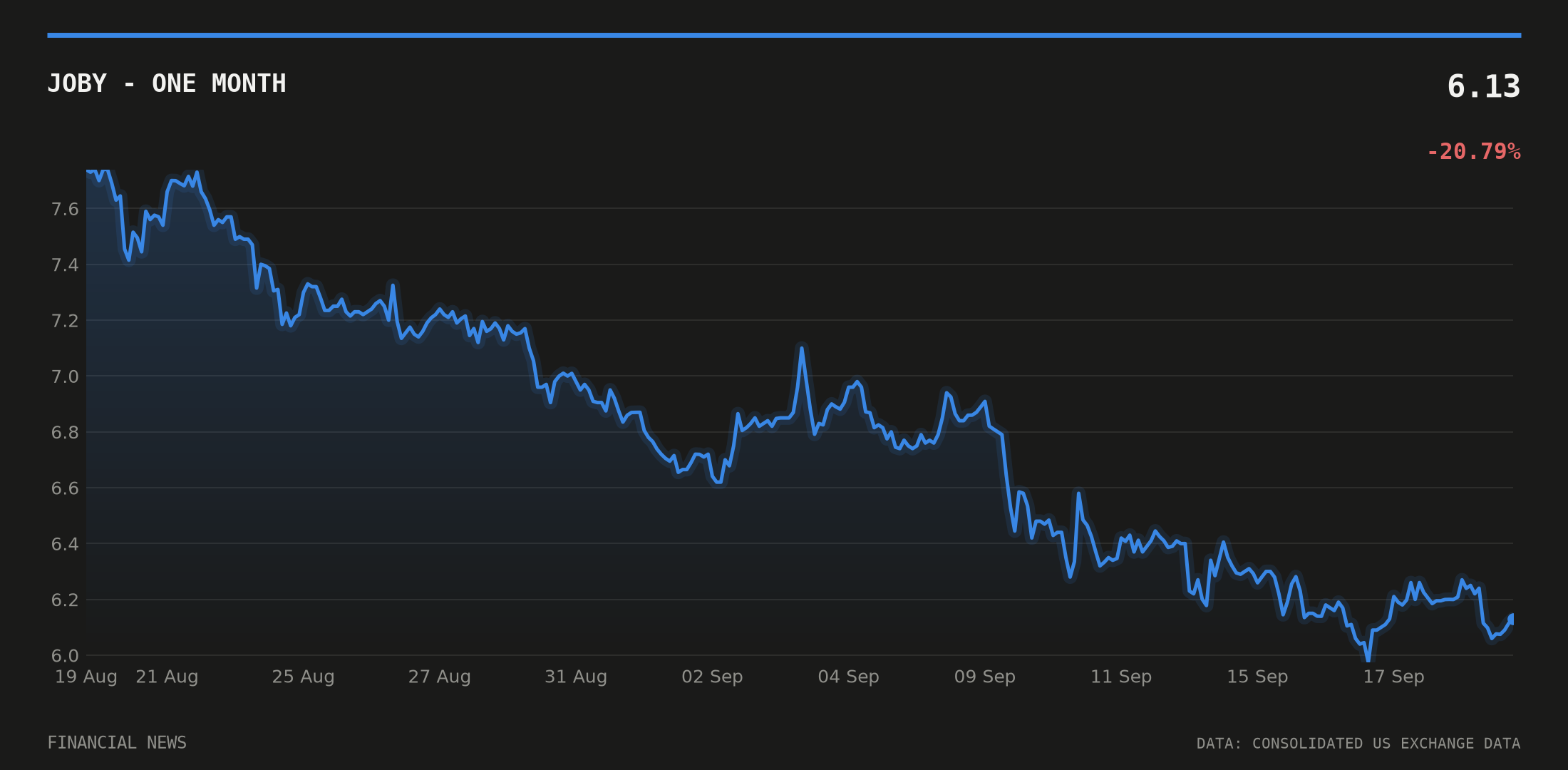
That dip did not hold. By 20:00 UTC, near the close, JOBY traded at $6.13, up 0.25% on the day, consolidated exchange data show. The stock remains down 12.55% over the trailing 20 sessions and had touched a 52-week low of $6.25 the previous week, as first reported by Benzinga, before the transcontinental leg was even completed.
Short-sale activity had also been easing into the announcement: FINRA data put JOBY’s short-volume ratio at 0.364 on 17 September, down from 0.492 earlier in the month, a decline consistent with fading bearish positioning rather than fresh scepticism about the flight itself, according to FINRA figures.
A routine CEO sale, not a verdict on autonomy
The more plausible explanation for the morning wobble sits in a separate filing. Chief executive JoeBen Bevirt’s trust sold 606,667 JOBY shares on 15 September at a weighted average price of $6.19, worth roughly $3.76m, according to a Form 4 filed with the SEC.
The sale followed a Rule 10b5-1 plan adopted in March 2026, and matches the cadence of prior months: 596,666 shares sold in July and 596,667 in August, both filed with the SEC under the same programme. That pattern points to a pre-scheduled disposal rather than a reaction to the flight news.
The business case behind the tour
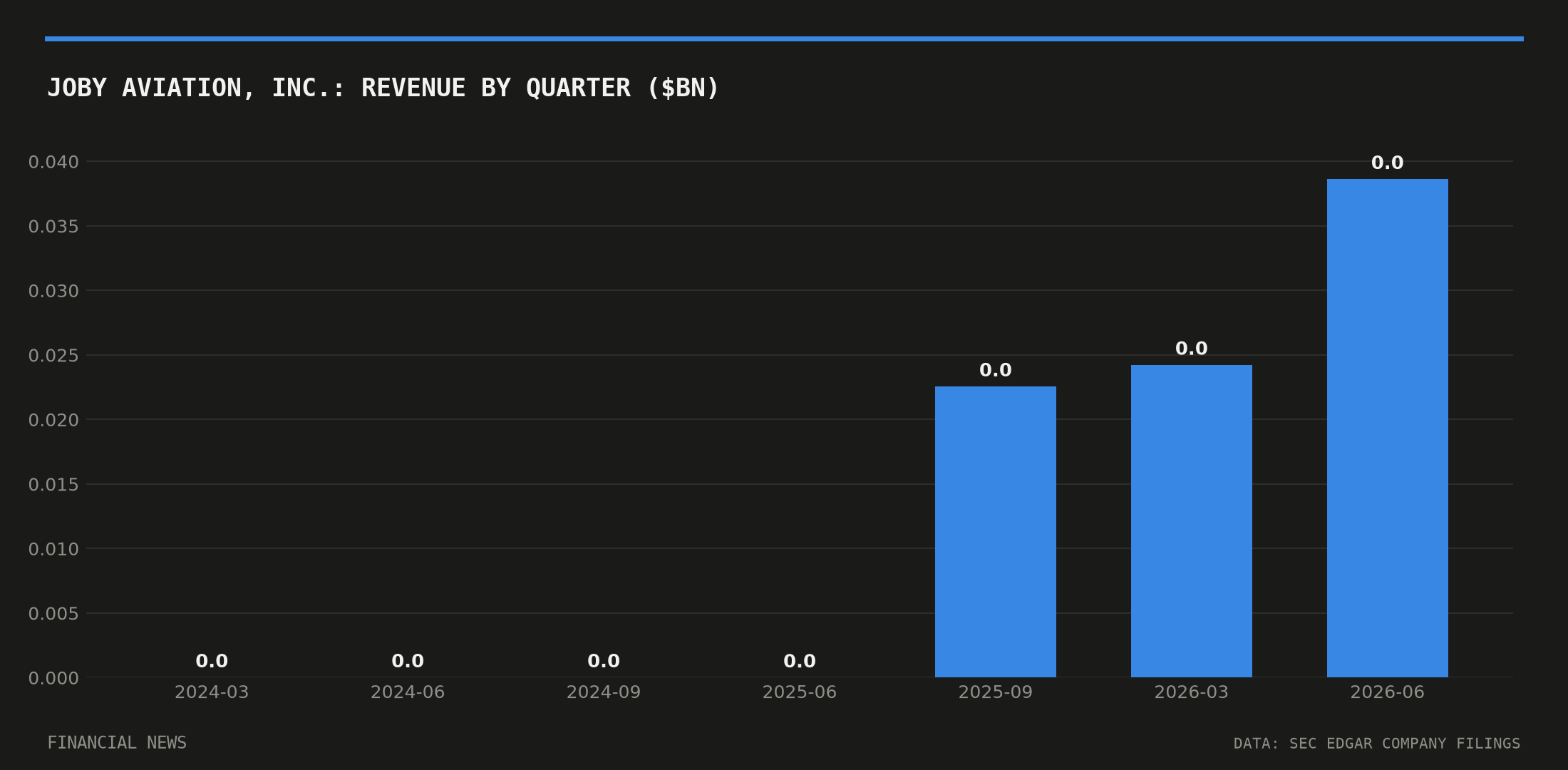
Joby’s quarterly figures underline why the autonomy push matters commercially. Revenue rose to $38.639m in the second quarter of 2026 from $24.246m in the first quarter, even as the net loss widened to $245.443m from $109.95m over the same period, according to the company’s 10-Q filing.
Analysts at TechCrunch read the flight as evidence Joby is building a second line of business in autonomous cargo and defence logistics, distinct from its still-uncertified electric air taxi programme. The Wall Street Journal noted the flight forms part of a month-long tour Joby has dubbed its “Electric Skies” campaign.
The aircraft is not done. It is making a westbound return trip to California with further stops planned, meaning the cross-country demonstration continues beyond this single eastbound leg, according to CoinCentral. Investors will get another readout on the commercial case when Joby next reports quarterly results.
This article is for information only and is not investment advice or a recommendation to buy or sell any asset. Markets move quickly; figures are correct as sourced at the time of writing. Always do your own research before making financial decisions.
