
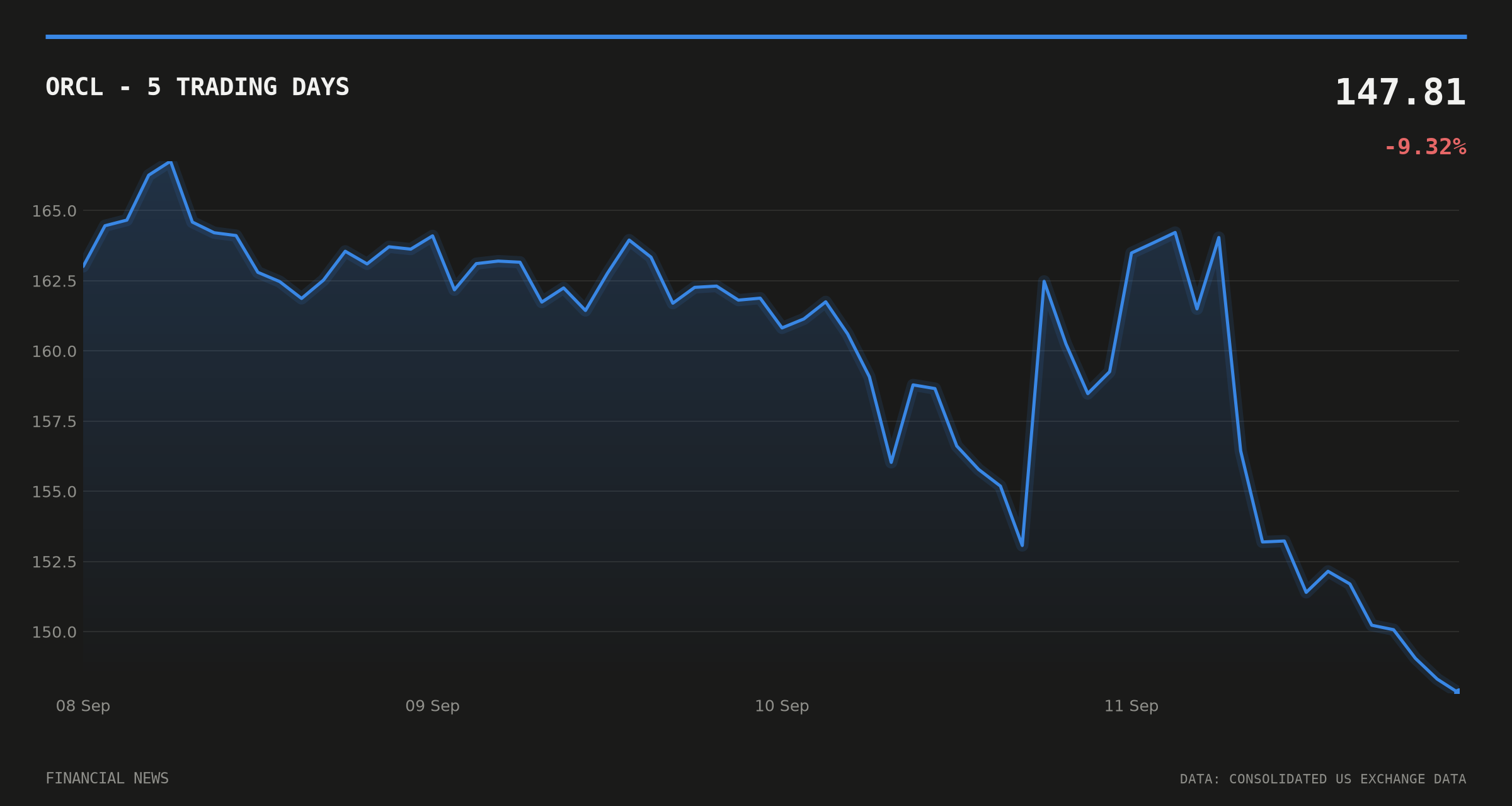

Larry Ellison has cancelled a trading plan that would have let him sell up to $7.5bn of Oracle (NYSE: ORCL) stock, the company said on 12 September 2026.
The plan, adopted on 22 June, covered as many as 50 million shares and was due to run until 24 October, according to CNBC.
Ellison cancels Oracle stock plan days after it emerged
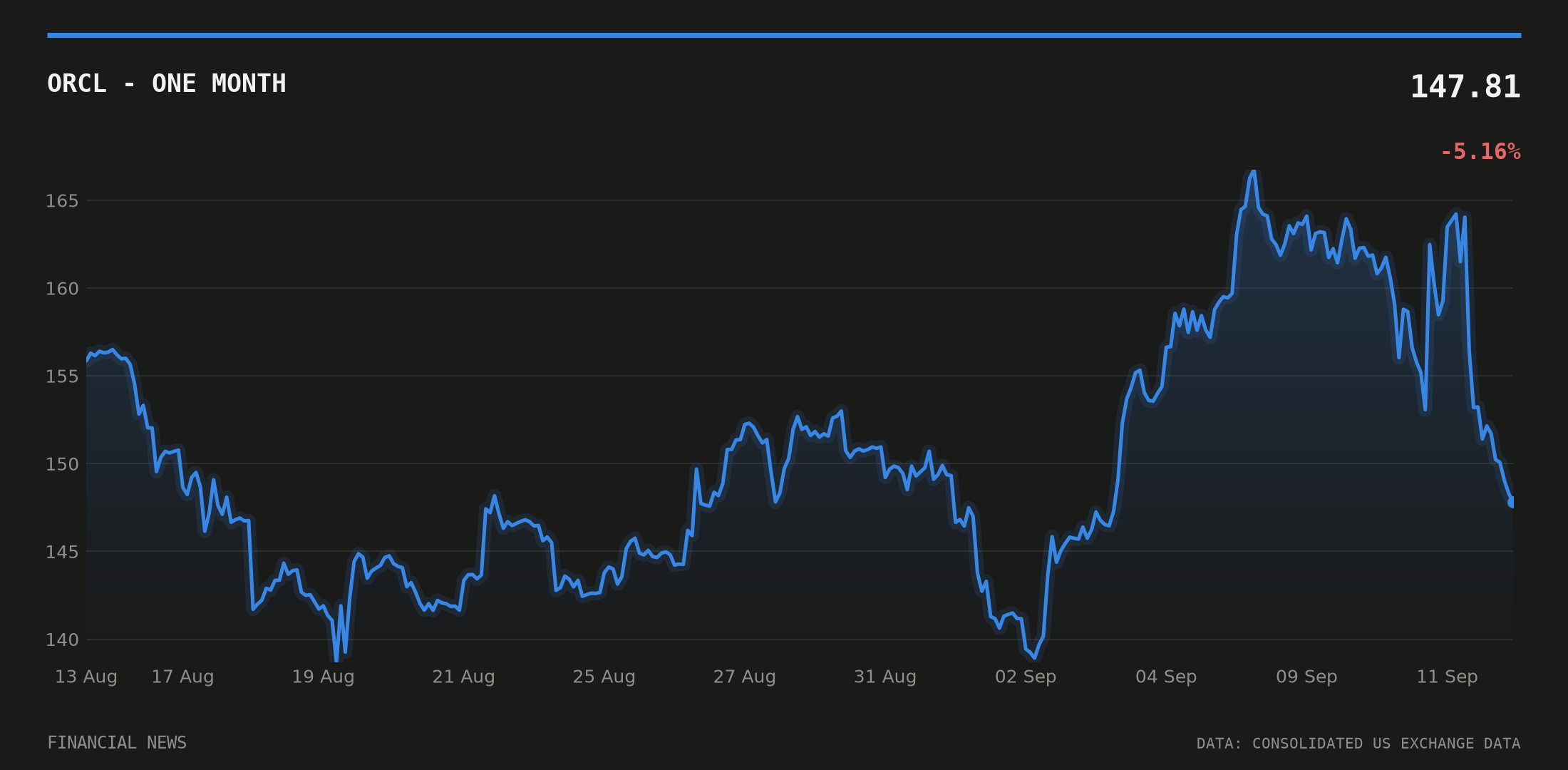
Oracle’s Executive Chair and Chief Technology Officer ‘has cancelled his 10b5-1 Plan to sell Oracle stock,’ the company said in a statement carried by PR Newswire.
News of the plan’s existence had only become public a day earlier, when CNBC reported the 10b5-1 arrangement covering the 50-million-share sale. The reversal followed within 24 hours of that disclosure.
Even a full sale under the plan would have left Ellison holding roughly 1.1 billion Oracle shares, more than 40% of the company, according to Finbold. Since 2000, Ellison had never sold more than 25,000 shares in a single transaction, CNBC reported, underscoring how unusual the June plan was against his own trading history.
Short interest had been climbing
FINRA’s daily short-sale volume ratio for Oracle rose from 0.310 on 28 August to 0.463 on 11 September, the day before the cancellation was announced, according to FINRA data. The stock traded near the bottom of its 20-day range in the days before the statement.
Oracle has historically leaned on debt rather than equity sales for liquidity, according to Finbold, a pattern that made Ellison’s original plan, and now its reversal, a closely watched signal for investors tracking insider activity at the company.
Results underpin the capex story
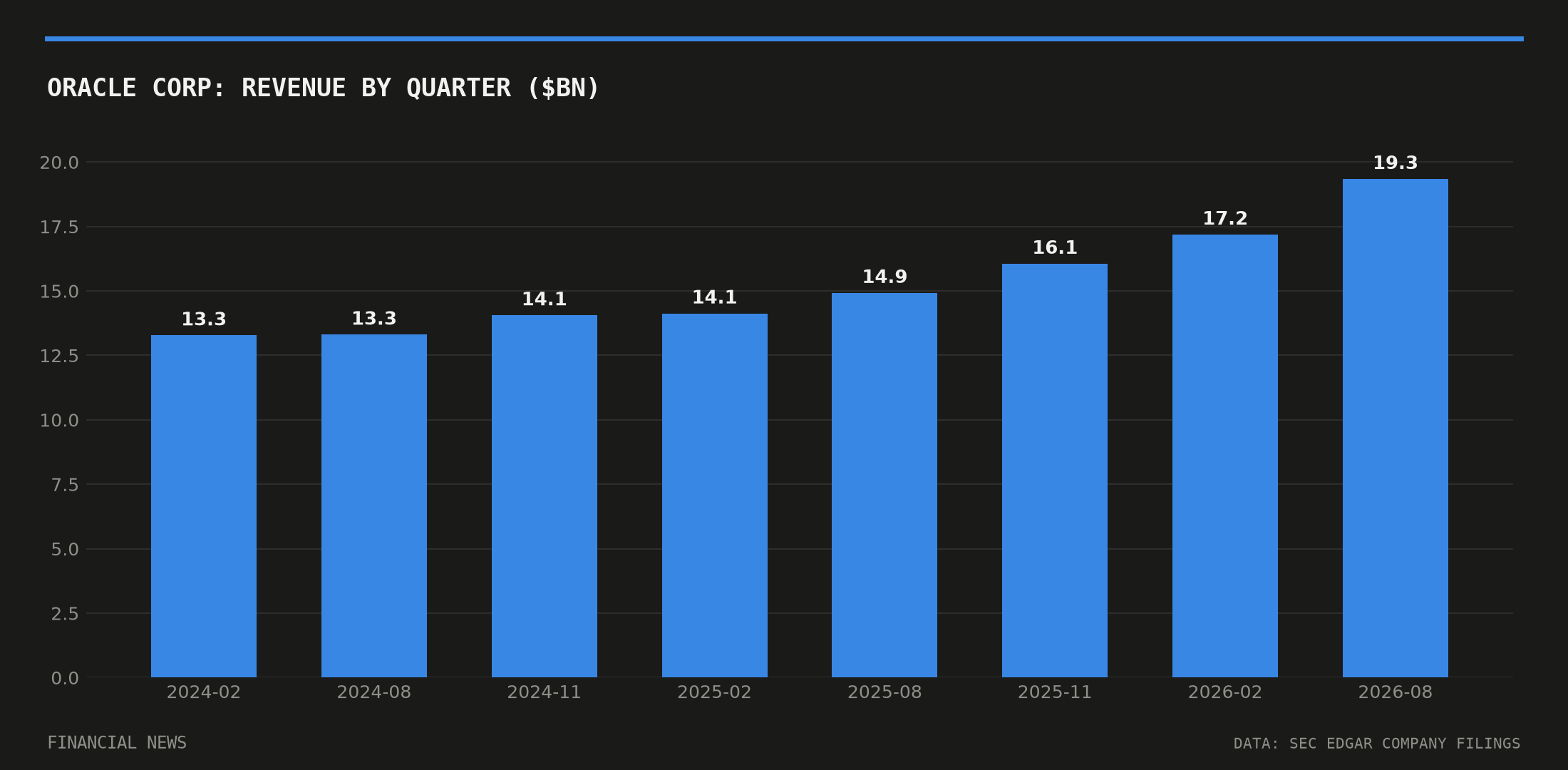
The cancellation came a day after Oracle filed its fiscal first-quarter 2026 results. Revenue for the quarter ended 31 August 2026 came to $19.345bn, up from $14.926bn a year earlier, according to Oracle’s 10-Q filing with the SEC. Net income rose to $4.76bn from $2.927bn in the same period last year, the filing showed, with diluted earnings per share of $1.56 against $1.01 a year earlier.
That growth builds on a run of quarterly gains stretching back through fiscal 2025 and 2026. Revenue rose from $14.059bn in the quarter ended November 2024 to $16.058bn a year later, then to $17.19bn by the quarter ended February 2026, filings show. Net income across those same periods moved from $3.151bn to $6.135bn to $3.721bn, according to Oracle’s SEC filings. The company’s cloud infrastructure unit grew 121% year-on-year to $7.4bn in the most recent quarter, Finbold reported, a figure investors have used to justify Oracle’s heavy capital spending on AI infrastructure.
Oracle shares remain down more than half from their September 2025 peak above $345, according to StartupFortune, a decline that frames both the sale plan and its cancellation against a much larger drawdown tied to the company’s AI-capex spending.
A tightening backdrop for capex-heavy names
The reversal also lands against a firmer US rate environment. The 10-year Treasury yield rose to 4.95% on 10 September from 4.83% previously, according to FRED data from the Federal Reserve Bank of St. Louis, while the 2-year yield climbed to 4.56% from 4.43% over the same window. The 10y-2y spread narrowed slightly to 0.33 percentage points from 0.39, FRED figures show, a backdrop that raises the funding cost of debt-financed capex programmes like Oracle’s data-centre build-out.
US inflation data released for August showed the consumer price index at 334.131, up from 332.813 the prior month, while the unemployment rate held steady at 4.1%, according to FRED. Neither figure moves sharply enough to explain the swing in Oracle’s own trading pattern, but they set the macro context against which investors are weighing a founder’s rapid about-turn on a multibillion-dollar share sale.
Oracle has not detailed why Ellison adopted, then scrapped, the plan within days of its terms becoming public. The company’s next scheduled disclosures, including any Form 4 filings tied to insider transactions, are likely to be the first test of whether the cancellation marks the end of the episode or the start of further disclosures.
This article is for information only and is not investment advice or a recommendation to buy or sell any asset. Markets move quickly; figures are correct as sourced at the time of writing. Always do your own research before making financial decisions.
