
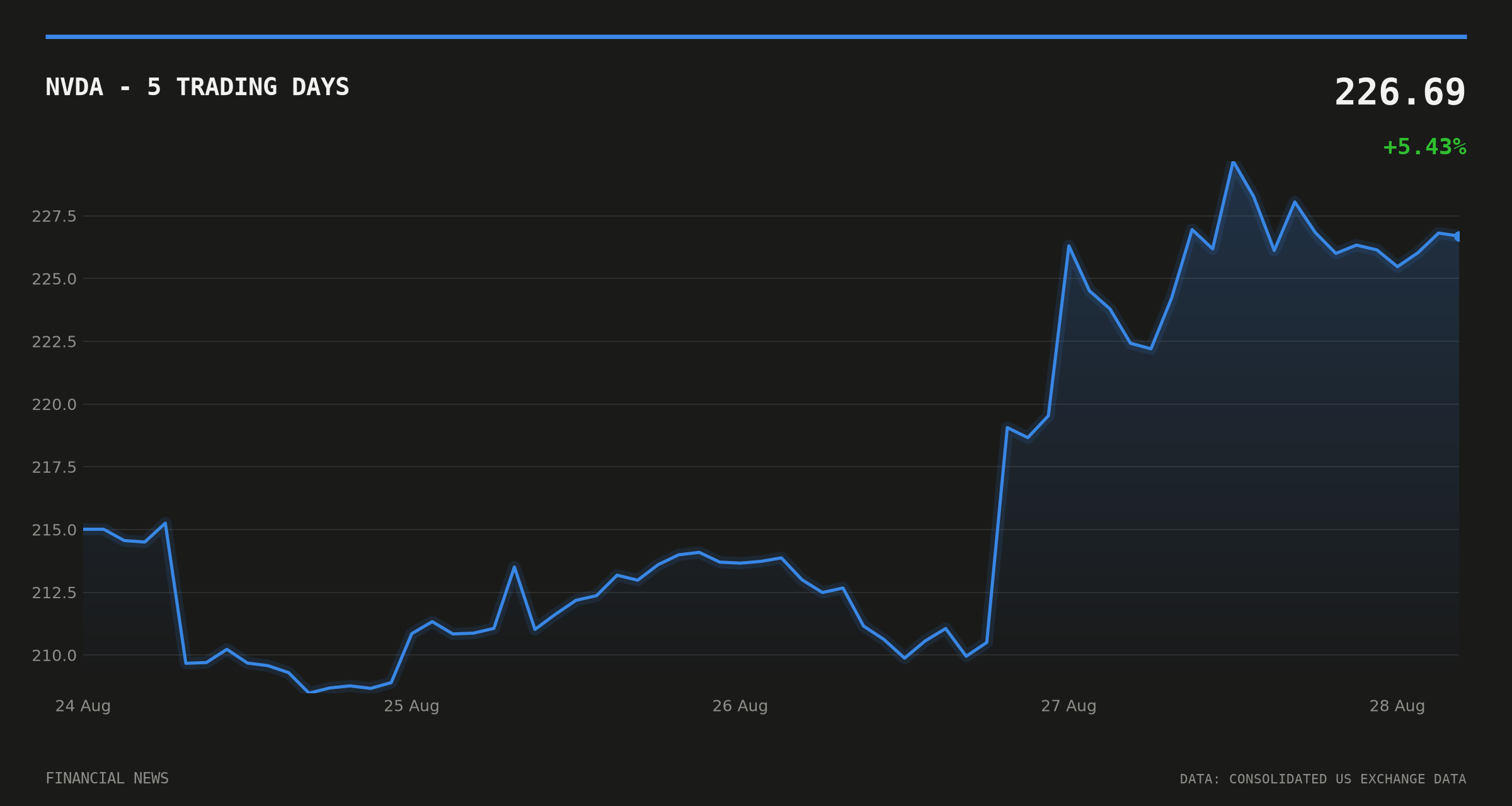

Nvidia (NASDAQ: NVDA) has paused some deals under a revenue-sharing financing programme with AI cloud companies, the Wall Street Journal reported on 27 August 2026, citing people familiar with the matter.
The programme, launched in July, offered credit support to cloud providers in exchange for a share of their revenue; Nvidia has disclosed roughly $36bn in related AI-cloud commitments tied to the initiative.
What the WSJ report says
According to the account, relayed by Reuters, some Nvidia employees raised concerns internally that the revenue-share and control terms attached to the deals could draw antitrust scrutiny. The company is said to have stepped back from parts of the programme last week. Separately, Nvidia is reported to have told some customers it would only rent chips to approved buyers, and that it preferred to spread capacity across multiple smaller AI firms rather than concentrate it with one large customer.
Nvidia’s own response stops short of confirming a pause. A company spokesperson said the broader business model unveiled in July ‘is still in place and continues to evolve due to high demand,’ language that neither confirms nor denies that specific deals were halted.
Where the headline overreaches
The WSJ story rests on anonymous sourcing, and no Nvidia filing or on-the-record statement independently confirms a blanket pause across the financing programme. Reuters and the wider wire pickup largely relayed the WSJ account rather than corroborating it independently. What is documented is narrower: a step back from “some deals” within one specific initiative launched in July, not a wholesale retreat from revenue-sharing arrangements with cloud partners.
That distinction matters because Nvidia’s broader AI-financing ecosystem is, by its own disclosures, expanding rather than contracting. The same week as the report, Nvidia’s latest 10-Q showed it had entered guarantees with SB Energy Corp to provide credit support on a 4.25-gigawatt Ohio data-centre campus built exclusively to host compute for OpenAI, with Nvidia’s exposure capped at $105bn. Nvidia has also partnered with Apollo, BlackRock, Blackstone, Brookfield, Goldman Sachs and KKR on platforms aiming to mobilise over $500bn of third-party capital for AI compute infrastructure.
Record profits, not distress
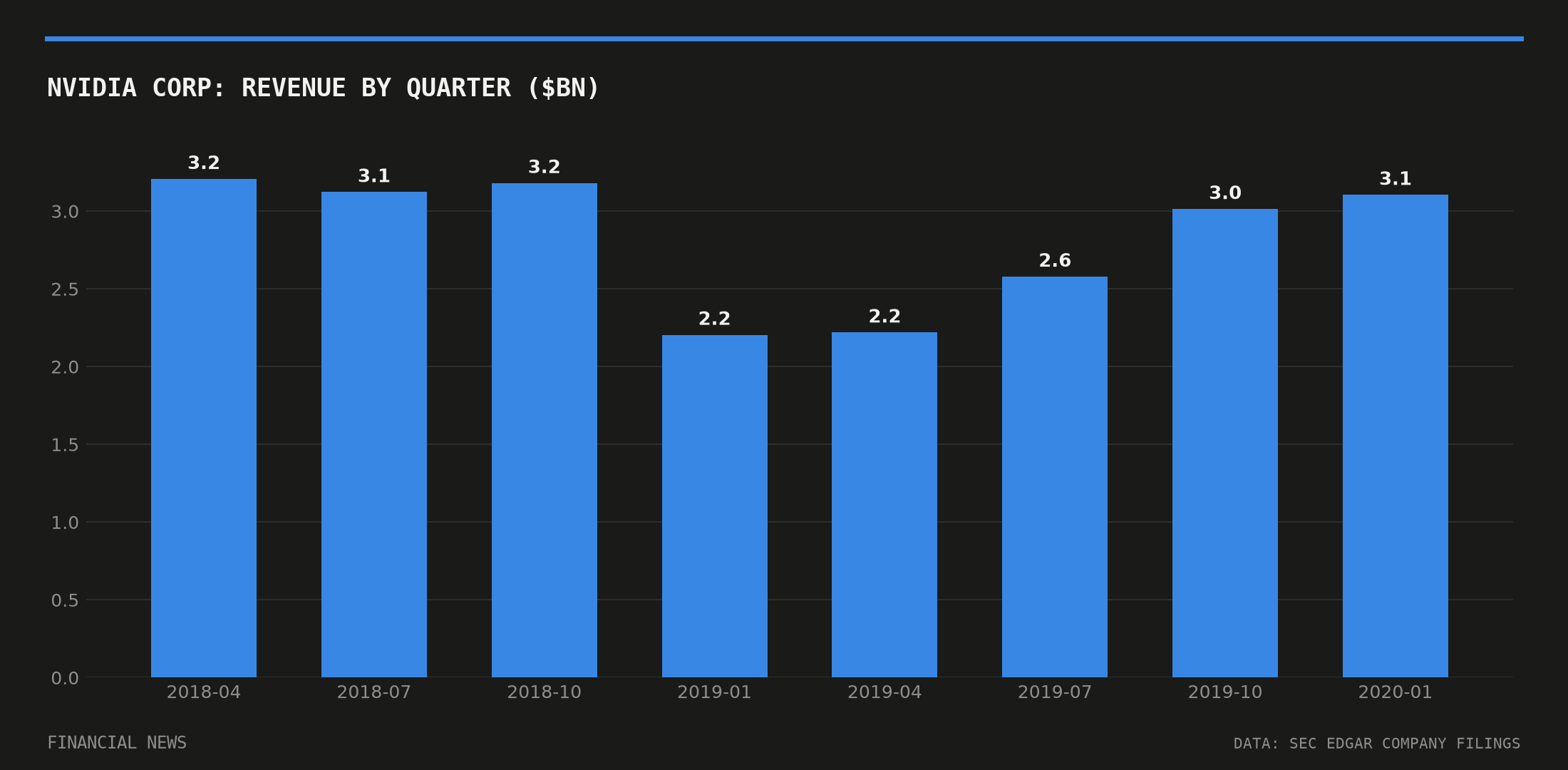
The pause, however limited, comes against a backdrop of record Nvidia earnings rather than financial strain. The company’s most recent 10-Q, filed the day before the WSJ report, showed net income of $59.688bn for the quarter ended 26 July 2026, up from $58.321bn the previous quarter and more than triple the $16.599bn reported in the equivalent period two years earlier.
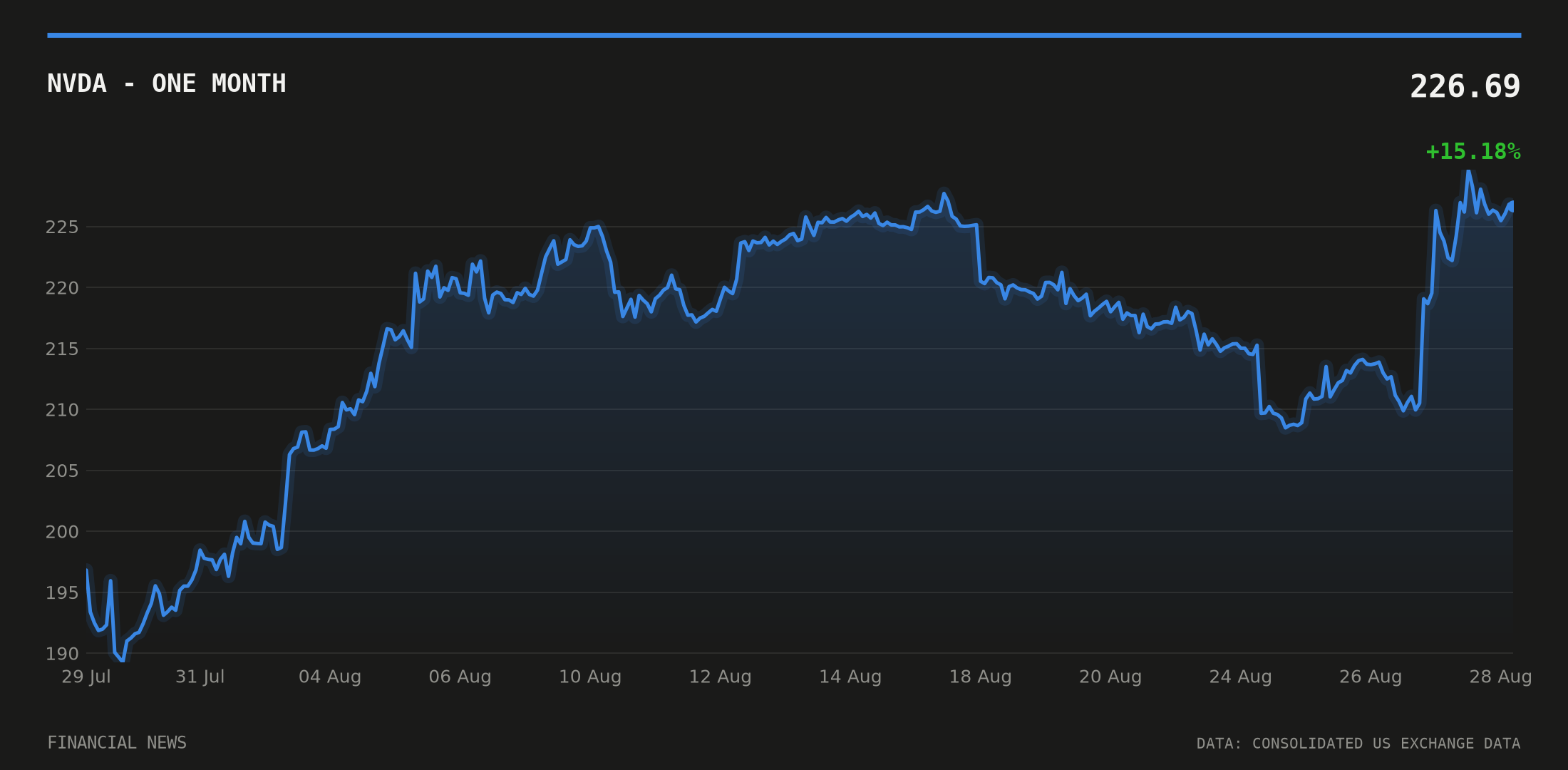
Trading data show no sign of alarm. Nvidia shares stood at $226.97 as of 28 August, roughly flat on the day and up 2.63% over the prior 20 trading days. FINRA short-sale volume data show the stock’s short ratio falling through the days around the report, from 0.42 on 24 August to 0.326 on 27 August – the opposite of what a spike in bearish positioning would look like.
What to watch
The report follows earlier coverage that Nvidia had scaled back a proposed financial backstop for OpenAI’s Ohio data-centre project, part of what some observers describe as a pattern of Nvidia retreating from arrangements that concentrate liability or invite antitrust attention while simultaneously expanding elsewhere. Nvidia has not detailed which specific deals were affected or for how long any pause might last. Investors are likely to press the company for clarity when it next updates on the financing programmes tied to its AI-cloud partnerships, and on whether regulators take any interest in the revenue-share structure the WSJ described.
This article is for information only and is not investment advice or a recommendation to buy or sell any asset. Markets move quickly; figures are correct as sourced at the time of writing. Always do your own research before making financial decisions.
