
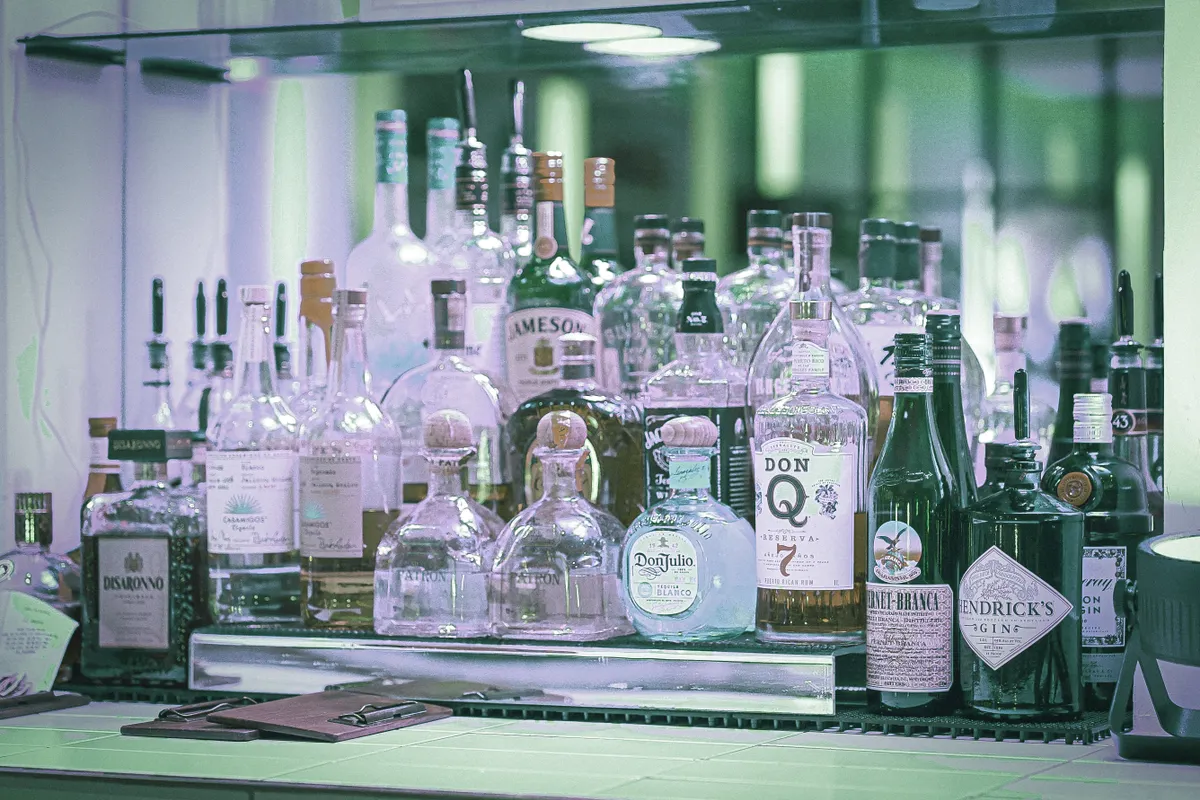

The Diageo share price recovery is drawing fresh attention after shares in the FTSE 100 spirits group (LSE: DGE) climbed 12.5% over the past month, the strongest run the stock has seen in years. The gain follows a brutal five-year stretch in which Diageo shares fell 56%, erasing more than half the stock’s value from its peak.
Diageo Share Price Recovery: What the Numbers Show
The scale of the underlying damage is visible in Diageo’s own disclosures. For the fiscal year ended 30 June 2025, the company reported net sales of $20,245 million, barely changed from $20,269 million a year earlier. Operating profit fell 28% to $4,335 million from $6,001 million, while earnings per share dropped 39% to 105.9 cents from 173.2 cents. The board held its full-year dividend flat at 103.48 cents per share. Those results were published on 5 August 2025, a day earlier than widely anticipated.
The debt position has remained a focal point for investors. Diageo’s Form 20-F filed with the SEC showed net borrowings of $21,854 million as of 30 June 2025, with 87% of that sum at fixed rate.
The picture for fiscal 2026 (year ended 30 June 2026) is sharper still. According to StockTitan reporting on Diageo’s fiscal 2026 Form 20-F, the total recommended dividend was cut to 50.00 cents per share from 103.48 cents, a reduction of approximately 52%. Net debt stood at $20,482 million, equivalent to a leverage ratio of 3.1 times adjusted EBITDA. Organic net sales declined 2.0% with volume down 0.4%.
Lewis’s Record and the Road Ahead
Much of the investor interest in the Diageo share price recovery centres on Sir Dave Lewis, who became chief executive effective 1 January 2026, on an annual base salary of £1,500,000 plus a 14% pension contribution, according to the company’s appointment RNS.
Lewis brings a specific track record in corporate distress. He served as Group CEO of Tesco from 2014 to 2020, a tenure widely credited with stabilising a business that had reported a major accounting scandal and collapsing profits. Before joining Diageo, he had been serving as Chair of Haleon, stepping down on 31 December 2025, and as a non-executive director of PepsiCo, according to Business Chief.
His appointment followed the abrupt exit of predecessor Debra Crew in July 2025, by mutual agreement, after just over two years in post. CFO Nik Jhangiani held the interim CEO role from her departure through the end of December 2025, then returned to the finance brief.
Diageo’s woes built over several years. Sales stalled first in Latin America and the Caribbean before weakness spread to the United States and China. Inflation, inventory overhang, and softening demand from younger consumers compounded the pressure. US tariffs on Mexican tequila and Canadian whisky added another layer of cost. The company sells its products in nearly 180 countries and describes itself as ranked first in international spirits by retail sales value, 1.4 times larger than its nearest international competitor.
Lewis opened his tenure in the manner he began at Tesco: by cutting the dividend sharply. The approximately 52% reduction in the fiscal 2026 payout signals a deliberate reset of capital allocation rather than a gradual adjustment. At Tesco, the stock took close to 18 months to find its footing after an equivalent reset. Whether Diageo follows the same arc depends on whether volume trends stabilise and whether debt comes down from its current 3.1 times leverage.
The shares trade at a price-to-earnings ratio of around 13.5 times, a level that implies limited optimism is priced in. A broader lift in consumer-facing equities has contributed to the recent move, but Diageo’s specific catalyst is the strategy update Lewis is expected to deliver alongside the group’s full-year fiscal 2027 results. That will be the first real test of whether the turnaround thesis has substance behind it.
