
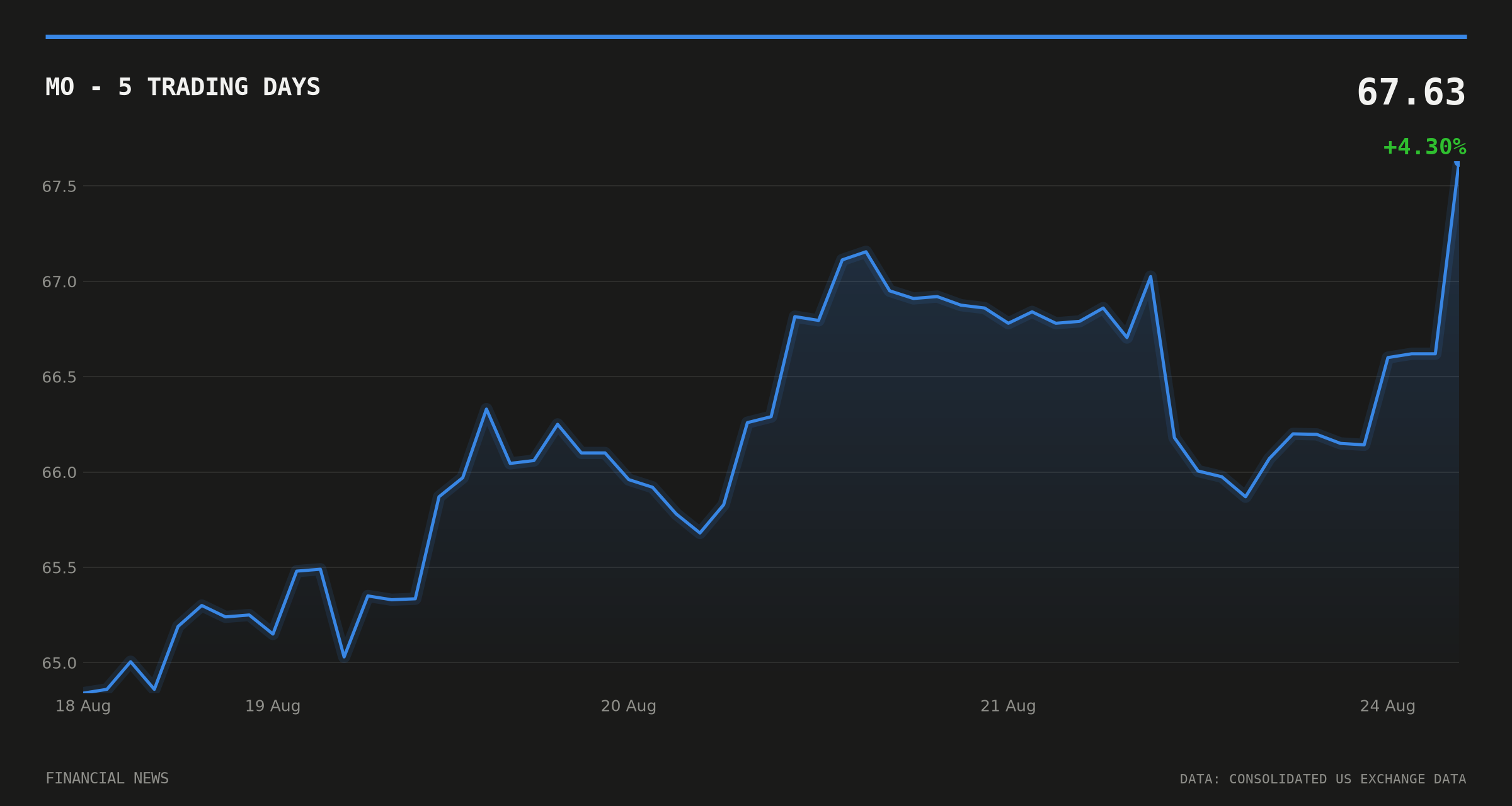

Altria (NYSE: MO) said on 24 August 2026 that its Philip Morris USA unit has entered a contract manufacturing arrangement with non-US affiliates of Philip Morris International (NYSE: PM) covering combustible cigarettes.
First shipments under the deal are expected in early 2027, subject to operational readiness and regulatory requirements, according to a joint statement carried on Business Wire.
What the Altria Philip Morris manufacturing deal covers
Under the arrangement, Philip Morris USA will produce combustible cigarettes for sale outside the United States through PMI’s international network. PMI’s own release, filed as an exhibit to its 8-K, frames the tie-up as a way to “enhance operational efficiency” by using spare capacity in Altria’s US factories, according to PMI’s filing with the SEC.
Neither company expects the deal to move the needle financially in the near term. Altria said the arrangement supports its 2028 Enterprise Goals but does not expect a material impact on 2026 results, according to Investing.com’s report. PMI gave the same guidance in its own statement, as reported by StockTitan.
Two companies, still separate
PMI was explicit that the deal does not put its cigarettes on US shelves. The company “has not commercialized combustible cigarettes in the United States and has no plans to do so,” and the two firms “will continue to operate independently with separate commercialization, distribution and regulatory responsibilities,” as first reported by TipRanks.
That distinction matters because Altria and PMI have been fully separate companies since PMI’s 2008 spin-off split the group into a US-focused business and an international one. The structure means any cross-border manufacturing has to be arranged as a commercial contract between two independent firms rather than an internal transfer — hence Wednesday’s announcement, rather than a quiet operational change.
The arrangement also runs against the grain of PMI’s stated strategy. The company has spent years pivoting toward “smoke-free” products such as heated tobacco and nicotine pouches, yet is now leaning on Altria’s traditional cigarette lines to supply markets outside the US. Neither company’s statement addressed that tension directly.
Market reaction stayed contained
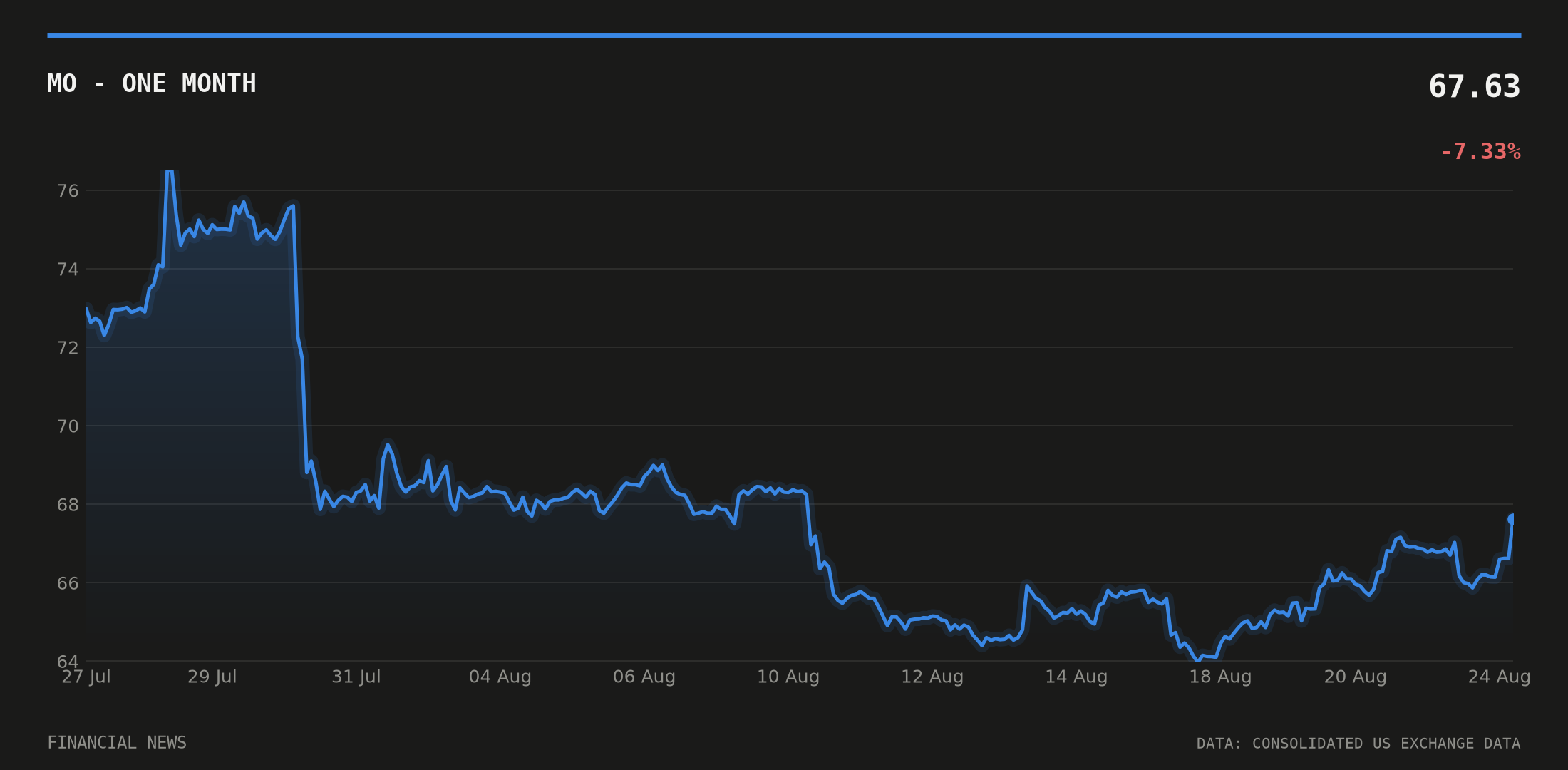
Altria shares traded at $67.605 as of 13:00 UTC on the day of the announcement, up 2.12% on the session but still inside the stock’s prior 20-day range of $63.975 to $69.00, according to consolidated US exchange data. Trading volume ran below the 20-day average, at roughly 76% of the recent norm.
Short-sale activity showed nothing unusual heading into the announcement. Daily short ratios for Altria stock ranged between roughly 0.39 and 0.594 in the three weeks to 21 August, according to FINRA daily short sale volume data, with no pre-announcement spike.
The numbers behind the deal
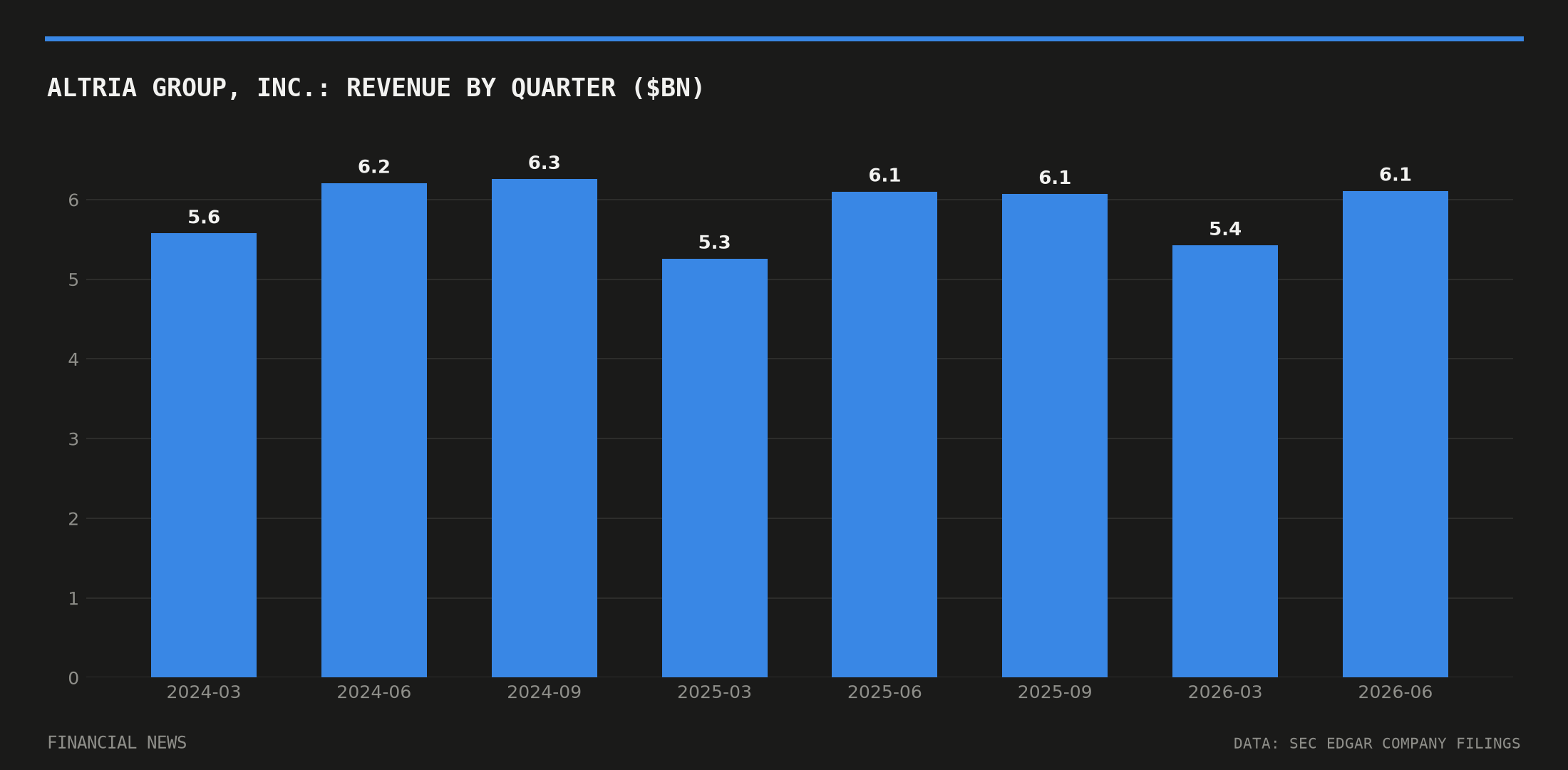
Altria reported net income of $2.298bn on revenue of $6.111bn for the second quarter of 2026, according to its 10-Q filed with the SEC on 30 July 2026. Diluted earnings per share for the quarter came to $1.37.
Those figures sit against a backdrop of a US bond market pricing in steady rather than falling rates: the 10-year Treasury yield stood at 4.69% on 20 August, up slightly from 4.65% the prior reading, according to Federal Reserve data. Tobacco stocks such as Altria are often held for yield, making the rate backdrop relevant to how investors weigh the shares even when the news itself is operational rather than financial.
Both companies said the manufacturing arrangement remains subject to operational readiness and regulatory sign-off before shipments can begin. Markets will get their next scheduled read on Altria’s underlying business when the company reports third-quarter results, the first results due since Wednesday’s announcement.
This article is for information only and is not investment advice or a recommendation to buy or sell any asset. Markets move quickly; figures are correct as sourced at the time of writing. Always do your own research before making financial decisions.
