
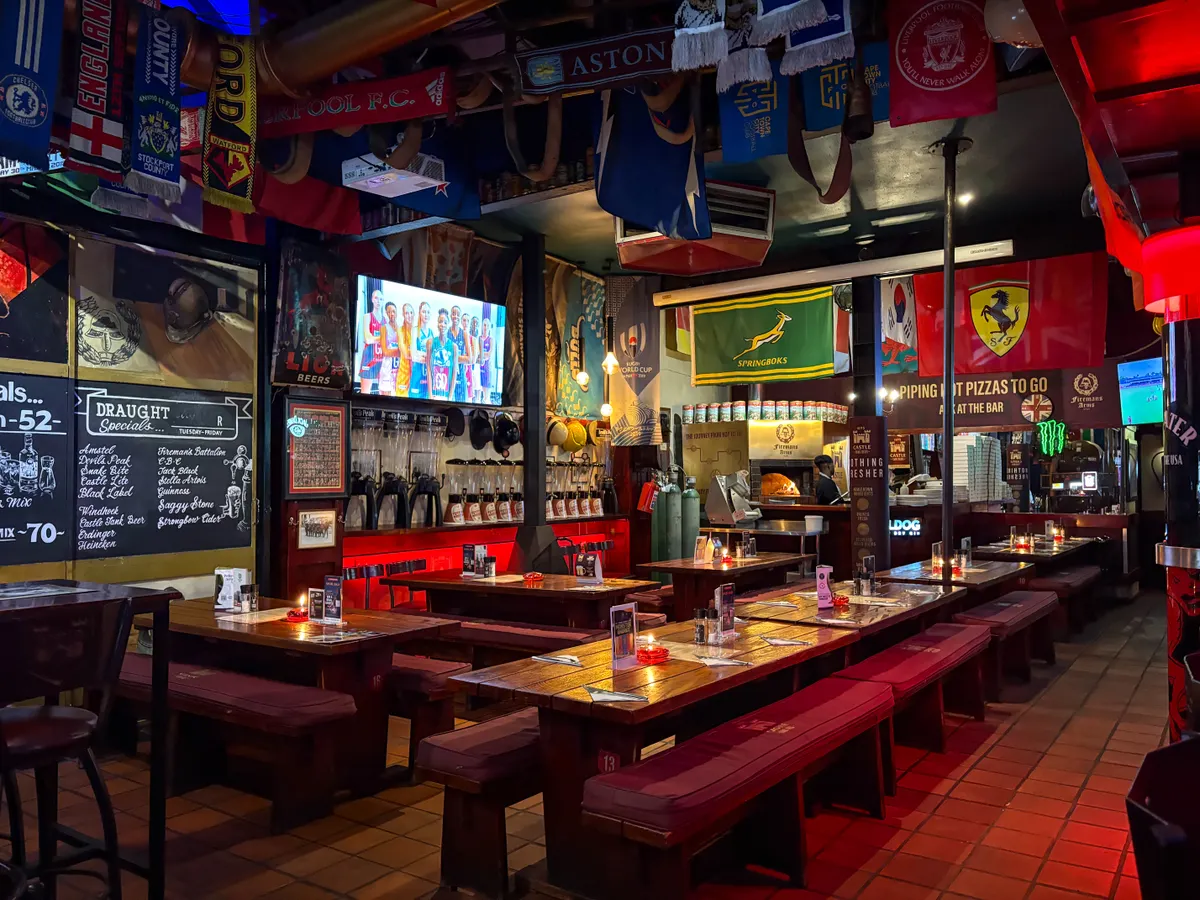

Marston’s Grandstand pub conversions are set to accelerate sharply after the pub group said England World Cup matchdays delivered like-for-like sales growth of 22%, with the company now confident of hitting its full-year margin targets ahead of schedule. Shares in MARS rose 1% on Tuesday.
The group’s 36 Grandstand conversions completed to date are generating year-to-date like-for-like growth of around 30%. Marston’s plans to target approximately 100 conversions in FY2027, substantially stepping up investment in the format.
Grandstand Returns Well Ahead of Group Average
Across the 10 Grandstand sites open for more than three months, Marston’s has recorded like-for-like revenue growth of around 30%, return on invested capital exceeding 40%, and EBITDA margins significantly ahead of the group average, according to the Marston’s half-year results RNS.
Across the broader new formats portfolio, the average ROIC from the FY2025 and FY2026 investment programme is 35%, with post-conversion like-for-like revenue growth of 20%, the same filing shows. The group’s sports-focused Grandstand pubs reported sales up around 170% year-on-year across World Cup matchdays.
Higher-value Order & Pay sales rose 45% across the estate, and guest reputation scores remain strong.
Wider Estate Still Soft, but Margin Target in Sight
Across the broader estate of more than 1,300 pubs, year-to-date like-for-like sales are 1.6% lower than last year, as softer off-peak trading has offset strong growth at peak occasions. Reuters confirmed the figure covers the 42 weeks to 18 July 2025.
The group expects to hit the EBITDA margin expansion target set at its October 2024 Capital Markets Day within this financial year, which it describes as significantly ahead of schedule. The target, set out in the preliminary results filed on Investegate, is a range of 200–300 basis points of improvement from 2024 levels, equating to a target EBITDA margin of 23.4%–24.4%. Marston’s underlying EBITDA margin reached 22.8% in FY2025, up from 21.4% in 2024.
Pre-IFRS 16 leverage stood at 4.7x at the H1 FY2026 period end on 28 March 2026, down from 4.9x a year earlier, with net debt excluding IFRS 16 lease liabilities of £857.7 million, per the half-year RNS. The board expects leverage to reach around 4x by the preliminary results.
The Capital Markets Day shareholder returns policy specifies that buybacks or other returns of capital will be considered once pre-IFRS 16 leverage falls below 4.0x, alongside further debt reduction and cash for growth investment, according to the Q4 trading statement. The board said it plans to commence shareholder returns alongside the accelerated formats rollout in FY2027, most likely through share buybacks, subject to market conditions.
Chief executive Justin Platt said: ‘Our pubs have delivered a strong start to the summer, with an excellent World Cup once again underlining the enduring role of the community pub as the place the nation comes together to cheer the moments that matter. Our new Grandstand pubs have been leading the way and continue to perform ahead of expectations, while our accelerated investment programme is driving further trading momentum and enhancing guest experiences across our estate.’
Platt added: ‘Supported by a clear strategy, disciplined cost control and continued investment in our new formats, we are well positioned for the summer trading period ahead. Given this, as well as our progress on leverage reduction, the Group is well-placed to recommence shareholder returns in FY2027.’
Marston’s is listed on the London Stock Exchange under the ticker MARS. The 100-conversion target for FY2027 now sets the pace: whether the wider estate can recover off-peak volumes before that investment cycle peaks will determine how much of the margin gain is structural rather than occasion-driven.
