
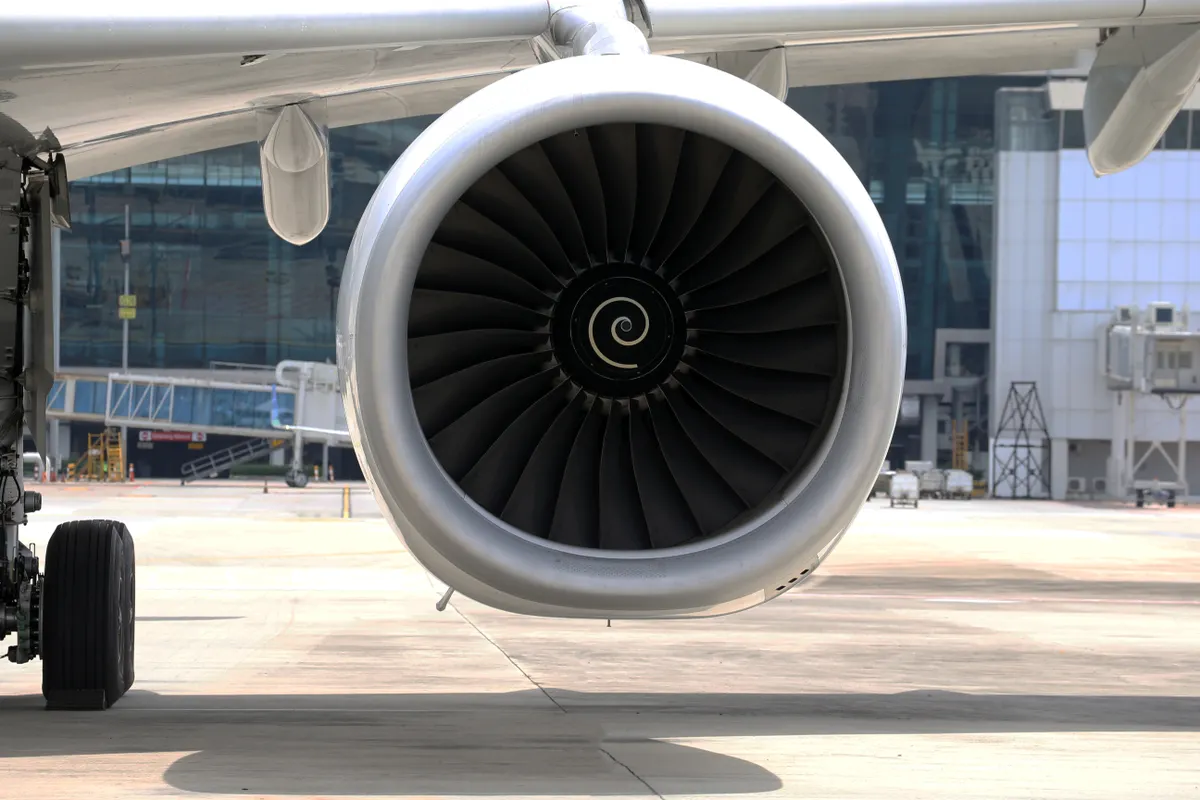

The Rolls-Royce share price has retreated from near-record highs after a five-year gain of more than 1,360%, prompting analysts to weigh a compelling operational story against a valuation that leaves little room for error.
A consensus of 18 analysts shows 16 Buy or Outperform ratings, two Hold and one Sell, with a median 12-month price target of 1,415p, according to market commentary reviewed by the original source. Most acknowledge that some profit-taking after such a sustained run is natural.
What the Numbers Say About the Rolls-Royce Share Price
The company’s 2025 full-year results, published in February 2026, set a strong baseline. Rolls-Royce’s full-year results press release disclosed underlying operating profit of £3.5bn, a margin of 17.3%, and free cash flow of £3.3bn. Net cash stood at £1.9bn at 31 December 2025.
Those figures sit below the company’s own 2026 guidance of £4bn–£4.2bn underlying operating profit, with management also targeting free cash flow of £3.6bn–£3.8bn for the year, reaffirmed at the 30 April 2026 annual general meeting.
The company’s 2026 Civil Aerospace guidance also includes 550–600 original equipment engine deliveries and 1,480–1,550 total shop visits. Large engine flying hours in Q1 2026 were 115% of 2019 levels, up 5% on the prior period, with full-year guidance set at 115%–120%, according to the AGM trading update.
Mid-term targets, framed around a 2028 timeframe, call for an operating margin of 18%–20%, free cash flow of £5.0bn–£5.3bn, and a return on capital of 23%–26%.
Capital returns are also accelerating. The full-year results press release confirmed a £7bn–£9bn multi-year share buyback programme running from 2026 to 2028, following a £1bn buyback completed in 2025. Rolls-Royce also declared a total 2025 dividend of 9.5p per share (final dividend: 5.0p), representing a 32% payout ratio of underlying profit after tax.
Efficiency gains underpin those targets. The Rolls-Royce 2025 annual report states that the total cash cost to gross margin ratio improved to 0.36x, with £0.6bn of efficiency and simplification benefits delivered alongside £1.2bn of third-party procurement savings.
Bear Case: Valuation Compression Risk
Optimism has a price. The forward price-to-earnings ratio sits around 39, against a 10-year average closer to 15. That multiple implies the market is pricing in near-flawless execution, and the company’s own guidance of roughly 19 times future earnings confirms the premium on offer.
Aerospace remains cyclical. Recessions, geopolitical shocks, or sustained oil price spikes can depress flying hours and the services revenue that sustains Rolls-Royce’s cash generation. Management has also flagged ongoing supply chain difficulties, including cost inflation and component constraints, that could pressure margins through 2026.
The long-term service agreement model offers revenue visibility but also carries cost exposure if unexpected repairs or technical faults arise. A mild miss on profit or cash flow at a 39x multiple could produce a sharp downward move.
Beyond aerospace, Rolls-Royce SMR signed a contract with GBE-N to supply three small modular reactors to the UK and agreed commercial terms with the ČEZ Group for the first of up to six SMRs in the Czech Republic, according to Yahoo Finance. Those deals extend the long-term optionality but will not move near-term earnings materially.
For investors assessing the Rolls-Royce share price today, the core tension is straightforward: the operational turnaround is real and the targets are credible, but the valuation has absorbed much of the good news already. The 1,415p median analyst target offers limited upside from recent levels, and the forward P/E leaves no margin for operational setbacks.
The next meaningful data point will be the half-year results, where management’s ability to convert guidance into reported profit, and progress on the buyback, will determine whether the current multiple holds or begins to compress.
