

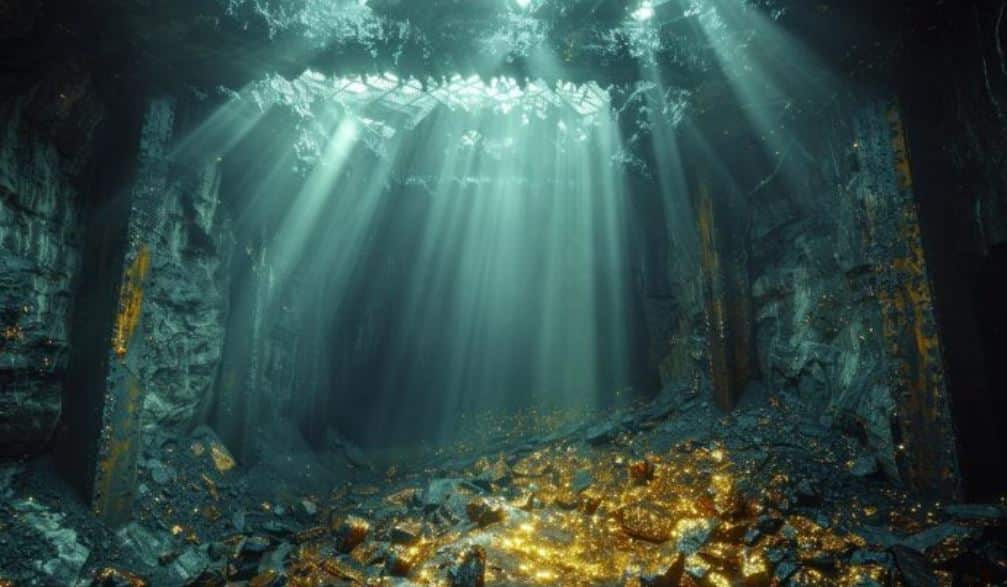
The floor is strewn with black lumps about the size of potatoes somewhere around four kilometers below the Pacific’s surface in a section of dark water that hardly anyone has ever seen. They appear unremarkable. They accumulated metal over millions of years, much like a pearl gathers around grit. And people are currently fighting over who gets to pick them up in government offices and boardrooms that are far from the water.
It’s difficult to ignore how quickly the atmosphere has changed. Deep-sea mining was confined to conference panels and speculative documentaries for many years. Then, in an effort to weaken China’s hold on vital minerals, President Trump signed an executive order in April 2025 to expedite extraction in both US and foreign waters. Months prior, Norway had authorized commercial seabed mining in its own waters. As part of its Vision 2030 plan, Saudi Arabia started a Red Sea initiative. Despite their caution, South Korea and Japan continued to expand their roadmaps. It seems as though a boundary was subtly crossed without the majority of the public noticing.
Cobalt, nickel, copper, and manganese—the unglamorous foundation of batteries, defense systems, and the entire green energy promise—are carried by the nodules themselves. Proponents contend that this could lessen the strain on land-based mines, which have their own setbacks. There is merit to that argument. Additionally, it has a convenient quality that most arguments have when money is at stake.
There’s also money. The CEO of The Metals Company, Gerard Barron, told CNBC that investor interest following Trump’s order was “like night and day,” and he hasn’t held back when expressing his confidence. Before the end of the year, he anticipates receiving a commercial permit. He said, “There is zero chance that this will not happen,” which, depending on the week you hear it, can sound either visionary or reckless. Almost immediately, his company applied for a license under U.S. law, which, if successful, would make it the first to mine international waters for profit.
That “if” is doing a lot of work. Bypassing it would be against international law, according to the International Seabed Authority, a little-known UN agency with headquarters in Kingston, Jamaica, which maintains that it is the only legitimate authority over seabed mining in international waters. In a similar vein, China’s foreign ministry denounced the executive order. The irony is stark: despite never having ratified the UN Convention on the Law of the Sea, the US is now using its own power to seize resources that the treaty refers to as the “common heritage of mankind.”
There are other factors besides politics that make this truly unsettling. The fact that we know very little about these ecosystems is something that scientists frequently bring up. There aren’t many surveys. There is hardly any long-term monitoring. There is no actual liability framework in place in case something irreversible occurs down there, and restoration techniques are mainly unproven. On a timeline determined more by geopolitics than by evidence, we might be on the verge of industrializing one of the planet’s last unexplored regions, a place we haven’t even mapped.
Ripples are seen by analysts spreading outward. According to Maria Jose Valverde of Eurasia Group, the order might upend the geopolitical board by encouraging other nations to band together against minerals extracted by the United States or pushing the ISA toward a rulebook that it has been unable to complete for years. Everyone is improvising in a world where multilateralism is waning.
The most bizarre aspect of watching this happen is how quiet the location is. Nobody is negotiating down there. For millions of years, the nodules have been oblivious to executive orders and quarterly profits. It remains to be seen if the battle for them will ultimately be more significant than the rocks themselves, or if anyone will be able to pull them up at scale. In any case, the race has begun. The regulations haven’t changed.
