

There is a specific type of fee that operates in silence. It is not given to you at a counter. At the gate, nobody stops you to retrieve it. Most people never scroll down far enough to see it, but it’s folded inside the airfare you booked months ago. The Albanese government increased the Passenger Movement Charge from $70 to $80, effective January 1, 2027, in the federal budget that was presented in Canberra on May 12.
Ten dollars. It sounds almost insignificant when spoken aloud. However, the response from the travel industry indicated that something more significant was at risk, and it’s difficult to ignore how raw the nerve turned out to be as the response has developed over the past week. The Tourism and Transport Forum’s director, Margy Osmond, refrained from using tactful language. It was an obvious tax grab, she said. Some referred to it as “outrageous.” Reading the statements gives the impression that the tenner isn’t the main source of the anger. It has to do with not knowing where it goes.
Because the answer is genuinely unclear, the question of where the money goes keeps coming up. The charge already generates about $1.4 billion annually. Less than half of that, according to industry figures, returns to border management. Over a five-year period, the new increase is anticipated to raise an additional $755 million. For the purpose of implementing the change, the government has allocated $700,000 to the Home Affairs department for the upcoming fiscal year. Critics contend that the remainder vanishes into consolidated revenue, a polite term for the overall pile.
Those who study this claim that the pace is just as painful as the quantity. In July 2024, the rate increased from $60 to $70. It is now on its way to $80. This amounts to about a 33% increase in less than three years, according to a Griffith University professor, who also pointed out, almost wearily, that a family of four would lose an additional $40 before they even locate their passports. The charge’s defenders have a valid point as well, and it’s important to state clearly that governments rely on tools like this because international air travel is exempt from GST and the majority of sales taxes due to international agreements. In one form or another, the PMC has been around since 1978, when it was ten dollars. It’s not brand-new. Simply put, it has grown more quickly than the nation to which it is attached.
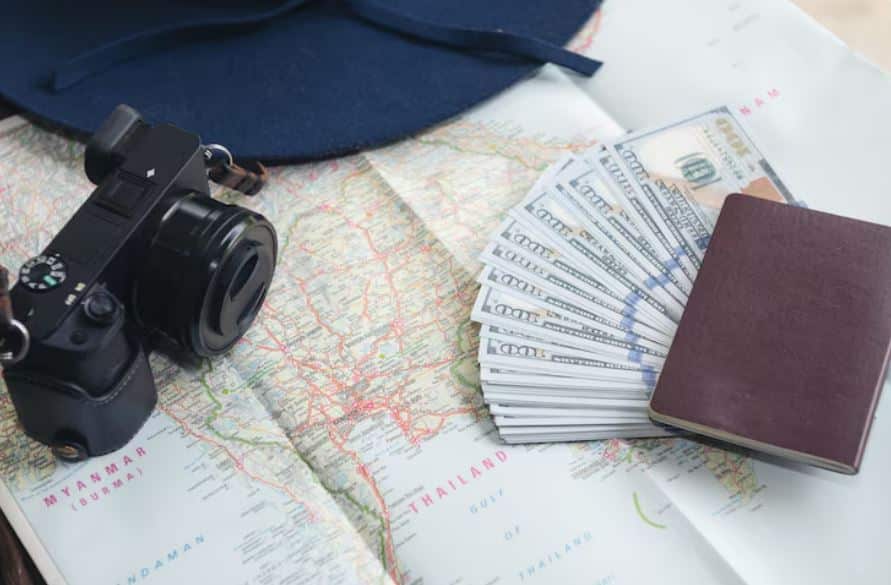
Nevertheless, there is an almost too clever irony in the middle of all of this. Travelers are given a paper card to fill out on the plane while being required to pay one of the highest departure taxes in the world in Australia. Pen, tray table, and the little act of writing your address while the cabin lights are dim are all part of the yellow incoming passenger declaration. In 2023, New Zealand discontinued using paper cards. The UAE and Singapore switched to biometrics years ago. Although digital versions have been successfully tested in Brisbane and Sydney, a national rollout has not yet been scheduled, and industry estimates place the total cost of the switch at roughly $25 million. When you compare that to $755 million, the math becomes unsettling.
Brisbane Airport manager Gert-Jan de Graaff described it as a lost chance, citing the impending 2032 Olympics. He might be correct when he says that this is the time to modernize. It’s also possible that the remaining funds are merely framing and that the money was always intended for the general pile.
The gesture’s insignificance in comparison to the silence’s magnitude is what lingers, speaking to no one in particular. Eighty dollars to go. The paper form is retained. Additionally, those who pay it are still unsure of what they purchased.
