

A Bored Ape Yacht Club NFT can be found in a digital wallet on the Ethereum blockchain that was last visited in late 2022. The ape in the picture wears a striped shirt and has laser eyes. The equivalent of $180,000 was spent on it. Since then, it hasn’t moved. Its owner, who was likely telling pals at a dinner party about the exclusive yacht club events, the intellectual property rights, and the upcoming metaverse game at the time of purchase, seems to have just lost interest. or lost the ability to pay for care. The wallet remains unaltered, producing nothing, and deteriorating in a manner similar to that of costly errors: quietly, slowly, and without fanfare.
The floor price of a Bored Ape Yacht Club NFT is expected to be between $30,000 and $40,000 by April 2026. The same floor was more than $350,000 in 2022. It’s not a correction. It is a collapse that spreads throughout a collection that once held a particular and truly unique cultural position. At the same time, it serves as a financial speculation, a status symbol, and a membership card to a group of people who, with differing degrees of sincerity, thought that digitally rare cartoon primates were the next big thing in luxury branding. There are about 10,000 of these apes. Many of their wallets haven’t been used in years.
| Category | Detail |
|---|---|
| Collection Creator | Yuga Labs — founded 2021; creator of BAYC, Mutant Ape Yacht Club, CryptoPunks, and the Otherside metaverse project |
| Peak Floor Price (2022) | Approximately 128 ETH per NFT — equivalent to over $350,000 at peak ETH prices; total BAYC market cap briefly exceeded $4 billion |
| Current Floor Price (April 2026) | Approximately $30,000–$40,000 per NFT — a decline of over 90% from peak in USD terms; some individual apes have sold for less than $10,000 |
| Celebrity Fallout | Justin Bieber’s BAYC purchase (valued at ~$1.3 million at time of purchase) now worth under $100,000; Paris Hilton and Jimmy Fallon removed BAYC profile images; celebrity-led hype cycle effectively ended |
| Broader NFT Market | An estimated 95% of NFT collections created during the 2021–2022 boom are now considered effectively worthless; trading volumes collapsed from billions per month to a fraction of peak levels |
| Legal Outcome | A 2025 federal court ruling determined that Bored Apes should not be classified as securities — resolving regulatory uncertainty but not reversing the market’s verdict on their value |
| Promise vs. Delivery | BAYC was sold on promises of exclusive events, metaverse access (Otherside), and IP licensing rights; most utility has failed to materialise at the scale or quality that justified the original pricing |
| Further Reference | NFT market data and collection analytics at NFT Price Floor |
In January 2022, Justin Bieber paid about 500 ETH, or $1.3 million at the time, for a Bored Ape. Depending on the buyer and the day, its current value is close to $70,000. Since early 2023, he has not made any posts regarding it. The profile pictures of Paris Hilton and Jimmy Fallon, who memorably compared their monkeys in a live TV segment that turned like something of a monument to the collective delusion of the time, have been deleted.
Once teeming with holders discussing about the Otherside metaverse and the upcoming utility drop, the community Discord server has become surprisingly silent. This is hardly a well-planned departure. It is more akin to a slow, ashamed slide, where people who have spent a lot of money on something find it easier to just cease noticing it than to face the consequences of their purchase.
The NFT market as a whole has not performed better. About 95% of the collections made during the 2021–2022 boom, according to researchers monitoring the sector, are now practically worthless—no customers, no floor, no community, and no activity in the smart contract.
The art NFT wave, the gaming NFT wave, the sports card NFT wave, and the celebrity-branded NFT wave all followed the same basic trajectory: a sharp rise fueled by FOMO and speculation, followed by a slow realization that the majority of what was being sold was the speculative narrative itself rather than anything with intrinsic, long-term value. The market adjusted prices when the story lost credibility.
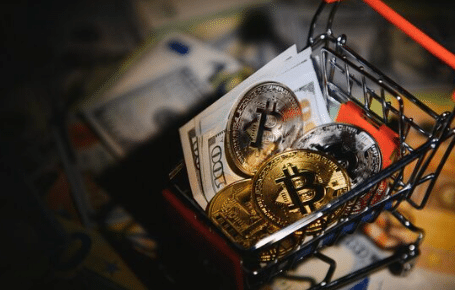
It’s possible that what happened with Bored Apes was essentially the same as what happened with tulips in 1637 or Beanie Babies in 1999—a time when people persuaded themselves that a rare item with strong social proof would retain its value forever, only to find out that social proof is exactly the kind of foundation that vanishes when sentiment changes. However, there is a significant distinction.
The tulip bulb was real and could be planted, at the very least. The Beanie Baby was touchable and took up shelf space. A web connection, an interface, and a continuous cause to care are necessary for The Bored Ape to exist on a blockchain. The object does not even deteriorate in the traditional sense when the care ceases. It simply remains there, a permanent record of the moment someone accepted the $350,000 asking price.
After two years of legal ambiguity, Yuga Labs, the firm behind BAYC, found some relief when a federal court verdict in 2025 decided that Bored Apes should not be regarded as securities. The floor price was not reinstated by the decision.
The Otherside metaverse project is still unfinished. None of the initial appraisals could have been supported by the stated utility that was meant to support the pricing. Upon reviewing the entire plot, it seems that the most truthful statement made about Bored Apes was the one that no one was ready to make at the time: the price was the product, and when the price dropped, nothing was left.
