

Claire Whitfield built FarrierIQ in Los Angeles after identifying a gap that most people outside the equestrian industry would never notice: professional farriers shoe up to 15 horses a day across multiple barns and run their entire business from the back of a truck with no software built specifically for them.
The daily operational picture tells the story clearly. A working farrier shoes between 8 and 15 horses per day, moving between barns. Along the way, they track hoof angles, corrective modifications, shoeing histories, return visits and invoices. The truck serves as the only office. Most manage all of this through text messages, paper appointment books and memory. The results are predictable: missed follow-ups, unbilled work and a coordination problem that compounds as client numbers grow.
Whitfield put the problem plainly. “Farriers are running sophisticated mobile businesses with no infrastructure behind them,” she said. “Their truck is their office, their phone is their everything. FarrierIQ gives them the back office they deserve, and it works from the truck.”
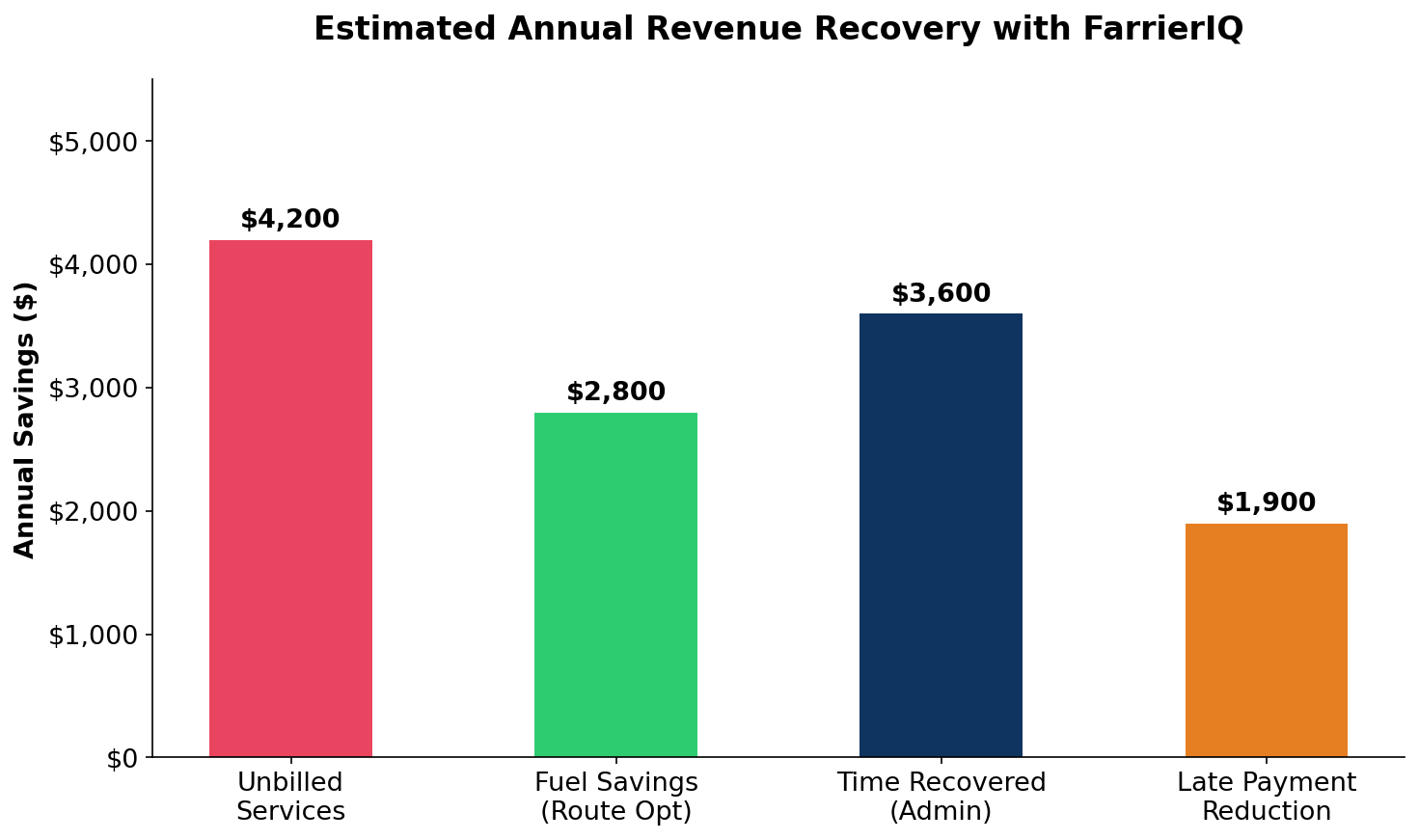
FarrierIQ’s scheduling function addresses the route problem first. The platform builds automatic route optimisation into appointment scheduling, calculating the most efficient loop across multiple barns for each working day. Fuel, mileage and time all shrink. The farrier arrives at the right barn in the right order without spending the evening before planning it manually.
The data model makes a specific design choice worth noting. Most field service platforms organise records by client. FarrierIQ organises by horse. Each animal carries its own profile: full shoeing history, hoof angles, corrective modifications, conditions and notes. For a farrier managing dozens of horses across multiple owners and barns, that distinction matters practically. A horse moves yards, changes owners, or sees a veterinarian — the record travels with the animal, not the billing relationship.
Photo documentation extends that record into the visual. Farriers photograph hooves over time, building a trackable visual history. That history serves three purposes. It monitors change, resolves disputes when a client questions outcomes, and gives veterinarians the context they need for treatment decisions. The camera becomes clinical documentation.
Invoicing accommodates the way farriers actually charge rather than forcing a generic billing model onto a specialist trade. Per horse, per visit, trims against full shoes, corrective work, emergency call-outs — FarrierIQ handles each scenario, with batch billing for large barn accounts and individual billing for private clients. Whitfield developed the platform with input from working farriers rather than adapting existing field service software, and the invoicing flexibility reflects that. FarrierIQ builds in the charging structures that already exist in farriery rather than approximating them.
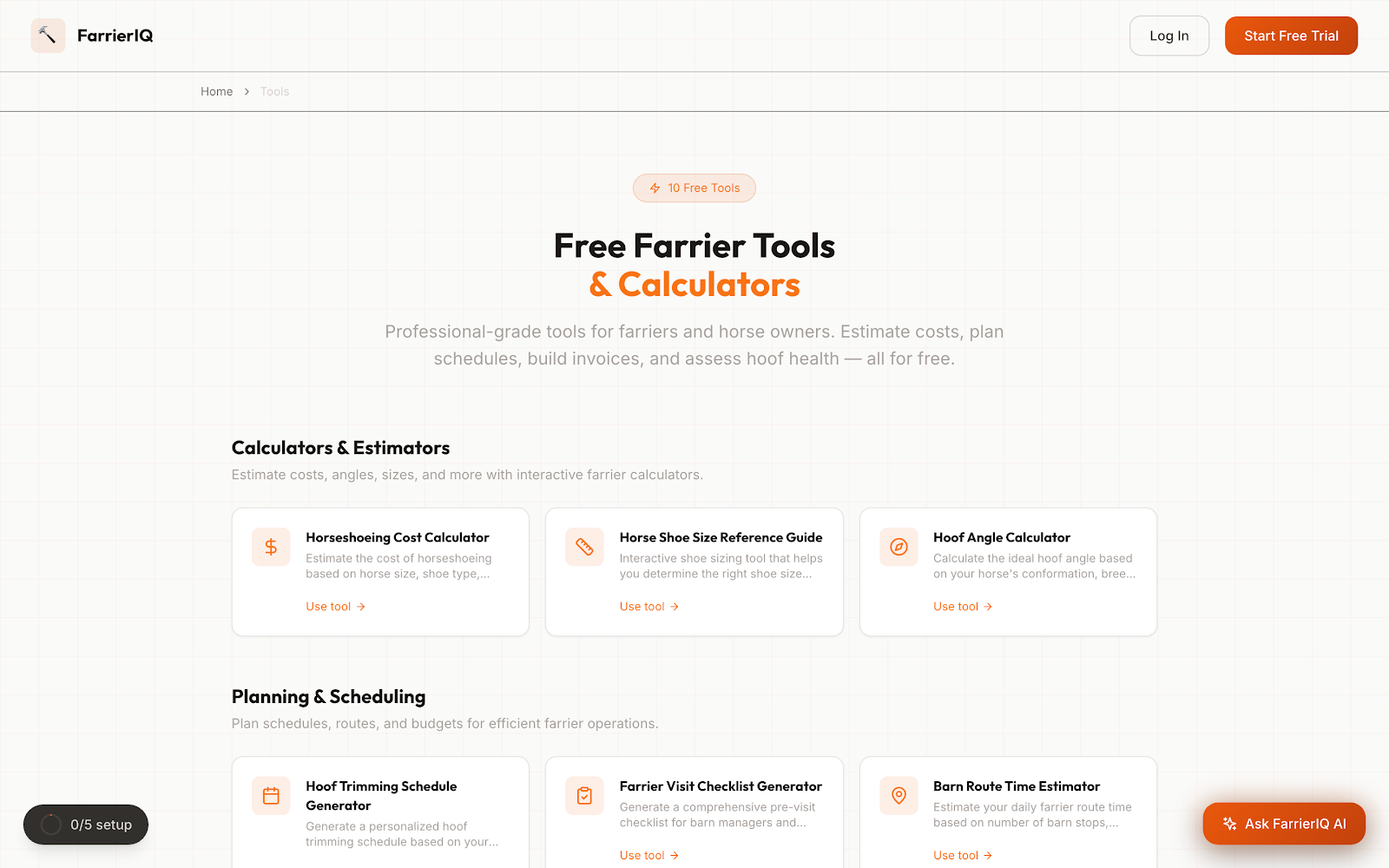
Beyond the core platform, FarrierIQ provides a free tools section covering shoe size calculators, trim interval trackers, hoof angle guides and shoeing cost estimators. A materials reference covers specifications for shoes, nails, pads, adhesives and packing materials from all major suppliers. It works as a practical lookup resource for the field rather than a library to consult from a desk.
The platform targets professional farriers, horseshoers, barefoot trimmers, equine podiatrists and mobile hoof care providers. Farriery sits at an unusual intersection. It demands physical trade skills and business management complexity simultaneously. Multiple clients, multiple animals per client, specialist clinical knowledge, mobile invoicing and long-term animal health records. Generic small business software handles none of it well. FarrierIQ claims the position of first platform built exclusively for the profession — a self-description, though the niche specificity of the feature set supports the framing.
The equestrian services industry has historically sat outside the attention of software developers. Farriers, like many specialist trades in agricultural and rural contexts, adapted general tools to specialist needs and absorbed the inefficiency. FarrierIQ treats that inefficiency as the product opportunity. Whether the platform builds the user base to sustain the category it is opening remains the question the next twelve months will answer.
For now, the back office has arrived at the barn.
