
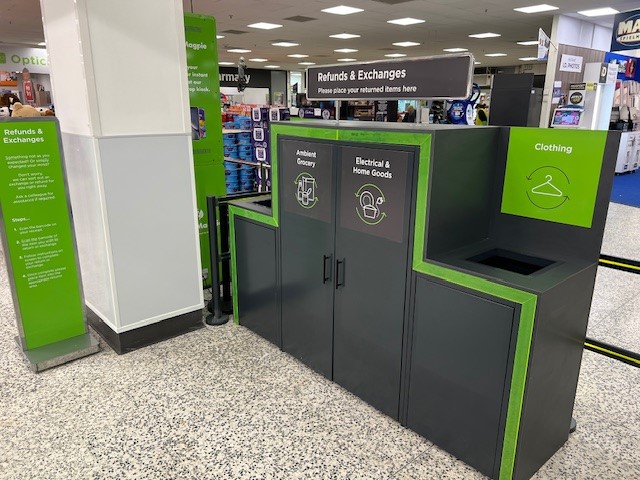

Asda’s latest initiative involves self-service returns and tobacco vending trials at a store in Greater Manchester.
- Customers can deposit returns into a self-service drop box for automatic refunds with receipt verification.
- A new system aims to streamline tobacco purchases, reducing queuing times at customer service desks.
- The trials are set to enhance efficiency and customer experience in Asda’s retail operations.
- Asda’s effort is part of a broader trend among retailers to modernise checkout processes.
Asda has introduced a self-service system for product returns, which is being trialled at its Ashton-under-Lyne store in Greater Manchester. This new system allows customers to deposit unwanted or faulty goods into a designated drop box. By scanning the receipts and barcodes at the self-service machine, refunds can be issued automatically, streamlining the return process. In cases where a receipt is not available, staff assistance is required to process the return manually, ensuring a fallback mechanism is in place.
The trial also encompasses a new way to purchase tobacco and vape products without the need to queue at a traditional kiosk. Initially, Asda staff will dispense these products from the kiosk, but future phases will allow customers to use self-serve tills for selection and undergo age verification. Once purchased, consumers can scan a receipt at an automated vending machine to receive their items. This approach aims to address the inconvenience experienced by customers who have to queue after completing their primary transactions.
As Alexander Lacy, a senior manager in retail front end service at Asda, emphasised, the primary goal is to alleviate the congestion at service desks, a frequent issue that extends customer wait times unnecessarily. This pilot is part of a wider movement amongst UK retailers like Sainsbury’s and M&S, who are also adopting more efficient self-checkout solutions. Sainsbury’s is experimenting with larger self-checkout areas, while M&S has added self-checkouts in changing rooms across numerous stores.
These advancements in retail operations represent a significant step towards enhancing customer convenience and operational efficiency. As technology becomes an integral part of everyday shopping experiences, such efforts are increasingly important to meet consumer demands and expectations. Retailers are continually looking to improve service delivery to remain competitive in a rapidly evolving market.
The ongoing trials underscore Asda’s commitment to improving retail efficiency and customer satisfaction through innovative self-service solutions.
