
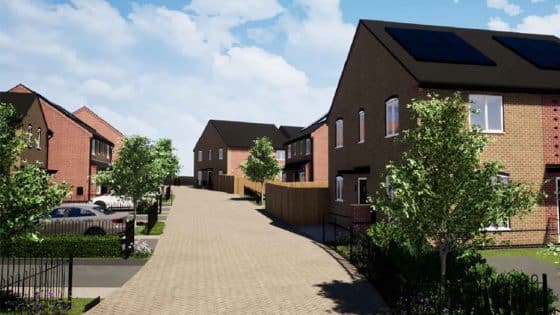

A significant collaboration has been formed to build 3,000 affordable low-carbon homes, led by Muse Developments.
- The venture includes government body Homes England and Pension Insurance Corporation (PIC) with combined startup capital.
- Habiko, the newly formed partnership, aims for 100% affordable housing that meets high environmental standards.
- Phil Mayall from Muse highlights the goal of addressing the community needs through collaborative expertise.
- The homes will be built in high-demand areas outside London, offering rents 20% below market rates.
Muse Developments, a subsidiary of Morgan Sindall, has embarked on an ambitious joint venture to construct 3,000 affordable low-carbon homes valued at £1 billion. This initiative sees Muse partnering with the government agency Homes England and the Pension Insurance Corporation (PIC), who together are investing £54 million as initial funding.
The joint venture, named Habiko, is set to deliver housing schemes that could achieve up to 100% affordability while adhering to stringent green building standards. The project aligns with the government’s bold housing strategy aimed at significantly increasing the availability of affordable homes over the next five years.
Phil Mayall of Muse emphasised the joint efforts with PIC and Homes England, expressing optimism about leveraging their combined resources and experience. Their goal is to provide thousands of low-carbon, low-energy homes tailored to meet the needs of various communities across the country.
James Agar from PIC explained that the new vehicle will be funded through a mix of grant funding and PIC investments. The ultimate objective is for Habiko to achieve financial independence, using rental income to reinvest in further developments.
Housing units will be available at rents set 20% below the typical market rates, with PIC retaining ownership. The homes will be managed in collaboration with a housing association, ensuring quality and sustainability. Agar noted that while this model will be effective across many regions, it would face challenges in London due to high land costs.
The focus of the development is on blending high-quality, innovative design with sustainability, possibly incorporating Passivhaus methods. Agar articulated a vision to change the perception of affordable housing, moving away from traditional stereotypes to deliver constructions that stand out for their design and energy efficiency.
The joint venture marks a forward-thinking approach to affordable housing, promising significant impact through sustainable development.
