
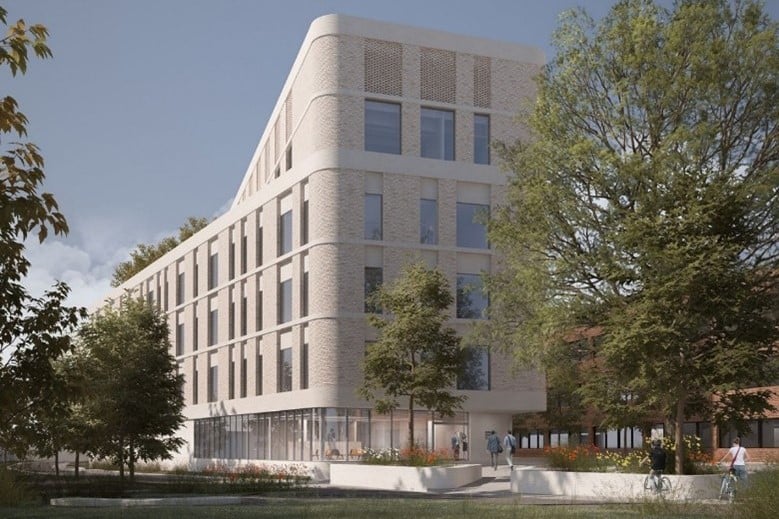

Bouygues UK has been appointed as the lead contractor for an £80m construction project for a diagnostic centre at West Middlesex University Hospital.
- The new facility, focusing on oncology, renal, and imaging services, will connect to the main hospital and is expected to complete by summer 2026.
- Current demolition work of the existing MRI building marks the beginning of this ambitious development project.
- Bouygues has a longstanding relationship with the hospital through a 35-year private finance initiative, reinforcing its commitment to healthcare infrastructure.
- This project reaffirms Bouygues’ role in enhancing regional patient care and outpatient services in Hounslow, Richmond, and Ealing.
Bouygues UK has been entrusted with the construction of a new Ambulatory Diagnostic Centre at West Middlesex University Hospital, an endeavour valued at £80m. Chelsea & Westminster Hospital NHS Foundation Trust has designated Bouygues as the main contractor, entrusting them with both the design and build responsibilities. The significance of this project lies in its aim to enhance diagnostic and treatment services, particularly in cancer, renal, and imaging sectors for the local communities of Hounslow, Richmond, and Ealing.
The construction has commenced with the demolition of the current MRI building, setting the stage for the development of a modern, five-storey facility. This new centre is architecturally planned to integrate seamlessly with the existing hospital structure via a ground floor corridor, ensuring ease of access to comprehensive healthcare services. Project completion is anticipated in the summer of 2026, marking a significant milestone in regional healthcare improvement.
Notably, Bouygues’ involvement with West Middlesex University Hospital is not a new venture. Its link to the facility, underpinned by a 35-year private finance initiative (PFI) agreement, has seen the company previously redevelop the hospital two decades ago. Within this PFI framework, Bouygues continues to provide essential facilities management services, solidifying its integral role in the hospital’s operational framework.
The proposed diagnostic centre is set to elevate outpatient care by offering enhanced day services. This aligns with the overarching objective to streamline patient pathways and improve service efficiency. By strategically locating this new facility at the heart of the hospital, the initiative is poised to significantly benefit regional health provisions, addressing current diagnostic service demands and future healthcare needs.
This initiative marks a significant step forward in improving healthcare infrastructure and patient care services in the region.
