
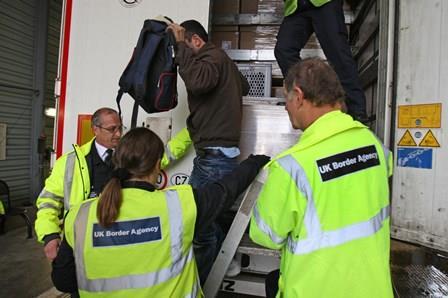

Hauliers are encouraged to share their experiences of discovering migrants in their HGVs with the Independent Chief Inspector of Borders and Immigration.
- David Bolt is investigating the efficiency of Border Force operations in deterring clandestine vehicle entry into the UK.
- The investigation will assess penalties imposed on hauliers, highlighting a need for evidence from those with direct experience.
- Submissions will remain confidential, and contributors will not be named in the final report.
- Hauliers face hefty fines under the Civil Penalty Accreditation Scheme, impacting their operations significantly.
The Independent Chief Inspector of Borders and Immigration, David Bolt, has urged hauliers to provide accounts of their encounters with illegal immigrants hidden in their haulage vehicles. This initiative is part of a broader investigation into the efficacy of the Border Force’s measures to deter and detect clandestine entries into the United Kingdom. Such entries, often taking place at critical junctures like Calais, Coquelles, and Dunkirk, pose significant challenges to border security.
Bolt’s investigation is particularly interested in the measures employed to prevent these entries, including the contentious Civil Penalty Accreditation Scheme. Initially designed to hold hauliers accountable for security lapses, the scheme has seen fines increase from £2,000 to £10,000 per clandestine entrant found aboard trucks. This punitive approach has raised concerns among the haulage community about its fairness and effectiveness.
Hauliers like EM Rogers, which received a £66,000 fine after six migrants were discovered in one of their vehicles, underscore the scheme’s significant impact. The company’s director, Ed Rogers, criticised the penalties, equating them to punishing residents after a house burglary. Such narratives are crucial in highlighting perceived flaws within current protocols and their real-world implications.
Although Bolt’s remit does not extend to individual cases, he emphasised that systemic issues reflected in these instances could inform improvements. The confidentiality of submissions is assured, enabling candid contributions that provide a more comprehensive understanding of the clandestine entry issue.
The call for evidence, closing on 6 September, seeks to amalgamate diverse insights into the clandestine migration phenomenon. This initiative is aimed at refining border strategies and ensuring the penalties align with the realities hauliers face daily. The ultimate goal is to balance stringent security measures with fair treatment of those operating within the legal transport framework.
The investigation aims to enhance border security strategies while ensuring equitable treatment of hauliers.
