
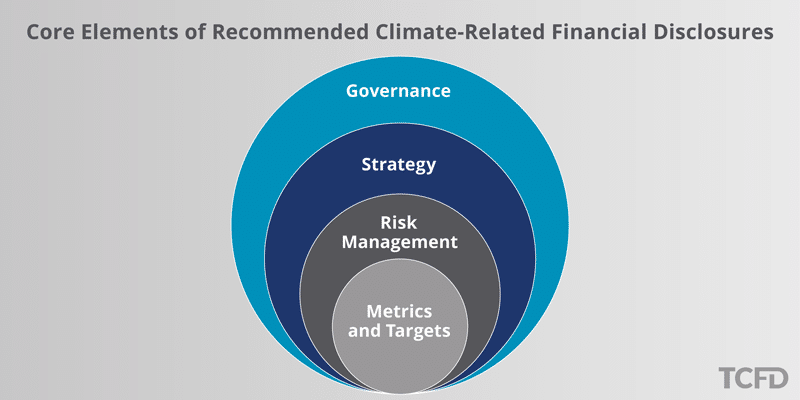

Incorporating climate risk into a bank’s broader framework involves understanding its potential exposure to transition and physical risks. These risks manifest themselves in a range of ways from increased default risk in credit portfolios to decreased asset values.
For example, banks may impose limits on financing to companies involved in Arctic drilling or mountaintop mining because of their environmental impact. They may also incorporate data on late and default payments into their credit models.
Climate Risk Analysis for Financial Institutions
Many financial institutions do not fully understand how their specific businesses, and the global financial system as a whole, could fare in a wide range of severe physical and transition-related climate scenarios. As a result, they are not adequately factoring these risks into long-term planning and risk management strategies. To address this challenge, banks should start by distilling global scenario analyses down to more specific country-level impacts, and then to targeted regions. Once these variables are granular enough, they can then begin incorporating them into their PD, LGD, and EAD models.
This page is intended to encourage companies to take a leadership role in corporate carbon reduction by leveraging SBTi. More than 4,000 companies have already signed up to SBTi, and new ones are joining continuously.
Companies who commit to SBTi have access to a set of best practices for setting and measuring science-based targets. These goals, which are designed to ensure that all sectors are on track to achieve net-zero emissions in line with a 1.5°C future, help companies assess how much they need to reduce their environmental impact.
Factoring climate risk into long-term planning and risk management strategies
As the world grapples with the escalating costs and consequences of climate change, more companies are focusing on the financial implications. Some are preparing for the physical risks of storms, floods and droughts that can damage infrastructure and destroy assets. Others are addressing transition risk, as they shift away from carbon-intensive business models.
The implications of these risks can be incorporated into corporate planning, investment strategies and credit risk management. Many institutions are using scenario analysis to identify potential exposures to both physical and transition risk. They also are incorporating climate-related drivers into their PD, LGD and EAD models.
The challenge is that climate risk is a holistic issue and requires a comprehensive approach. As with the COVID-19 pandemic, it is important that each institution develop a strategy that focuses on its core competencies and sets out a clear roadmap for making progress against this emerging threat. Those that can demonstrate they are taking effective action will have an edge. The first step is developing a comprehensive taxonomy and map of the risks, with the emphasis on the transmission channels that can make them most consequential. This should focus on industry/sector, geography and client type. Having done that, banks should then integrate climate risk into their overarching credit business strategy and product focus and into their credit risk processes and policies.
Aligning Business Strategy with Science
There are a number of ways to quantify and communicate your company’s progress toward a low-carbon future. The metrics you choose are best when they clearly link to your strategy and risk management systems, and are meaningful in the context of current and potential financial impacts from climate change.
The Science-Based Targets Initiative is the global standard for companies to set and verify emission reduction targets that align with scientific evidence. The organisation is a partnership between CDP, World Resources Institute (WRI) and WWF, and has recently expanded its scope to include an Environment Attribute Certificate (EAC) as a means of fulfilling Scope 3 emissions reduction requirements in the new Corporate Net Zero Standard that was launched on 28th October 2021.
The SBTi framework includes a rigorous set of criteria on what counts as a science-based target. By committing to an SBTi-approved target, you’re future-proofing against the inevitable arrival of climate legislation and letting your stakeholders know that your carbon reduction commitment is genuine. More importantly, it’s an opportunity to drive innovation in your business tactics by forcing you to think outside the box on how to achieve your goals. This can lead to novel ideas that you wouldn’t have considered if you weren’t a member of SBTi.
Investing in climate resilience
The global economy’s reliance on financial institutions to provide credit has a major impact when it comes to climate risk. Without a sufficient flow of capital, it will be difficult for companies to invest in the physical and transition risks that are already emerging, let alone to address more-severe impacts that could be unavoidable as the world moves away from carbon-intensive business-as-usual.
For these reasons, it is increasingly important that all investments, including those in infrastructure and development projects, be climate-resilient. Moreover, many adaptation investments are interlinked with other types of investment (e.g., in agriculture and nature) that can bring much broader economic, social, and environmental benefits.
Financial institutions can help bolster these efforts by increasing their own transparency around climate-related disclosures. For example, they can report on the specific climate-related risks and opportunities unique to their businesses using existing benchmarks. They can also help companies better understand their own climate-related financial risks by providing them with more contextual information on how those metrics relate to company strategy and risk management. Examples of this are found in the Canada Pension Plan’s 2020 Sustainable Investment Report and Federated Hermes’s 2020 TCFD report. The knowledge hub maintained by the Task Force on Climate-Related Financial Disclosures provides a good starting point for learning more about this.
