
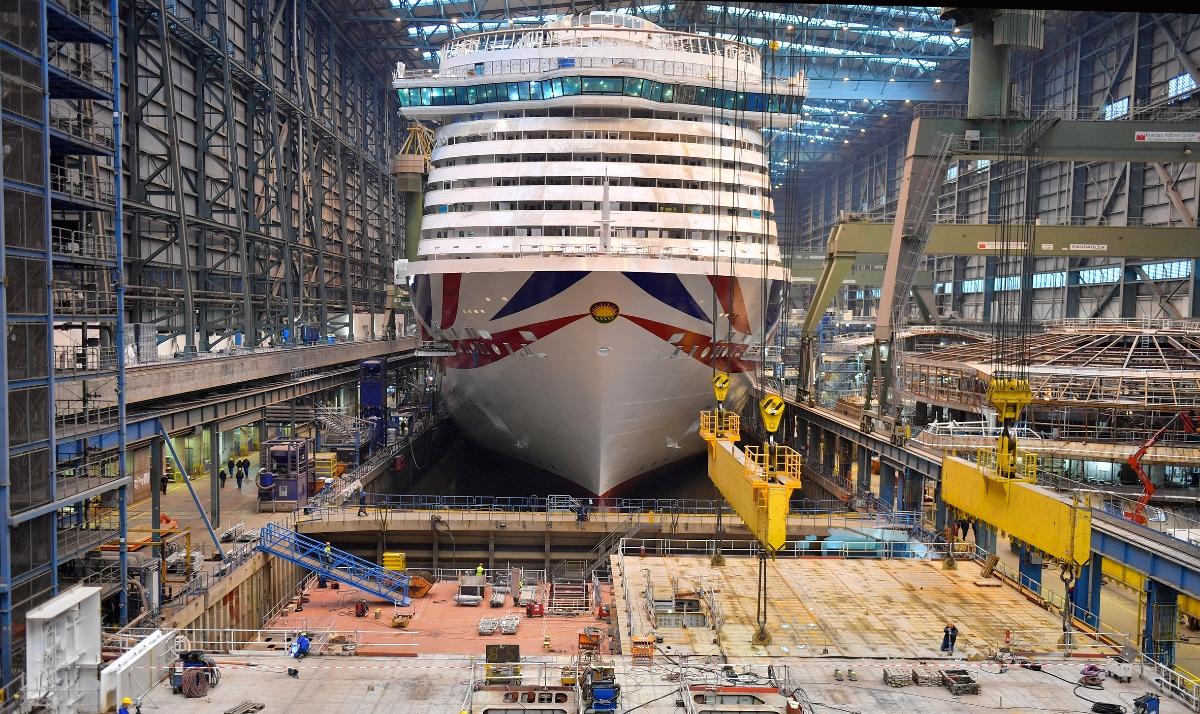

Meyer Werft, the storied German shipyard, is navigating troubled waters. Recent revelations highlight its financial challenges amid a backdrop of massive booked orders.
- A deal is being pursued with the German government for financial support to maintain its operational viability.
- The shipyard requires a substantial sum of 2.7 billion euros to fulfil current cruise ship orders.
- Significant job cuts have been announced, impacting approximately 18,000 direct and indirect employees.
- Government interventions may see temporary state ownership to safeguard the shipyard’s future.
Meyer Werft, a 229-year-old shipyard with a storied history, is currently facing significant financial challenges. Despite boasting €11 billion in booked orders, the construction costs for these ships necessitate immediate financial assistance, prompting the shipyard to negotiate a rescue package with the German government. The potential closure of Meyer Werft presents a looming crisis, not only for the company but also for the Papenburg community where thousands rely on the shipyard for employment.
As reported by Financial Times, the shipyard is seeking €2.7 billion to complete its existing cruise ship orders. This unusual requirement stems from the industry’s business model, wherein payment is received post-delivery, necessitating large up-front expenditures for construction materials and labour costs. The German chancellor, Olaf Scholz, underlined the government’s commitment to preserving the shipyard’s operations, recognising its critical role in the local economy.
The potential impact on employment is severe, with the shipyard having previously announced the intention to cut 340 jobs. In total, Meyer Werft supports around 18,000 jobs both directly and indirectly. Such job cuts could have devastating consequences on the region’s economic stability. “We all want to secure the continued existence of the shipyard – and with it everything that depends on it,” remarked Scholz.
The proposed government intervention includes a contribution of €400 million in equity from both the federal and Lower Saxony state governments, alongside bank loan guarantees. This intervention may also see the temporary acquisition of up to 80% of the shipyard by the government, essentially placing it under state control until financial stability is restored.
Meyer Werft’s recent success in securing its largest ever contract—four new cruise ships for Disney Cruise Line—offers a glimmer of hope amid the turmoil. These ships are slated for delivery between 2027 and 2031 and demonstrate the shipyard’s potential to recover given the right financial support. Bernard Meyer, the CEO, expressed optimism about the company’s future, stating: “The solution that has now been found is not easy for the family, but we have always said that the interests of the company take precedence over those of the family.”
The collaborative effort between Meyer Werft and the German government aims to stabilise the shipyard’s finances, ensuring its longevity and safeguarding thousands of jobs.
