
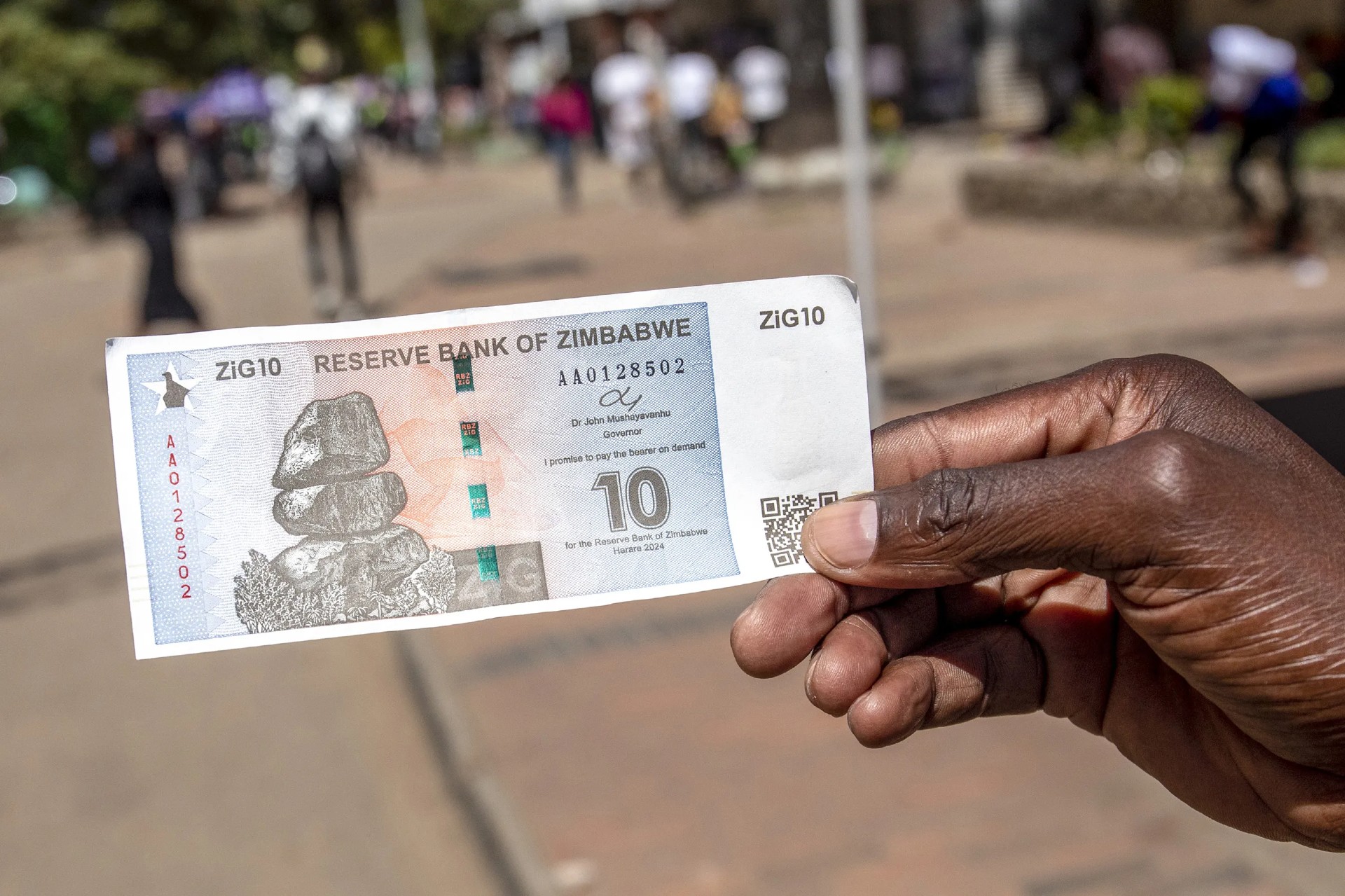

Zimbabwe’s introduction of the ZiG, a gold-backed currency, was initially met with a mix of hope and scepticism. The new currency aimed to replace the beleaguered Zimdollar. Yet, within months, ZiG’s value plummeted by 40%. This unexpected decline has raised significant questions about the nation’s economic trajectory and the viability of its monetary strategies.
The Zimbabwean government has promoted de-dollarization to stabilise the economy. However, the rapid devaluation of ZiG has prompted concerns. The public remains divided, questioning whether the gold-backed currency can indeed pave the way for stability. The narrative surrounding ZiG is now one of cautious anticipation, with many looking for clear government action to navigate this economic challenge.
The Journey to ZiG
In an effort to address relentless hyperinflation, Zimbabwe has continually attempted to establish a stable national currency. The introduction of the ZiG was the latest in this series of efforts. Launched on April 5, the currency aimed to replace the Zimdollar, which had crashed in 2009. However, scepticism among the public was palpable, given the history of failed monetary policies, and the outlook was divided between cautious optimism and mistrust. The government’s communication strategy regarding ZiG’s launch was notably opaque, leading to unanswered questions and public concern about its viability.
Economic Context
The decline in ZiG’s value, from 13.56 per US Dollar at launch to 24.4, marks a significant 43 percent drop. This devaluation occurred just within months, echoing the past troubles of the Zimdollar, which fell to a staggering exchange rate against the US Dollar before its eventual demise. This downward trajectory served as a reminder of the turbulent economic history Zimbabwe has faced, further complicating efforts to restore local confidence in national monetary policy.
The Reserve Bank of Zimbabwe’s role in the devaluation was crucial. Governor John Mushayavanhu explained that the decline was not a deliberate devaluation but rather a reflection of existing market dynamics. This statement aimed to assuage fears, but the reality of falling currency value spurred concerns over potential economic instability and inflationary pressures.
Government’s Perspective
Governor John Mushayavanhu, in addressing the devaluation, emphasised that the changes seen in ZiG’s value were market-driven and not orchestrated by the government. He expressed optimism about the future, stating that stabilisation and eventual price drops were expected. This official stance was intended to reassure both domestic and international stakeholders.
The government’s narrative focused on the potential benefits of the gold-backed currency, highlighting its role in steering the nation towards economic recovery. Officials argued that a stable local currency was pivotal in achieving long-term economic goals, even amid short-term fluctuations and market adjustments.
Public Sentiment
Public reaction to the ZiG’s fluctuations has been mixed. Many citizens remain wary of the new currency, recalling previous experiences with hyperinflation and economic instability. Trust in government policies is fragile, with calls for transparency and accountability intensifying amidst these developments.
Social media platforms have become outlets for public discourse, with users expressing both doubt and cautious hope. While some individuals commend the effort to stabilise the economy through a gold-backed currency, others highlight the need for greater government transparency and economic reform.
Comparisons with Past Currency Issues
Zimbabwe’s history with hyperinflation has led to comparisons between the ZiG and its predecessor, the Zimdollar. The latter’s collapse remains a poignant reminder of the potential pitfalls associated with poor monetary policy and governance. While ZiG initially seemed promising, its devaluation revived fears of returning to an era of economic hardship.
The ZiG’s downturn, occurring relatively quickly after its introduction, has been viewed by some as a reflection of the systemic issues within Zimbabwe’s financial sector and broader economic structures. Critics argue that without addressing these underlying challenges, new currencies might only offer temporary relief rather than sustainable solutions.
Lessons from the past suggest that currency value stability is crucial for economic recovery. However, achieving this stability requires not just technical adjustments but also political will and governance reforms. The need for a comprehensive approach is evident as stakeholders strive to restore confidence in Zimbabwe’s financial future.
Market Reactions and Predictions
The market’s response to the ZiG has been cautious. Investors, both local and foreign, have taken a wait-and-see approach, reflecting uncertainties surrounding the currency’s long-term stability. While the government remains hopeful for a turnaround, market analysts suggest that without significant economic reform, stabilisation might remain elusive.
Experts predict that the ZiG’s future will heavily rely on Zimbabwe’s ability to address structural economic issues. Reforms aimed at boosting investor confidence and enhancing transparency are likely prerequisites for sustained growth. The need for robust financial policies is evident, influencing market sentiment and future predictions.
Impact on Zimbabwe’s Economy
The devaluation of ZiG has sparked concerns over potential economic consequences, including inflation and decreased purchasing power. The depreciation challenge lies in managing inflation while striving for economic recovery. As prices remain volatile, the general populace faces heightened economic challenges.
The government’s commitment to mitigating these issues is crucial. Without decisive action to stabilise the currency and address inflation, the economy faces further strain. Social and economic repercussions could exacerbate, impacting livelihoods across the nation.
Global Perspectives
International observers view Zimbabwe’s currency struggles as indicative of broader economic challenges facing the nation. The ZiG’s instability underscores the difficulties in managing economic recovery amid historical and systemic issues. Global analysts stress the importance of financial transparency and reforms to bolster confidence.
The gold-backed nature of ZiG, while theoretically promising, has yet to translate into tangible benefits. For Zimbabwe to attract international investment and support, significant strides in policy reform and governance are essential. These elements are pivotal in altering the course of its economic trajectory.
Moving Forward
The road ahead for Zimbabwe’s economy is fraught with challenges yet offers pathways for recovery. Addressing currency stability through comprehensive reforms and transparent policies will be key. The government and financial institutions must collaborate to implement strategies that foster trust and economic growth.
Long-term stability for Zimbabwe hinges on systemic reforms that extend beyond currency policy. Strengthening financial institutions and governance frameworks will be critical in creating a conducive environment for economic recovery. Only through sustained efforts can Zimbabwe hope to achieve lasting economic improvement.
Concluding Thoughts
Zimbabwe’s experience with the gold-backed ZiG highlights the complexities of currency management in a volatile economic landscape. The journey of the ZiG serves as a reminder of the interconnectedness between monetary policy and broader economic factors.
While the immediate future may be uncertain, the potential for positive change remains. Collaborative efforts towards economic reform and transparency hold promise for Zimbabwe’s financial resurgence.
Zimbabwe’s economic landscape remains intricate as it navigates through the challenges posed by the ZiG’s devaluation. The path to stability lies in reform.
As the nation’s financial story unfolds, the importance of transparent policies and governance reforms cannot be overstated. Zimbabwe’s future depends on it.

